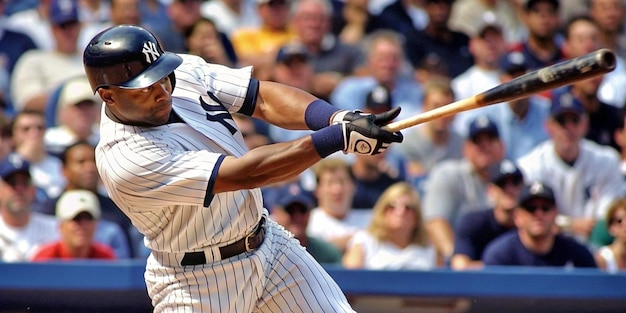
Major League Baseball, a sport often revered for its timeless traditions, is also a constant canvas for evolution. While the game’s essence remains, its contours are perpetually reshaped by innovation, unexpected events, and paradigm shifts that challenge long-held beliefs. These aren’t always grand, overt declarations; sometimes, they’re subtle yet undeniable forces that, like a perfectly placed Bernie Williams swing, hit you precisely where it matters, compelling a sudden, often uncomfortable, re-evaluation of everything you thought you knew. Here’s a look at moments and movements that promise a shift in perspective and pique curiosity, forcing us to reconsider the very fabric of America’s pastime.
1. The Rise of the Reliever-Centric Game
For decades, the starting pitcher was the undisputed king, tasked with going deep into games, often completing them. The modern era, however, has witnessed a seismic shift towards specialized bullpen usage. Starters often face a lineup only twice, with high-leverage relievers taking over to navigate the late innings, turning every at-bat into a potential high-wire act. This strategic pivot, initially viewed with skepticism by traditionalists, fundamentally altered roster construction and in-game management, pushing the sport towards a quicker, more power-focused late-game dynamic.
2. Sabermetrics and the Analytics Revolution
The embrace of advanced analytics, spearheaded by Bill James and popularized by “Moneyball,” represented a direct challenge to generations of conventional baseball wisdom. Suddenly, gut feelings and scouting biases were questioned by objective data points like OBP, SLG, and WAR. This shift from anecdotal observation to statistical analysis has permeated every facet of the game, from player valuation and draft strategies to defensive alignments and pitch sequencing, forcing even the most staunch traditionalists to acknowledge its undeniable impact on winning.
3. The Death of the Complete Game
Intrinsically linked to the bullpen revolution, the complete game has become an increasingly rare feat, almost an anomaly. What was once a benchmark for pitching dominance and endurance is now a statistical curiosity. This erosion of the complete game narrative reflects not only a strategic shift but also a broader understanding of pitcher health and maximizing efficiency, prompting a redefinition of what constitutes a “quality start” and fundamentally altering the hero narrative of the lone pitcher battling through nine innings.
4. The Universal Designated Hitter
For half a century, the American League embraced the designated hitter, while the National League clung to the tradition of pitchers hitting. The eventual adoption of the universal DH across both leagues marked a significant philosophical concession. While streamlining rules and potentially increasing offensive output, it irrevocably altered NL strategy, removing the intricate double-switch and the tactical dilemma of whether to pinch-hit for a struggling pitcher, ushering in a more homogenized offensive approach across the sport.
5. The Shohei Ohtani Phenomenon
In an era of hyper-specialization, Shohei Ohtani has emerged as a truly singular talent, a legitimate ace pitcher who also possesses elite power as a hitter. His unprecedented success as a two-way player forces a re-evaluation of what’s possible in modern baseball, challenging the long-held belief that specialization is the only path to sustained greatness. Ohtani’s unique skill set has captivated audiences and inspired a fresh perspective on player development and roster construction, truly a generational talent.
6. The Juiced Ball Debates
The increasing frequency of home runs across MLB in recent years has ignited persistent debates about the baseballs themselves. Whether intentional or incidental, changes in the ball’s construction or storage conditions have undoubtedly influenced offensive numbers, prompting a deeper look into the physics of the game and the integrity of its records. This ongoing discussion highlights a subtle, yet profound, manipulation of the game’s core equipment, impacting everything from pitching strategies to player contracts.
7. The Rise of Pitch Velocity
The arms race for higher pitch velocity has transformed the game. Once a rare commodity, triple-digit fastballs are now commonplace, raising questions about player safety, arm endurance, and the evolution of hitting. The relentless pursuit of velocity has pushed the boundaries of human performance, forcing hitters to adapt with quicker bat speeds and a focus on launch angle, fundamentally altering the aesthetic and statistical profile of the pitching-hitting confrontation.
8. Instant Replay and the Pursuit of Perfection
The introduction of expanded instant replay fundamentally changed the human element of umpiring, sacrificing subjective judgment for objective accuracy. While aiming to eliminate egregious errors, it also introduced delays and controversies surrounding the interpretation of slow-motion footage. This shift challenges the romantic notion of baseball’s imperfect, human-driven narrative, forcing a dialogue between traditionalists who value the flow of the game and those who demand absolute correctness.
9. The Shift in Defensive Alignment
Fueled by analytics, the dramatic defensive shift, once a quirky tactic against extreme pull hitters, has become a standard practice. By strategically repositioning fielders based on spray charts, teams aim to minimize hits against certain batters, often leaving vast swaths of the infield uncovered. This tactical innovation fundamentally alters the geometry of the game, compelling hitters to adjust their approaches or risk becoming statistical outliers against a perfectly aligned defense.
10. Player Empowerment and Free Agency’s Evolution
The modern era of free agency and player contracts has ushered in an unprecedented level of player empowerment. Superstars command astronomical salaries and often dictate their destinations, impacting team building and parity across the league. This shift from a more owner-centric model to one where player agency holds significant sway forces a re-evaluation of loyalty, market value, and the very structure of roster construction, making every offseason a high-stakes chess match.
11. The Impact of the Pitch Clock
Introduced to quicken the pace of play, the pitch clock represented a significant rule change, fundamentally altering the rhythm and timing of games. It directly impacts pitchers’ routines and hitters’ ability to step out, forcing both to adapt to a stricter temporal framework. This seemingly minor adjustment carries major implications for strategy, player endurance, and the overall fan experience, aiming to inject more action into the game without sacrificing its strategic depth.
12. The Expansion of the Postseason Format
The incremental expansion of the playoff format, introducing more wild card teams and rounds, has undeniably altered the regular season’s narrative. While creating more meaningful games deeper into September for a larger pool of teams, it also potentially diminishes the singular achievement of winning a division title. This shift forces a re-evaluation of postseason qualification and the inherent value of regular-season success versus the sudden-death drama of October baseball.
13. The Focus on Launch Angle and Exit Velocity
Modern hitting philosophy is heavily influenced by “launch angle” and “exit velocity” – quantifiable metrics that correlate directly with offensive success. Hitters are increasingly coached to elevate the ball and hit it hard, maximizing the chances of extra-base hits and home runs. This data-driven approach challenges the traditional “line drive” mentality, encouraging a more aerial attack that has visibly reshaped offensive strategies and the physical profiles of successful power hitters.
14. The Global Reach of Talent Development
MLB has become a truly global game, with an ever-increasing influx of talent from Latin America, Asia, and other international markets. This globalized talent pipeline has diversified the game’s skill sets and cultural tapestry, enriching the league with various styles of play and perspectives. It highlights the growing international appeal of baseball and forces a re-evaluation of traditional scouting territories, emphasizing the worldwide search for elite athletic prowess.
15. The Growing Gap Between Elite and Average Teams
While often cyclical, the modern game has seen periods where the disparity between the league’s top spenders and its lowest budgets appears stark, raising concerns about competitive balance. This phenomenon, influenced by market size, revenue streams, and a willingness to invest in analytics, challenges the ideal of a truly level playing field, prompting discussions about revenue sharing, luxury taxes, and the long-term health of small-market franchises in a high-stakes economic environment.
16. The Mental Health Conversation
Once a taboo subject in professional sports, the mental health of athletes has rightfully entered the mainstream conversation. Players are increasingly open about their struggles with anxiety, depression, and the pressures of performance, leading to greater awareness and support systems within organizations. This shift represents a crucial step in humanizing athletes and challenging the stoic, invincible archetype, fostering a more empathetic and holistic approach to player well-being.