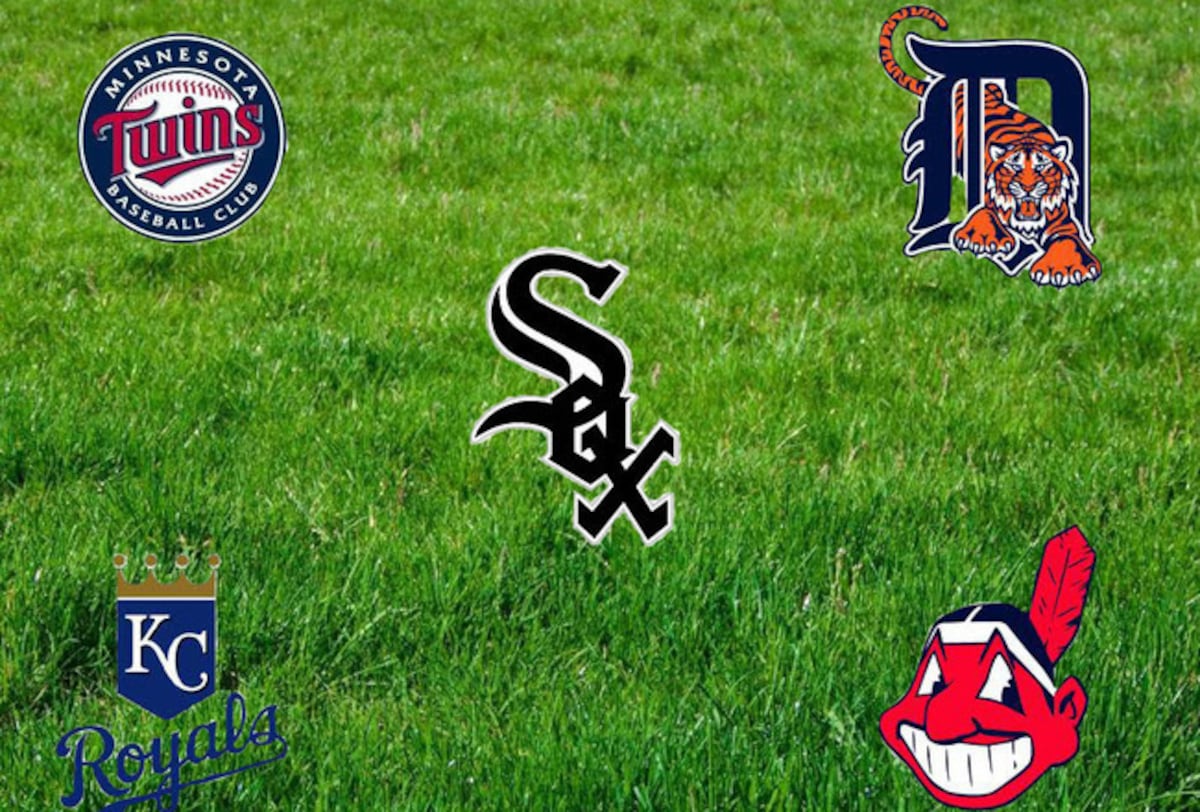
The 2011 American League Central was a fascinating tapestry woven with threads of unexpected surges, frustrating plateaus, and a truly dominant individual performance that cast a long shadow over the entire division. What began as a tightrope walk for several contenders ultimately saw one team break free from the pack, solidifying its place atop the standings with a powerful, late-season surge. It was a year where potential clashed with reality, where established stars battled the relentless march of time and injury, and where the promise of tomorrow occasionally outshone the struggles of today. This division offered a compelling narrative of grit, strategy, and the unpredictable nature of America’s pastime, leaving an indelible mark on the league’s landscape.
1. The Tigers’ Roaring Ascent: A Late-Season Dynamo
The Detroit Tigers, for much of the season, felt like a powerful engine slowly finding its rhythm, eventually transforming into a high-octane machine that couldn’t be stopped. After hovering around .500 for the first half, they caught fire in August and September, leaving their rivals in the dust. Their eventual 95-67 record was less a sudden explosion and more a controlled detonation, demonstrating the sheer force of a team whose pieces finally interlocked with precision.
2. Justin Verlander’s Unforgettable Season: The Unhittable Apex
Justin Verlander’s 2011 campaign wasn’t just exceptional; it was a supernova, burning brighter than any other pitcher in baseball. He pitched as if he commanded the very elements, crafting an unhittable symphony of fastballs and breaking balls that earned him both the Cy Young and MVP awards, a rare feat for a hurler. Verlander wasn’t just the ace; he was the undisputed king of the mound, a singular force whose brilliance alone could tilt the scales of an entire division race.
3. Miguel Cabrera: The Batting Savant’s Constant Pulse
Amidst Verlander’s dazzling theatrics, Miguel Cabrera remained the quiet, consistent heartbeat of the Tigers’ offense, a batting savant who continually found ways to wreak havoc on opposing pitchers. His .344 batting average was a masterclass in plate discipline and power, serving as the steady anchor that allowed the rest of the lineup to find their footing. Cabrera was the rock, the unwavering presence at the plate, regardless of the storm around him.
4. Victor Martinez: The Catalytic Agent’s Arrival
The addition of Victor Martinez in the offseason proved to be the catalytic agent the Tigers needed, a veteran presence whose bat and clubhouse leadership were invaluable. He wasn’t just a designated hitter; he was the linchpin that connected the lineup’s disparate parts, providing timely hitting and a calming influence that helped elevate the entire team’s offensive production. Martinez completed the puzzle, making the Tigers a truly formidable unit.
5. Jim Leyland’s Grizzled Guidance: The Skipper’s Steadfast Hand
Guiding the Tigers through their early season inconsistency and into their late-season dominance was Jim Leyland, the grizzled skipper whose experience and steady hand proved invaluable. Leyland managed the roster like a seasoned conductor, knowing precisely when to push buttons and when to let his veteran players lead. His calm demeanor and strategic acumen were the underlying currents that propelled Detroit to the division title.
6. Cleveland Indians’ Fleeting Promise: A Shooting Star’s Arc
The Cleveland Indians started 2011 like a shooting star, dazzling early and briefly topping the division, only to fade dramatically as the season progressed. Their initial surge was a testament to unexpected chemistry and scrappy play, but it ultimately proved to be an unsustainable burst of energy. The Tribe’s journey mirrored a beautiful but fragile blossom, vibrant for a moment before succumbing to the harsh realities of a long season.
7. The Ubaldo Jimenez Gamble: A High-Stakes Wager
The Indians’ mid-season acquisition of Ubaldo Jimenez was a high-stakes poker hand, a desperate throw of the dice meant to inject ace-level pitching into their faltering rotation. While Jimenez had moments of brilliance, he never fully recaptured his prior dominance in Cleveland, leaving the trade as a poignant reminder that even the boldest moves don’t always yield immediate dividends. It was a swing for the fences that landed just foul.
8. Chicago White Sox’s Stuttering Engine: A Season of Unfulfilled Potential
The Chicago White Sox entered 2011 with the hum of expectation, a powerful machine poised to contend, but instead found themselves bogged down, a luxury car sputtering in neutral. Their roster boasted talent, yet they consistently underperformed, unable to translate individual potential into collective success. The South Siders felt like a perpetual “next year” team, mired in a frustrating cycle of what-ifs.
9. Adam Dunn’s Striking Out Saga: A Grand Experiment Gone Awry
Adam Dunn’s inaugural season with the White Sox was a painful striking out saga, a grand experiment that tragically went awry. Hailed as a power threat, he became a black hole in the lineup, battling an alarming number of strikeouts and a career-low batting average. Dunn’s struggles were a highly visible symbol of the team’s offensive malaise, a testament to how even the most established hitters can lose their way.
10. Paul Konerko’s Veteran Glow: The Last Man Standing
Amidst the White Sox’s overall disappointment, Paul Konerko shone brightly as a beacon of veteran consistency and leadership, a true professional cutting through the gloom. His consistent power and solid defense were the steady pulse of a team often lacking direction. Konerko was the last man standing, embodying resilience and reminding fans of the reliable cornerstone he remained for the franchise.
11. Kansas City Royals’ Budding Hope: A Spring Garden of Talent
The Kansas City Royals in 2011 were a spring garden, full of budding hope and nascent talent, slowly unfurling the banners of their future stars. Players like Eric Hosmer and Mike Moustakas began to arrive, offering glimpses of the offensive firepower that would eventually define their success. Though the wins weren’t abundant, the groundwork for a brighter future was visibly being laid, planting seeds for seasons to come.
12. Minnesota Twins’ Injury Avalanche: A Crumbling Empire
The Minnesota Twins, after years of divisional dominance, suffered an injury avalanche in 2011, transforming their once-formidable empire into a crumbling fortress. Key players like Joe Mauer and Justin Morneau battled debilitating health issues, effectively dismantling the core of a team that had become a perennial contender. It was a season where the medical bay often saw more action than the batting cages, leading to a precipitous fall.
13. Joe Mauer and Justin Morneau: Fractured Jewels of the Franchise
The twin pillars of the Twins’ success, Joe Mauer and Justin Morneau, became fractured jewels in 2011, their once-reliable contributions severely hampered by injury. Mauer battled leg issues and Morneau struggled with post-concussion syndrome, rendering two of the league’s most consistent hitters largely ineffective. Their shared plight symbolized the team’s overall misfortune, leaving a gaping void in the heart of the Twins’ lineup.
14. The Division’s Unpredictable Canvas: From Chaos to Clarity
The 2011 AL Central painted an unpredictable canvas, moving from a chaotic blend of hopeful contenders to a clear, dominant victor by season’s end. What initially appeared to be a wide-open race, filled with twists and turns, ultimately distilled into a testament to sustained excellence. It underscored baseball’s enduring truth: that the marathon always finds its true champions, no matter how murky the early miles appear.