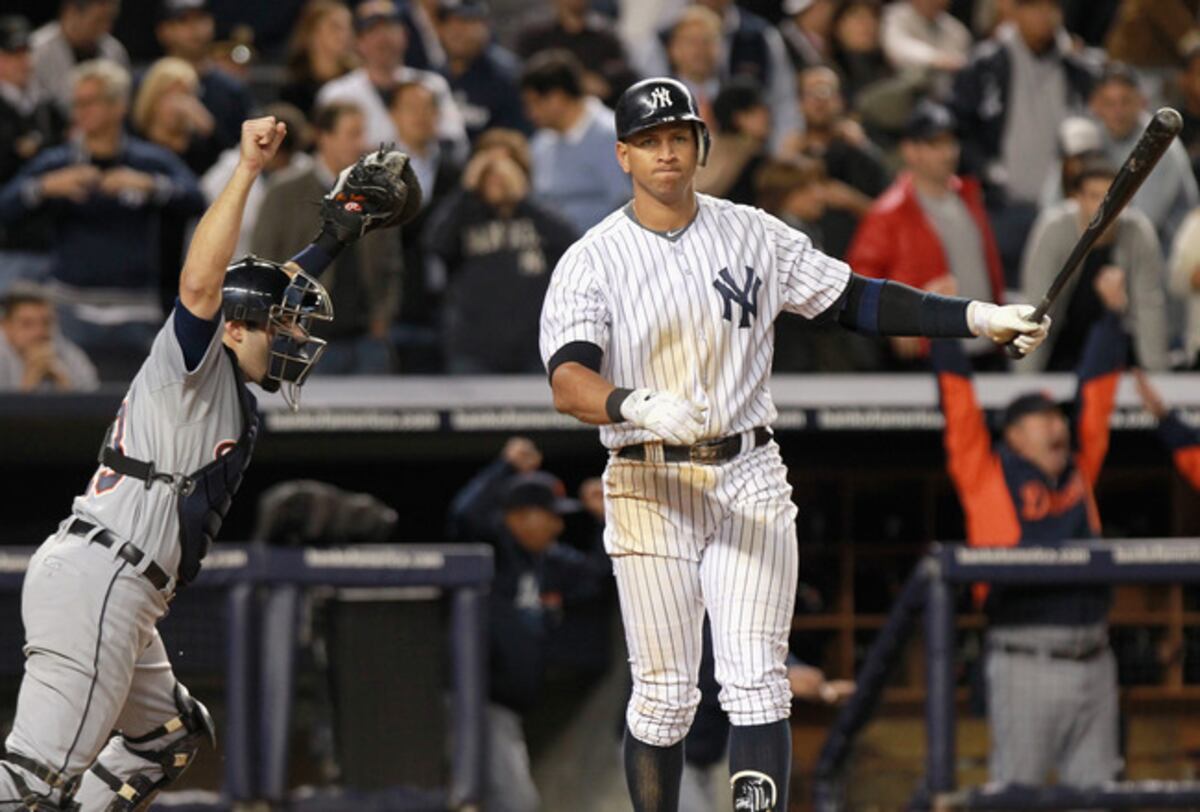
In 2010, the name Alex Rodriguez, a central figure in the New York Yankees lineup and one of baseball’s most recognized athletes, landed at a less-than-coveted position: 8th on Forbes’ list of the “Most Disliked People in Sports.” This ranking wasn’t merely a fleeting statistical anomaly; it represented a culmination of years of intense public scrutiny, both on and off the field, and a fascinating, often vexing, relationship between an extraordinarily talented player and a captivated, yet frequently critical, fanbase. Unpacking the layers behind this pervasive sentiment offers more than just a trip down memory lane; it provides insight into the intricate dynamics of celebrity, expectation, and moral judgment in the high-stakes world of professional sports. His presence on such a list wasn’t simply due to a few missteps but a complex tapestry of perceived slights, genuine controversies, and a persona that seemed to defy easy categorization, yet consistently invited strong reactions.
1. The Unprecedented Contracts and Sky-High Expectations
Alex Rodriguez set financial benchmarks twice in his career, first with the Texas Rangers’ record-shattering $252 million deal, and then again with the Yankees’ even larger $275 million contract. While indicative of his supreme talent, these gargantuan sums placed an immense burden of expectation on his shoulders. Every strikeout, every error, every failure to deliver in a clutch moment was magnified through the lens of those colossal figures, fueling a narrative that he was overpaid or didn’t always deliver commensurate value, particularly in the postseason before 2009.
2. The Steroid Admission of 2009
Just a year before his 2010 Forbes ranking, Rodriguez publicly admitted to using performance-enhancing drugs (PEDs) from 2001 to 2003 while with the Texas Rangers. This confession, following years of denial, profoundly damaged his credibility and reputation. It wasn’t just the admission itself, but the perceived deceit and the cloud it cast over his early, prodigious achievements that alienated a significant portion of the public and media.
3. Perceived Arrogance and Self-Serving Persona
Throughout his career, Rodriguez was often portrayed as arrogant or self-absorbed, a perception fueled by various media appearances and on-field behaviors. Whether it was his confident demeanor, specific comments, or even magazine photo shoots (like the infamous “kissing himself” photo), he often came across as more focused on individual accolades and celebrity than on team success, a trait that typically doesn’t endear an athlete to the masses.
4. The “Slap Gate” Incident in Boston
During the intense 2004 ALCS between the Yankees and Red Sox, Rodriguez infamously swatted at the glove of Bronson Arroyo as the pitcher attempted to tag him out. While initially ruled safe, the call was overturned upon review, causing a furor. This moment solidified his image as a player willing to bend the rules, or even cheat, in the eyes of many, especially rival fans who needed little prompting to dislike him.
5. Postseason Struggles (Pre-2009)
Despite his regular-season brilliance, A-Rod developed a reputation for struggling in the postseason for many years. His inability to consistently deliver in October, particularly during the Yankees’ dry spell between 2001 and 2009, frustrated a demanding New York fanbase and provided ample ammunition for critics who questioned his “clutchness” and mental fortitude under pressure. His 2009 World Series heroics provided some redemption, but the years of struggle left a lasting impression.
6. The High-Profile Celebrity Relationships
Rodriguez’s personal life frequently spilled into the public sphere, often through high-profile relationships with celebrities like Madonna and Kate Hudson. While common for athletes, these relationships, particularly coming in the midst of steroid controversies and on-field underperformance narratives, were often spun by media and fans as distractions or evidence of a focus on celebrity over his sport, further fueling the “diva” narrative.
7. Constant Comparisons to Derek Jeter
Playing alongside Derek Jeter, the universally beloved “Captain” of the Yankees, created an unavoidable and often unfavorable contrast for Rodriguez. While A-Rod often boasted superior individual statistics, Jeter was lauded for his perceived humility, leadership, and “clutch” gene. The constant comparisons, often painting A-Rod as the less authentic or more selfish counterpart, contributed significantly to his public perception.
8. The Pop-Up Interference Play (2007)
In a crucial game against the Toronto Blue Jays in 2007, Rodriguez yelled “Hah!” as a pop-up landed near third base, causing rookie Howie Clark to flinch and drop the ball. While rule interpretations were debated, it was widely seen as an unsportsmanlike attempt to distract an opponent. Though not penalized on the field, it added to the perception of A-Rod as a player who would exploit any loophole or psychological edge, regardless of sportsmanship.
9. The Shifting Allegiances and Perception of Chasing Money
Moving from the Seattle Mariners, where he began his career, to the Texas Rangers for a record contract, and then opting out of that contract to join the Yankees, fed a narrative that Rodriguez prioritized money over loyalty or team building. While a fundamental right of a free agent, in the court of public opinion, this sequence of moves often contributed to a perception of him as mercenary rather than devoted.
10. A Seeming Disconnect with the Media
Rodriguez often struggled with his relationship with the media. His interviews sometimes felt guarded, polished, or inauthentic, leading to a perception that he wasn’t being fully transparent. This strained relationship exacerbated negative storylines and made it harder for him to control his public image, contributing to the cycle of criticism.
11. The Relentless Pursuit of Records
While chasing records is a hallmark of elite athletes, A-Rod’s pursuit of revered milestones, particularly home run marks held by legends like Willie Mays and ultimately Barry Bonds, became a source of contention. After his steroid confession, every record he approached or broke was viewed through the prism of his past PED use, leading to widespread debate about the legitimacy of his accomplishments.
12. The Yankees Factor: Magnified Scrutiny
Playing for the New York Yankees inherently brings a level of scrutiny unmatched by almost any other team in professional sports. Every move, every statement, every performance is magnified under the intense glare of the New York media and a demanding fanbase. For a personality as complex and controversial as Rodriguez, this environment simply amplified every perceived flaw or misstep, making it almost impossible to escape public judgment.
13. The Ever-Present Controversy
It seemed that throughout his career, particularly during the 2000s, A-Rod was perpetually embroiled in some form of controversy, whether related to his performance, personal life, or the steroid saga. This constant state of being in the news, often for negative reasons, created an exhausting narrative for the public, leading to a general sense of fatigue and animosity.
14. The “Love-Hate” Relationship with Yankees Fans
Even within his own fanbase, A-Rod’s relationship was complicated. While his talent was undeniable and he played a crucial role in the 2009 World Series victory, he never achieved the unquestioned adoration bestowed upon other Yankees legends. This internal division within the Yankees faithful further highlighted the divisive nature of his public persona, contributing to his overall disliked status.
15. The “A-Rod Being A-Rod” Phenomenon
Ultimately, a significant factor contributing to A-Rod’s ranking was a cumulative sense of frustration with his entire public persona, encapsulated by the phrase “A-Rod being A-Rod.” This encompassed all the perceived self-centeredness, the controversies, the media gaffes, and the general sense that he was a supremely talented, yet deeply flawed individual who consistently found ways to alienate large segments of the sports world.