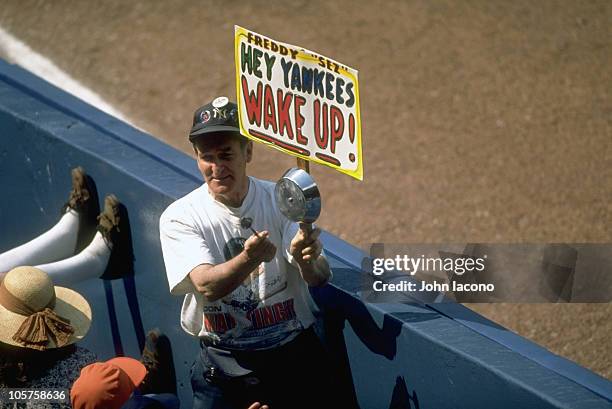
Freddy Sez Schuman was more than just a ubiquitous presence at MLB games; he was an institution, a commentator, and a unique form of street art brought to the stadium. For decades, his distinctive, hand-lettered signs offered often-pithy, sometimes provocative, but always thought-provoking messages that transcended the simple act of cheering for a team. He didn’t just attend games; he participated in a dialogue with fans, players, and even society at large, quietly challenging conventional fandom and inviting everyone to look beyond the scoreboard. This article explores how Freddy Sez Schuman, through his singular dedication, provided a fresh lens through which to view baseball, culture, and the very act of being a fan.
1. The Silent Voice of Collective Fandom
Freddy Sez offered a unique perspective on fan engagement: he gave a powerful, collective voice to the masses without uttering a single word. His meticulously crafted signs, often reflecting broad sentiment or pointed questions, became an unofficial barometer of the crowd’s mood. He demonstrated that true impact doesn’t always require volume; sometimes, a carefully chosen phrase, displayed prominently and consistently, can resonate far more deeply and widely than any roar from the stands. This quiet advocacy invited spectators to consider how their own opinions could be articulated and amplified, shifting the focus from individual cheerleading to collective expression.
2. Beyond the Batter’s Box: Social Commentary on Cardboard
What truly set Freddy Sez apart was his audacious willingness to venture beyond the confines of baseball statistics and into the realm of social and political commentary. While many fans focused solely on the game’s immediate narrative, Freddy’s signs frequently addressed broader societal issues, global events, or local politics. This unexpected juxtaposition of sports and serious discourse compelled fans to pause and think, reminding them that the world extended far beyond the stadium walls and that even a baseball game could serve as a backdrop for deeper contemplation. It challenged the notion of sports as pure escapism, suggesting they could also be a platform for awareness.
3. The Unofficial Fan Poll: A Democratic Dialogue
Freddy Sez didn’t just create messages; he curated them. He famously invited suggestions from fellow fans, turning his cardboard canvas into a democratic forum for public opinion. This unique approach transformed what could have been a singular, personal statement into a collaborative, community-driven dialogue. It fostered a sense of shared ownership and amplified diverse perspectives, causing fans to wonder what message would be featured next and how their own thoughts might contribute. This act of collective expression offered a profound shift from passive consumption to active participation in shaping the public narrative.
4. A Constant in a Changing Game: The Enduring Anchor
For decades, Freddy Sez Schuman was a reassuringly consistent presence in an ever-evolving sport. Players came and went, stadiums rose and fell, rules changed, and dynasties emerged, yet Freddy was reliably there, often perched in his familiar spot. This unwavering presence offered a stable landmark for generations of fans, creating a unique sense of continuity and tradition. His steadfastness invited fans to appreciate the enduring rituals of baseball, reminding them that some elements of the game’s culture are more timeless than any particular roster or championship run, offering a fresh perspective on the impermanence of sport versus the resilience of fandom.
5. The Art of Simplicity: Low-Tech Impact in a High-Tech World
In an era increasingly dominated by massive Jumbotrons, digital advertising, and high-tech fan experiences, Freddy Sez’s low-tech, hand-written cardboard signs were a striking anomaly. Their sheer authenticity and humble presentation commanded attention precisely because they defied modern spectacle. This simplicity forced a shift in perception, highlighting that profound impact doesn’t always require grand budgets or sophisticated technology. It underscored the enduring power of a direct, human touch and a well-chosen message, prompting curiosity about how such an unassuming medium could capture so much public imagination.
6. From Spectator to Performance Artist: Blurring the Lines
Freddy Sez elevated the act of spectating into a form of public performance and engagement. His meticulous preparation, from the precise lettering to the strategic unveiling of his signs, transformed him from a mere fan into an integral part of the game-day experience. This blurred the lines between performer and audience, inviting spectators to reconsider their own roles within the stadium. He demonstrated that fandom could be a creative, expressive act, prompting others to think about how they, too, could contribute to the atmosphere and narrative of a sporting event in unique ways.
7. The “Why” Behind the Roar: Prompting Deeper Thought
Unlike simple cheers or boos, Freddy’s signs often prompted introspection. They weren’t just reactions; they were invitations to ponder the deeper meaning, implications, or ironies of events unfolding on the field or in the world. He encouraged fans to look beyond the immediate play and consider the broader context, the historical significance, or the ethical dimension of a situation. This intellectual engagement offered a profound shift from purely emotional responses to a more thoughtful appreciation of the game and its place within society.
8. A Bridge Between Eras: Connecting Baseball’s Past and Present
Having witnessed generations of baseball, from legends of the past to contemporary stars, Freddy Sez and his signs served as a living bridge between the sport’s rich history and its present state. His long tenure allowed him to comment on trends, commemorate milestones, and reflect on the game’s evolution with a unique perspective only possible through decades of dedicated observation. His presence piqued curiosity about baseball’s heritage, encouraging younger fans to learn about the figures and moments that shaped the game long before their time.
9. The Anticipation Factor: Part of the Game-Day Ritual
For many regular attendees, especially at Yankee Stadium, part of the game-day experience became the eager anticipation of “What will Freddy Sez say today?” His signs added an extra layer of intrigue and surprise beyond the game itself, becoming a beloved ritual for many. This created a shift in how fans perceived the overall event, acknowledging that elements external to the play on the field could significantly enhance their enjoyment and engagement, turning a simple fan into a cherished cultural touchstone.
10. Challenging Partisan Allegiance: Messages for All of Baseball
While often seen at Yankee games, Freddy’s messages frequently transcended simple team allegiance. Many of his signs were universal in their appeal, addressing broader baseball themes, sportsmanship, or human nature. This invited a shift in perspective for even the most partisan fans, encouraging them to see beyond their team’s specific rivalry and appreciate the shared humanity and passion that unites all baseball enthusiasts. He fostered a sense of community across fan bases, reminding everyone of their common love for the game itself.
11. The Human Element of Fandom: A Symbol of Dedication
Freddy Sez personified the individual, dedicated fan, reminding us that behind every collective cheer is a person with thoughts, feelings, and an unwavering passion. His singular commitment highlighted the profound personal connection many individuals have to the sport. He shifted the focus from the faceless crowd to the unique human experience of fandom, prompting curiosity about the stories and motivations of other dedicated fans who populate the stands day after day, year after year.
12. The Global Stage: His Perspective Amplified by Media
Thanks to television cameras frequently panning to his distinctive presence, Freddy Sez’s unique perspective and pithy commentary were amplified to a national, and at times, international audience. What began as a local phenomenon evolved into a global symbol of passionate, thoughtful fandom. This demonstrated how a simple, authentic act could transcend local boundaries, causing viewers worldwide to wonder about the “man with the signs” and the messages he carried, shifting him from a mere fan to an unexpected media figure.
13. Inspiring Dialogue: More Than Just a Statement
Freddy’s signs were rarely just statements; they were conversation starters. They sparked discussions among strangers in the stands, leading to impromptu debates, shared laughs, or moments of thoughtful agreement. This active engagement fostered a sense of community and connection, proving that a simple piece of cardboard could facilitate genuine human interaction and dialogue. He shifted the perception of a baseball game from a solitary viewing experience to a communal forum for shared ideas.
14. A Reflection of the Times: Baseball as a Cultural Barometer
Through his decades of sign-holding, Freddy Sez inadvertently created a historical ledger, reflecting not just baseball’s journey but also broader societal shifts. His signs captured the zeitgeist, addressing everything from national tragedies to economic anxieties, always filtered through a baseball lens. This offered a unique perspective on how the sport intersects with and mirrors the larger cultural landscape, inviting fans to consider baseball not just as a game, but as a microcosm of society.
15. The Power of Consistency: A Lesson in Enduring Influence
Freddy Sez’s unwavering presence for over three decades taught a powerful lesson in dedication and the slow, steady build-up of influence. His consistent effort, day in and day out, year after year, eventually cemented his status as an icon. This demonstrated that enduring impact doesn’t always come from fleeting viral moments, but often from persistent, authentic engagement, providing a fresh perspective on what it means to leave a lasting mark.
16. Legacy Beyond Wins and Losses: Defining Fan Impact
Freddy Sez fundamentally redefined what it meant to be an impactful fan. His legacy isn’t tied to any particular team’s championship or player’s record, but to his own unique contribution to the culture of the game. He showed that a fan’s presence and perspective could transcend the scoreboard, creating a cultural footprint that was recognized and celebrated independently. This shift in understanding fan impact invites curiosity about other non-traditional ways fans shape the spirit of the sport.
17. The Metaphysics of Fandom: The Observer as Observed
Freddy’s consistent presence eventually turned the act of observing the game into an act of being observed himself. Fans and media looked for him, not just for his messages but for his mere presence. This fascinating reversal of roles offered a unique, almost metaphysical, perspective on fandom: the one who watched became a part of the spectacle. It piqued curiosity about the unseen stories and dedicated individuals who, through their sheer commitment, become inseparable from the institutions they love.
18. An Enduring Memory: A Name Etched in Baseball Lore
Long after his passing, Freddy Sez Schuman remains a name etched in baseball lore, fondly remembered by generations of fans. His unique approach ensured his memory endures, proving that individuality and thoughtful expression can create a legacy as powerful as any on-field achievement. His story is a poignant reminder that true passion, when coupled with creativity and consistency, can inspire a lasting shift in perspective, forever enriching the tapestry of MLB history.