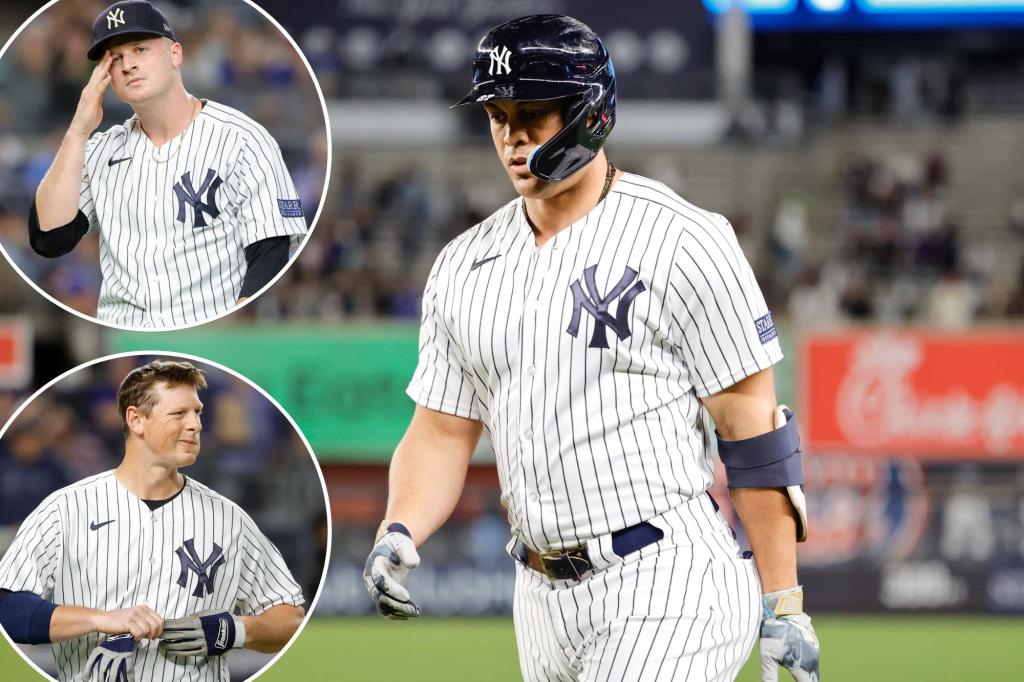
For years, the name José Ramírez has been whispered like a forgotten prayer among the Yankee faithful, a potent balm for the club’s perennial third base uncertainties. He was the perfect fit, a switch-hitting dynamo with power, speed, and defensive prowess, a true five-tool maestro who could anchor the hot corner for years. Yet, as the trade deadline looms and the rumor mill churns with frenetic energy, one truth has become as unyielding as the concrete facade of Yankee Stadium itself: Brian Cashman’s Yankees will not pursue Ramírez. The dream, once a vibrant, tantalizing mirage on the horizon, has now dissolved into the thin air of inevitability. It’s time to put those hopes and dreams to rest, for the Yankees’ well-worn operational blueprint has, once again, precluded a pursuit of the game’s most coveted commodity.
1. The Mirage on the Hot Corner
José Ramírez was not merely a player; he was a solution, a balm for a persistent ache at third base. For many, his arrival in pinstripes was an almost celestial vision, a beacon of switch-hitting brilliance destined to complete an already formidable lineup. Fans envisioned him as the missing keystone, the final, perfect piece to a championship puzzle that has felt frustratingly incomplete for far too long. Yet, like a desert traveler chasing a shimmering oasis, the reality of his acquisition always remained just beyond reach, a beautiful, unattainable illusion.
2. Cashman’s Unspoken Code of Conduct
Brian Cashman operates by an unwritten code, a set of principles that have become as predictable as the changing seasons in the Bronx. This code often prioritizes organizational control and future flexibility over immediate, blockbuster moves for established stars. The pursuit of Ramírez, requiring a king’s ransom in prospects and a significant financial commitment, stands in direct opposition to this cautious, long-game philosophy, making the non-pursuit a foregone conclusion for those intimately familiar with the GM’s strategic playbook.
3. The Sacred Cows in the Farm System
The Yankees’ top prospects are not just assets; they are often treated as sacred cows, untouchable deities worshipped within the organizational structure. The likes of Anthony Volpe, Oswald Peraza, and Jasson Domínguez are seen as future cornerstones, their potential glowing like untarnished jewels. To part with such perceived treasures for an established star, no matter how brilliant, goes against the deeply ingrained belief that the next wave of champions will be homegrown, a faith that can border on blind devotion.
4. The Iron Curtain of the Luxury Tax
While the Yankees’ coffers are famously deep, the luxury tax threshold often acts as an invisible iron curtain, dictating permissible spending. Having already sailed past several tiers, the financial implications of acquiring a player like Ramírez – both his remaining salary and a potential extension – would send the payroll soaring into unprecedented territory. This self-imposed fiscal restraint, despite the team’s immense revenue, frequently limits their willingness to pursue the market’s most expensive, and often most impactful, talents.
5. The Lure of the In-House Solution
The Yankees frequently subscribe to the seductive narrative that the solution to their positional woes lies within their own ranks. For third base, this means clinging to the hope that a player like Josh Donaldson will rebound, or that a prospect such as Volpe or Peraza could eventually transition to the hot corner, offering a cost-controlled, long-term fix. This internal optimism, whether justified or not, often overshadows the external reality of needing an immediate, proven upgrade.
6. The Positional Chessboard Conundrum
The Yankees’ infield has, at times, resembled a complex chessboard, with too many pieces vying for limited squares. With Gleyber Torres, Isiah Kiner-Falefa, and the aforementioned prospects, the front office might perceive an impending logjam, making a premium acquisition at third base seem less urgent. This perceived glut, rather than a clear pathway, can paradoxically deter the pursuit of an elite talent who would undeniably elevate the entire infield.
7. Echoes of Unfulfilled Blockbusters Past
The ghosts of failed “big splash” trades and free agent signings past often cast long shadows over current decision-making. Whether it’s the high-profile acquisitions that didn’t pan out or the deals that seemed too costly in retrospect, the front office has developed a cautious, almost risk-averse posture. This historical baggage makes them hesitant to pull the trigger on another potentially franchise-altering, but undeniably risky, move for a player of Ramírez’s caliber.
8. Cleveland’s Unyielding Price Tag
The Cleveland Guardians are not a desperate club. They understand Ramírez’s immense value and the foundational role he plays. Their asking price would undoubtedly be astronomical, a package so rich in prospects and possibly even big-league talent that it would dismantle a significant portion of the Yankees’ future. This unyielding demand, a fortress of prospects, is often a deal-breaker for a Yankees front office notoriously protective of its developmental pipeline.
9. The “Wait and See” Tendency
Cashman often prefers to observe and react rather than pre-emptively strike, a “wait and see” philosophy that defines many of his maneuvers. This approach suggests a preference for letting the market dictate terms, or for prospects to mature organically, rather than forcing a monumental trade at peak value. While sometimes prudent, this often means missing out on the game’s truly elite, high-demand talents who demand immediate, decisive action.
10. The Looming Specter of Future Free Agency
The Yankees often operate with an eye firmly fixed on future free agent classes, always anticipating the next “whale” to harpoon. The allure of Shohei Ohtani, Juan Soto, or other potential megastars in the coming years frequently overshadows the present need. This perpetual forward gaze means avoiding significant long-term commitments or prospect divestment in the immediate, preserving resources for a perceived bigger catch down the line, a strategy that often leaves current gaps unaddressed.
11. The Elusive Pursuit of Defensive Perfection
While Ramírez is a capable defender, the Yankees often place a premium on specific defensive profiles and seamless positional fits. Introducing a new infielder, especially one who demands the hot corner, might be viewed as disrupting an already delicate defensive alignment or hindering the growth of internal options. This meticulous approach to defensive cohesion can sometimes inadvertently preclude the acquisition of an offensive juggernaut.
12. The Siren Song of “Good Enough”
A recurring theme in the Yankees’ recent history is the tendency to settle for “good enough” rather than relentlessly pursuing “the best.” Incremental upgrades or internal hope often become substitutes for a truly transformative acquisition. The current roster, with its undeniable strengths, might be deemed sufficient to compete, silencing the siren song of a game-changer like Ramírez, despite the clear and present need for his unique blend of skills.
13. The Fan’s Familiar Ache of Unfulfilled Desire
For the faithful in the stands, the non-pursuit of Ramírez is not just a missed opportunity; it’s a familiar ache, a recurring testament to the chasm between fan aspiration and front office execution. This annual cycle of hope and disappointment has become a disheartening ritual, leaving a lingering sense of unfulfilled desire that echoes through the hallowed grounds of Yankee Stadium.
14. The Scarcity of the Elite Switch-Hitter
José Ramírez is a diamond in the rough, an elite switch-hitter capable of impacting the game from both sides of the plate with power and contact. Such players are a rare commodity, a true luxury in any lineup. To pass on such a unique and valuable asset speaks volumes about the Yankees’ entrenched philosophy, one that values other considerations above the scarcity and undeniable impact of a truly generational talent.
15. The Unseen Ripples of a Star Acquisition
Beyond the prospects and the salary, a star acquisition creates unseen ripples throughout the organization. It impacts clubhouse dynamics, playing time for other players, and the perception of the team’s long-term vision. The Yankees front office often considers these intricate, less visible factors, and the disruption a blockbuster trade might cause, even if for a player of Ramírez’s caliber, can sometimes outweigh the perceived benefits in their methodical calculations.
16. The Silent Whispers of “Contention Window”
Within the Yankees’ hierarchy, there’s a silent whisper that the current contention window is either firmly open or nearing its peak, without needing a seismic shift. This internal assessment suggests that the existing roster, with minor tweaks, is capable of reaching the ultimate goal. Such a belief can dampen the urgency to make a bold, expensive move, perpetuating the status quo rather than pursuing a decisive, championship-altering acquisition.
17. The Narrative of “Developing Our Own”
The Yankees take immense pride in their farm system and the narrative of “developing our own” talent. This organizational identity, while commendable, can sometimes become an obstacle to external upgrades. The desire to see prospects like Volpe and Peraza blossom into everyday big leaguers is strong, often at the expense of acquiring a proven, established star who could fill an immediate need and elevate the team’s championship aspirations right now.
18. The Fading Echoes of Hope
As the trade deadline approaches, the once-vibrant echoes of hope for José Ramírez in pinstripes grow fainter, replaced by the somber tones of resignation. The dream, once a bright ember, has now cooled to ash, leaving behind only the cold realization that some destinies are simply not meant to converge. The narrative is set, the decision made, and the possibility, once alive, is now merely a historical footnote.
19. The Perpetual “What If”
For years to come, whenever the Yankees struggle at third base or fall short in the postseason, the specter of José Ramírez will undoubtedly haunt the conversations of the Yankee faithful. The perpetual “what if” will linger in the air, a silent question mark over the front office’s decision-making. What if they had pushed harder? What if they had loosened the reins on their prospects? The hypothetical will forever be more vivid than the actual, a constant reminder of the path not taken.
20. The Empty Chair at the Banquet of Dreams
Ultimately, the non-pursuit of José Ramírez leaves an empty chair at the Yankees’ banquet of dreams. He was the perfect guest, the one whose presence would have elevated the entire feast, yet his place remains unfilled. This absence symbolizes the recurring pattern of the modern Yankees: a team perpetually on the cusp, possessing immense resources, yet often hesitant to make the decisive, game-changing move that could truly usher in a new era of championships.