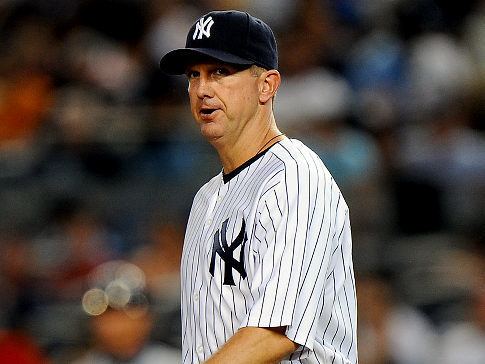
As the New York Yankees embarked on their 2010 campaign, fresh off a thrilling World Series victory, the focus inevitably turned to the crucial components of their roster. Amidst the established superstars and veteran stalwarts, the continued development of promising young talent held a particular intrigue. One such intriguing figure was right-handed reliever David Robertson. Having debuted in 2009 with a glimpse of his unique arm talent, the 2010 season was poised to be a pivotal year for the “Alabama Slamma.” What could fans and analysts realistically expect from Robertson as he navigated his sophomore season in baseball’s most demanding market? Here, we delve into the multifaceted projections that surrounded David Robertson entering 2010, offering a detailed perspective on the potential that lay before him.
1. Building on a Promising Rookie Glimpse
Robertson’s 2009 debut offered a tantalizing, albeit brief, look at his capabilities. In 29 appearances spanning 43 innings, he posted a 3.35 ERA with an impressive 11.2 K/9 rate. This initial exposure suggested a reliever with the raw stuff to succeed at the major league level. For 2010, the projection was a natural progression: more innings, more consistent outings, and a reduction in the minor league shuttles, solidifying his spot in the Yankees’ bullpen from Opening Day.
2. The Dominance of the Curveball
Robertson’s primary weapon, his looping, knee-buckling curveball, was already a recognized out-pitch. Its sharp 12-6 break and deceptive speed differential from his fastball made it extremely difficult for hitters to square up. In 2010, the expectation was that this pitch would continue to be his bread and butter, generating a significant portion of his strikeouts and serving as his go-to offering in critical two-strike counts, especially against right-handed hitters.
3. Sustained High Strikeout Rate
Building on his rookie season’s impressive K/9, projections for 2010 confidently anticipated Robertson maintaining a strikeout rate well above the league average for relievers. His ability to miss bats, particularly with that devastating curveball, was seen as a key asset. The hope was that he could approach or even exceed a strikeout per inning across a larger sample size, further cementing his value in a high-leverage bullpen.
4. Addressing Control Anomalies
While Robertson’s strikeout numbers were eye-popping, his walk rate in 2009 (4.8 BB/9) presented a clear area for improvement. For 2010, a significant projection involved a concerted effort to refine his command and reduce free passes. Improved control of both his fastball and curveball, pitching more consistently in the strike zone without sacrificing deception, was seen as paramount to elevating his overall effectiveness and preventing costly jams.
5. Ascending the Bullpen Hierarchy
The 2010 Yankees bullpen was stacked, featuring legends like Mariano Rivera, alongside strong arms like Joba Chamberlain, Phil Hughes (before his transition back to starter), and Damaso Marte. Robertson’s projection saw him firmly entrenched in the middle-to-late innings, carving out a consistent role. While not yet a setup man, his performance was expected to challenge others for higher-leverage opportunities as the season progressed, potentially leapfrogging some veterans.
6. Learning from the Legends
One invaluable aspect of Robertson’s 2010 projection was the opportunity to learn daily from some of the game’s best relievers, most notably Mariano Rivera. The expectation was that being around such established professionals would accelerate his development, offering insights into pitch sequencing, mental fortitude, and navigating the pressures of pitching in New York. This mentorship was deemed critical for a young pitcher still finding his footing.
7. Primary Role in Mid-Leverage Innings
Initially, Robertson was projected to handle a significant workload in the 6th and 7th innings, bridging the gap to the established setup men. These mid-leverage situations, often starting with a clean inning or inheriting runners with a small lead/deficit, would test his ability to consistently execute and minimize damage. Success in this role would be crucial for the Yankees’ bullpen depth and his personal growth.
8. Contribution to the World Series Defense
Coming off a championship, every piece of the 2010 roster was scrutinized for its potential contribution to a repeat. Robertson’s projection was vital for bolstering the bullpen’s depth, ensuring that manager Joe Girardi had a fresh, effective arm for various scenarios. His ability to provide reliable innings and stifle opposing offenses was seen as a quiet but significant factor in the Yankees’ quest for back-to-back titles.
9. Fastball Effectiveness and Deception
While the curveball garnered much of the attention, Robertson’s fastball, though not overpowering in terms of sheer velocity, possessed excellent late life and deception due to his unique delivery. The projection for 2010 included an emphasis on locating this fastball effectively, setting up the curve, and using it to induce weak contact. Its effectiveness in conjunction with his breaking ball would define his overall arsenal.
10. Accumulating Holds and Building Trust
For a middle reliever, “holds” are a significant measure of success. The projection for Robertson in 2010 was a substantial increase in this statistic compared to his rookie year. By consistently getting key outs in the 6th and 7th innings, he would accumulate holds and, more importantly, build greater trust with the coaching staff, earning opportunities in increasingly critical game situations.
11. Minimizing Hard Contact and Limiting Damage
Beyond strikeouts, the ability to induce weak contact was a key projection for Robertson. While susceptible to the long ball occasionally, his movement and deception were expected to limit solid contact, turning potential extra-base hits into routine outs. His success in stranding inherited runners and preventing inherited situations from spiraling would be a critical metric for evaluation.
12. Durability Through a Full Season
Having not yet pitched a full major league season, Robertson’s durability was an unspoken projection for 2010. The expectation was that his arm would hold up to the rigors of a 162-game schedule, plus potential postseason play. Maintaining his velocity and command deep into the season without significant injury concerns was crucial for fulfilling his potential contributions.
13. The Whispers of a Future Closer
While perhaps premature for a full-blown projection, the raw tools Robertson displayed in 2009, particularly his high strikeout rate and elite curveball, led to hushed speculation among some fans and analysts about his long-term potential as a closer. For 2010, the focus was on developing consistency, but the underlying potential for him to someday inherit the ninth-inning role was certainly a tantalizing thought.
14. Statistical Targets: ERA and WHIP
Specific statistical projections for Robertson in 2010 often hovered around a sub-3.50 ERA and a WHIP (Walks and Hits per Innings Pitched) in the 1.20-1.30 range. These numbers would represent a solid improvement over his rookie campaign’s WHIP and solidify his status as a reliable major league reliever, crucial for a team with championship aspirations.
15. The Unconventional Delivery and Deception Factor
Robertson’s unique, somewhat jerky delivery was another element of his projection. While unconventional, it added a layer of deception that hitters found challenging to pick up. For 2010, maintaining this delivery’s effectiveness while improving its repeatability and minimizing wildness was a key developmental point, ensuring his stuff played up against advanced big league hitters.