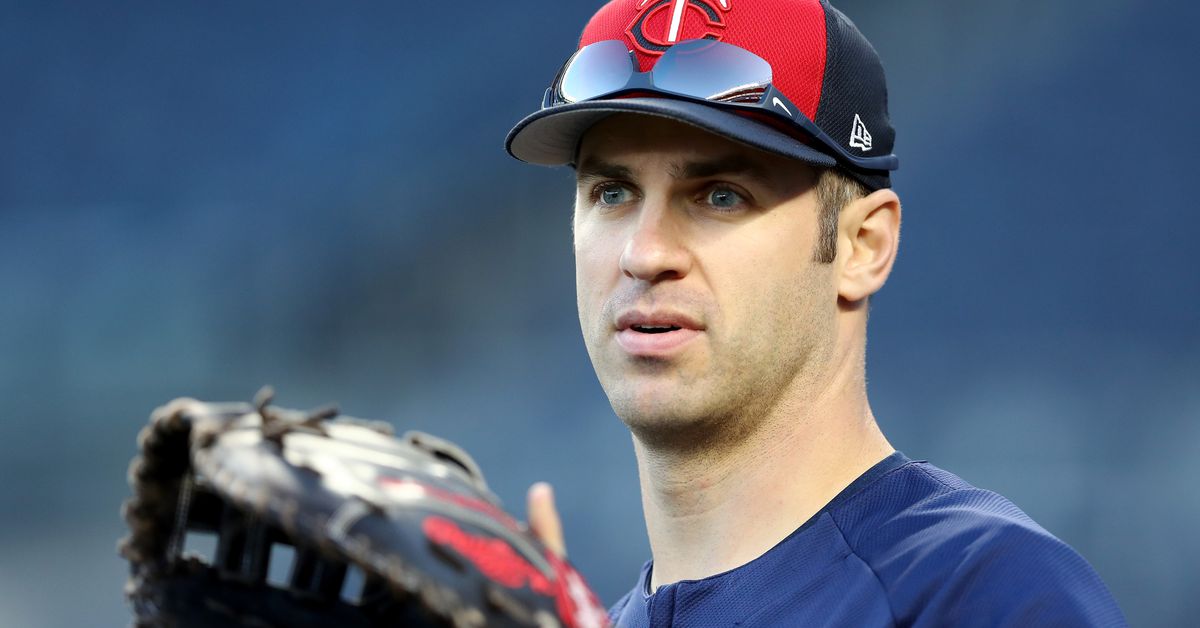
Joe Mauer’s induction into the National Baseball Hall of Fame in his first year of eligibility was an undisputed coronation, a testament to a career defined by unwavering consistency, exceptional skill, and an almost poetic loyalty. For Minnesota Twins fans, it solidified what they already knew: Mauer was, is, and always will be theirs. He is synonymous with “Twinkie Town,” a hometown hero who never strayed. But in a modern landscape where free agency often dictates destiny and individual legends frequently test new waters, one can’t help but ponder the absolute nature of that belonging. Was it truly inevitable, or did a series of choices and circumstances forge an unbreakable bond, ensuring that Minnesota would forever claim its native son?
1. The Prodigal Son Who Never Left
Born and raised in St. Paul, Minnesota, Joe Mauer was the ultimate local hero, drafted by his hometown team with the first overall pick in 2001. His entire 15-year career unfolded within the confines of the Twins organization, a rarity in modern professional sports. This unwavering loyalty is admirable, leading to a natural question: did the gravitational pull of home simply become too strong to ever consider an alternative, or did the Twins consistently do enough to ensure he never felt the need to test the open market’s lucrative waters?
2. A Batting Title Masterclass
Mauer captured three American League batting titles (2006, 2008, 2009), an extraordinary feat for any player, let alone a catcher. His .347 average in 2009 remains the highest by a catcher in the live-ball era. These consistent offensive outbursts cemented his status as a premier hitter. One might wonder, however, if these individual accolades, achieved within the relative quiet of the AL Central, truly showcased the full scope of his offensive potential to a broader national audience, or if he was content simply dominating his division?
3. MVP, Crown, and Glory
His 2009 MVP season was nothing short of spectacular, where he hit .365 with 28 home runs and 96 RBI, all while navigating the demands of catching. It was a season that elevated him from star to superstar, a generational talent leading the league. This individual peak was undeniable, but it also prompts a thought: for a player of his caliber, wouldn’t the ultimate validation be translating such individual brilliance into multiple deep postseason runs or even a World Series championship, rather than his team making early exits?
4. The Catching Conundrum and Concussions
Mauer’s transition from catcher to first base later in his career, driven largely by concussions and the grueling toll on his body, extended his playing days but undeniably altered his defensive identity. While understandable and necessary for his health, one might speculate if an earlier move to a less demanding position, or perhaps a different organizational philosophy, could have unlocked even more years of elite offensive production from behind the plate, or allowed him to explore different avenues for his career?
5. The Big Contract, The Big Commitment
In 2010, Mauer signed an eight-year, $184 million contract extension with the Twins, a monumental deal at the time that effectively ensured he would spend his entire career in Minnesota. This was a clear statement of mutual commitment. But in hindsight, did the security and loyalty offered by the Twins perhaps overshadow what other opportunities, potentially with more immediate championship aspirations, might have presented themselves to a player of his stature if he had entertained other suitors?
6. A Catcher’s Defensive Prowess
Beyond his bat, Mauer was a Gold Glove-caliber catcher, winning three awards (2007, 2008, 2009). His ability to frame pitches, block balls, and control the running game made him a complete player behind the plate. This two-way excellence is often overlooked in discussions of his Hall of Fame case. Yet, one could ask: in an era of specialized catching, did his demanding defensive workload ultimately limit his offensive peak, or was it simply part of the unique package that made him Joe Mauer?
7. The Postseason Puzzle
Despite his individual brilliance, Mauer’s teams often struggled in the postseason, going 0-5 in division series appearances and never advancing past the ALDS. While team success isn’t solely on one player, it’s an indelible part of a player’s legacy. This raises the playful challenge: for a player so tied to his hometown, how much did the consistent lack of deep October runs impact his broader national perception, and would a few World Series rings have cemented his “belonging” in a different, perhaps more universally celebrated, way?
8. A Symbol of Stability
In an era of player movement and superteams, Mauer remained a constant, a symbol of stability for the Twins franchise. He represented continuity and homegrown success. This steadfastness endeared him to the fan base, almost making him an extension of the state itself. Could this deep, almost familial connection to Minnesota have actually been a subtle impediment to experiencing the heightened pressure and glory of playing on a perennial contender, which often comes with a different kind of ‘belonging’?
9. Consistency Over Power
Mauer was known more for his exceptional on-base percentage and batting average than for prodigious power, especially after his transition to first base. He was a contact hitter in an era increasingly dominated by home run totals. While effective, it leads to a thought: if he had embraced a more power-centric approach, perhaps in a different ballpark or lineup construction, could his offensive numbers have become even more eye-popping, leading to a different kind of legend?
10. The Twin Cities Icon
More than just a baseball player, Mauer became a cultural icon in the Twin Cities. His image was ubiquitous, his name synonymous with Minnesota sports excellence. This deep local reverence is something money can’t buy. Yet, for a player who achieved so much locally, how much did this intense, almost singular focus on his “Twinkie Town” identity prevent him from ever truly contemplating if his immense talent could be equally celebrated, or even amplified, on a grander, national stage?
11. His Hall of Fame Validation
Mauer’s first-ballot Hall of Fame induction solidified his place among baseball’s immortals, proving that his unique blend of hitting prowess, defensive skill, and positional value was recognized by voters. This honor, achieved entirely through his contributions to one franchise, provides irrefutable evidence of his impact. But it also invites a reflective question: did his singular dedication to the Twins ultimately make his Hall of Fame case *more* compelling due to its narrative purity, or did it perhaps mask what other statistical heights he might have reached in a different environment?
12. The Designated Hitter Question
As his career progressed and concussions became a concern, Mauer frequently served as a designated hitter. This move prolonged his career and kept his bat in the lineup. It’s a pragmatic decision, yet one can’t help but consider if, in a league without the DH, his career trajectory might have ended sooner, or if an earlier shift to another defensive position could have been beneficial, creating a different set of challenges and opportunities for a player so intrinsically tied to his catching identity?
13. A Player Ahead of His Time?
Mauer’s elite on-base percentage and ability to control the strike zone were hallmarks of his game, skills that are increasingly valued in today’s analytics-driven MLB. He was a patient, selective hitter. One might playfully challenge: if he played in the current era, fully embracing the launch angle revolution and leveraging his incredible bat-to-ball skills for more power, could he have been even more dominant, and would such a transformation have ever been possible outside of the Twins’ long-held philosophy?