Baseball cards are more than just cardboard and ink—they’re tiny time capsules, each one a frozen moment of a player’s legacy. Among the pantheon of vintage cardboard, few names carry the weight of Carl Yastrzemski, the Boston Red Sox legend whose rookie card remains a cornerstone of the hobby. But here’s the thing: while many assume that all vintage cards from Hall of Famers are worth a fortune, Yaz’s rookie card occupies a fascinating middle ground. It’s not a Mickey Mantle or a Willie Mays—cards that routinely fetch six or seven figures—but it’s far from a throwaway. So, what’s the real story behind the Carl Yastrzemski rookie card value today? Is it a sleeping giant, or has the market already priced it appropriately? Let’s dig in.
The Allure of the Yaz Rookie Card: Why It Captivates Collectors
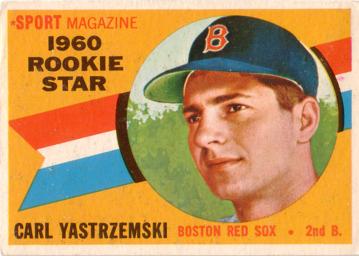
There’s an almost mystical pull to the 1960 Topps Carl Yastrzemski rookie card. Part of it stems from the player himself—a man who embodied the soul of the Red Sox during an era when Fenway Park was the epicenter of baseball’s most dramatic narratives. Yaz wasn’t just a star; he was a franchise cornerstone, a left-handed hitter with a swing so smooth it looked like poetry in motion. His 1967 Triple Crown season, where he led the Red Sox to their first World Series in 20 years, cemented his place in history. But the rookie card? That’s the gateway. It’s the first tangible link between a collector and a legend, a way to hold a piece of baseball’s golden age in your hands.
Then there’s the card’s design. The 1960 Topps set is a masterclass in mid-century aesthetics—bold colors, clean lines, and that iconic red border that pops against the stark white background. Yaz, captured mid-swing with his number 8 emblazoned across his chest, looks every bit the prodigy he was. The card’s simplicity belies its significance. It’s not overproduced like modern parallels or flashy inserts; it’s pure, unadulterated vintage charm. And that’s what makes it so enduring. Collectors aren’t just buying cardboard; they’re buying a piece of Americana, a relic from a time when baseball was America’s pastime in the truest sense.
Market Reality: How Much Is the Yaz Rookie Card Really Worth?
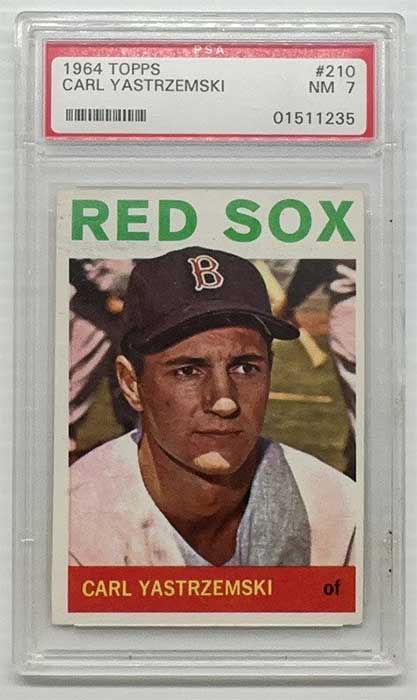
If you’ve ever scrolled through auction results or dealer listings, you’ve probably seen Yaz’s rookie card listed anywhere from $500 to $5,000. But those numbers can be deceptive. The truth is, the market for the 1960 Topps #250 Carl Yastrzemski is fragmented, with values swinging wildly based on condition, grading, and demand. A raw, ungraded copy in decent shape might fetch $300–$800, while a professionally graded PSA 8 could push $2,500–$4,000. Top-tier grades—PSA 9 or BGS 9—can flirt with $6,000 or more, but those are rare birds indeed.
Compare that to the 1952 Topps Mickey Mantle, which routinely sells for six figures, and the disparity becomes clear. Yaz’s card isn’t a blue-chip investment in the same way. But that doesn’t mean it’s a bad hold. The key lies in understanding the card’s place in the broader market. It’s a solid vintage investment—not a lottery ticket, but not a dud either. The demand is steady, driven by Red Sox fans, Yaz enthusiasts, and vintage collectors who appreciate its historical weight. Unlike some overhyped modern rookies, Yaz’s card has stood the test of time, and that consistency is worth something.
Grading and Condition: The Make-or-Break Factors
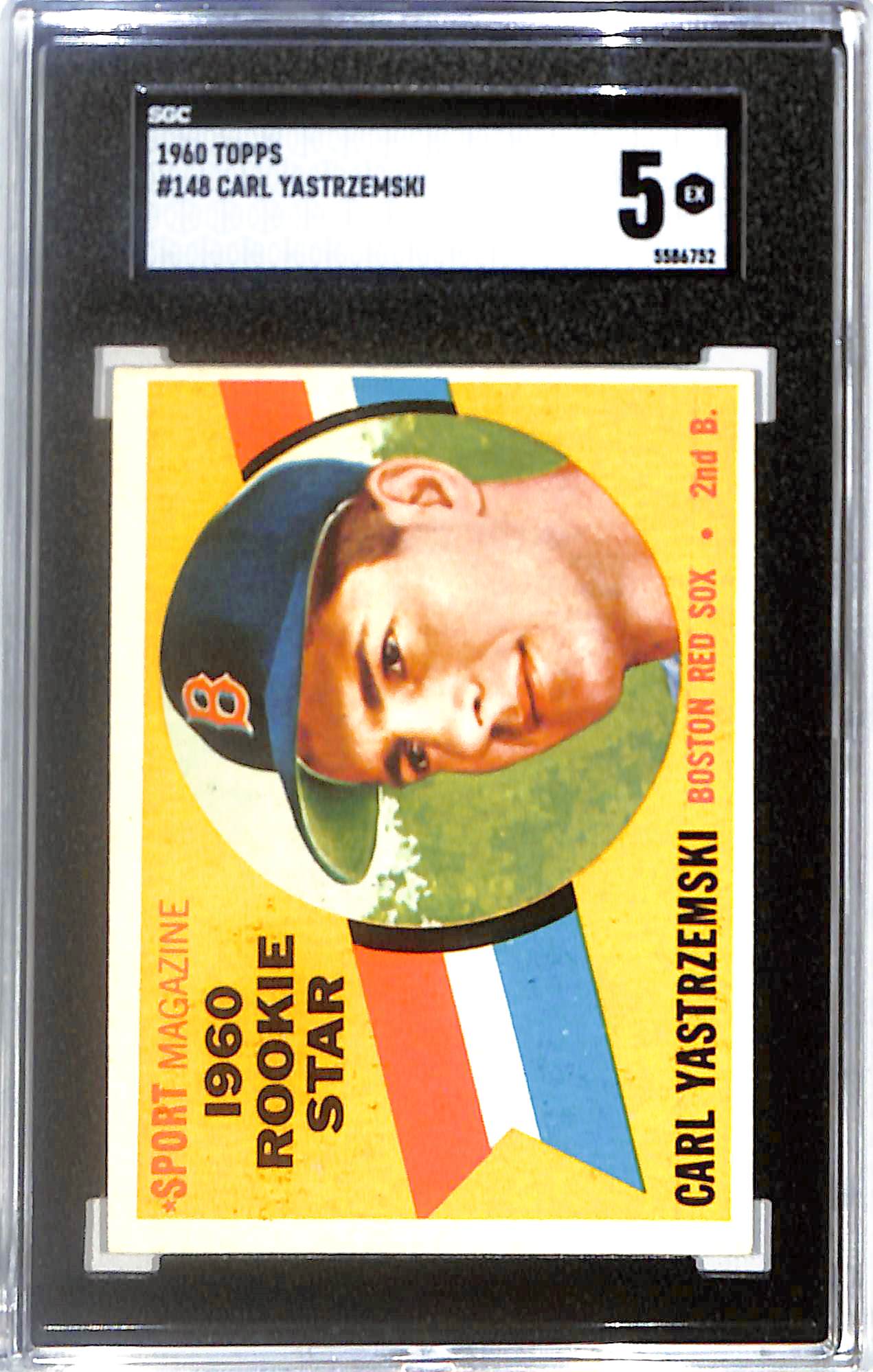
Here’s where things get interesting—and where many collectors stumble. The Yaz rookie card is notoriously finicky when it comes to condition. The red borders are prone to chipping, the corners take a beating, and the surface can develop unsightly creases if not stored properly. A card that’s just a few grades lower can see its value drop by 50% or more. That’s why grading is non-negotiable for serious buyers. A PSA 7 might be a great card for a casual collector, but if you’re eyeing long-term value, you’ll want to aim for a PSA 8 or higher.
But grading isn’t just about the numbers. It’s about the story the card tells. A Yaz rookie with a clean centering, sharp corners, and vibrant colors feels like a relic plucked from a 1960s shoebox. A card with rounded corners or print defects? That’s a card that’s lived a life—and not necessarily a glamorous one. The best Yaz rookies have a certain presence, a je ne sais quoi that makes them feel alive. That’s the kind of card that appreciates over time, not just in dollar value, but in emotional resonance.
For those willing to take the plunge on a raw card, patience is key. A well-preserved ungraded copy can be a hidden gem, especially if it’s slabbed later. But be warned: the market is littered with overgraded cards that don’t hold up under scrutiny. Always buy from reputable sellers, and if possible, get a second opinion before committing.
The Yaz Effect: How His Legacy Influences Card Values
Carl Yastrzemski’s career wasn’t just long—it was legendary. Eighteen All-Star appearances. Over 3,000 hits. A Triple Crown. Three Gold Gloves. And let’s not forget his 1967 MVP season, a year so iconic it’s still whispered about in Boston like a sacred text. That kind of résumé doesn’t just disappear when the card market moves on. It lingers, casting a long shadow over every piece of memorabilia tied to him.
But here’s the twist: Yaz’s legacy isn’t as marketable as some of his contemporaries. He wasn’t a flamboyant showman like Mantle, nor did he have the tragic mystique of a Roberto Clemente. He was, in many ways, the anti-hero—a quiet, steady force who let his bat do the talking. That makes him beloved by purists but less of a headline-grabber for casual fans. As a result, his rookie card doesn’t benefit from the same speculative frenzy as, say, a Mike Trout or a Derek Jeter. It’s a card for the connoisseur, not the flash-in-the-pan investor.
Still, Yaz’s appeal is undeniable. He’s the kind of player who grows on you, like a fine wine or a favorite song you didn’t realize you loved until the third listen. Collectors who gravitate toward his card often do so because they feel something when they hold it—not just because it’s a potential goldmine. That emotional connection is what keeps the market stable. Even in a downturn, Yaz’s rookie card doesn’t vanish. It lingers, waiting for the next generation of fans to discover its magic.
Investment Potential: Is the Yaz Rookie Card a Sleeper or a Stagnant Asset?
If you’re looking for a card that’s going to triple in value overnight, Yaz’s rookie isn’t it. But if you’re after something with steady, reliable appreciation—and a story that only gets richer with time—then it might just be the perfect fit. The key is to think of it as a cultural asset first, a financial one second. Cards like this aren’t just about ROI; they’re about legacy.
Consider the broader vintage market. The 1960s Topps sets, in general, have seen modest but consistent growth over the past decade. Yaz’s card, as one of the set’s most recognizable, benefits from that tide. While it won’t outpace the stratospheric gains of ultra-rare vintage, it’s unlikely to crash either. The demand is too steady, the supply too finite. And as long as baseball remains America’s pastime, Yaz’s legacy will endure.
That said, there are risks. The vintage market is cyclical. What’s hot today might cool tomorrow. Yaz’s card isn’t immune to that. But unlike some fads, his appeal isn’t tied to a single moment or a viral moment. It’s tied to a career, a franchise, a city. That’s the kind of foundation that lasts.
The Carl Yastrzemski rookie card is a study in contrasts—a card that’s both ordinary and extraordinary, depending on how you look at it. It’s not a million-dollar monster, but it’s not a $50 afterthought either. It’s something in between: a card with soul, with history, with a story that only gets better with time. For collectors who see baseball cards as more than just investments, Yaz’s rookie is a treasure. For those chasing the next big score, it might feel like a missed opportunity. But here’s the thing about legacies: they don’t always announce themselves with fanfare. Sometimes, they just sit there, quietly waiting for the right person to pick them up and see the magic in the details. And in a hobby that’s increasingly dominated by flash and hype, that kind of quiet brilliance is worth its weight in gold.