What if I told you that a single piece of cardboard, no thicker than a credit card, could unlock a treasure trove worth thousands—or even hundreds of thousands—of dollars? Not just any cardboard, mind you, but one that carries the inked visage of a man who once stood at the precipice of baseball immortality. Pete Rose, the all-time hits king, whose controversial legacy looms as large as his on-field achievements, has become a magnet for collectors seeking not just a piece of history, but a potential goldmine. But here’s the kicker: not all Pete Rose baseball cards are created equal. Some are mere pocket change in the collector’s world, while others command prices that make even seasoned investors do a double-take. So, what separates the wheat from the chaff? And more importantly, which of these cards are worth your hard-earned cash right now?
The Early Years: 1960s Topps Cards and Their Stealth Appreciation
Ah, the 1960s—a decade where baseball cards were as much about chewing gum as they were about nostalgia. Pete Rose’s rookie card, a 1963 Topps issue, is the crown jewel of this era. Printed when Rose was still a fresh-faced rookie bursting onto the scene with the Cincinnati Reds, this card captures a moment before the weight of history settled on his shoulders. Today, a high-grade 1963 Topps Pete Rose rookie can fetch anywhere from $5,000 to $15,000, depending on its condition. But why the steep price tag? Scarcity, my friend. The 1960s were a time when card production was less industrialized, and fewer cards survived in pristine condition. A mint-condition copy is rarer than a no-hitter in the modern era. Then there’s the 1964 Topps card, which, while not a rookie, still holds significant value—especially in high grades. These early Topps issues are the bedrock of Pete Rose’s collectible legacy, and their prices have been quietly climbing as new generations of collectors rediscover the charm of vintage cardboard.

The 1970s Boom: When Pete Rose Became a National Treasure
The 1970s were Pete Rose’s decade. From the “Big Red Machine” era to his infamous collision with Ray Fosse in the 1970 All-Star Game, Rose was everywhere. Collectors took notice, and card companies like Topps and Fleer rushed to immortalize him in cardboard. The 1974 Topps card, featuring Rose in his Reds uniform, is a standout. In near-mint condition, it can sell for $1,000 to $3,000. But the real gem of this era? The 1975 Topps “Record Breaker” card, issued after Rose broke Ty Cobb’s all-time hits record. This isn’t just a baseball card; it’s a historical artifact. High-grade examples have sold for over $10,000 at auction. Then there’s the 1979 Topps card, capturing Rose in his Philadelphia Phillies uniform as he chased (and eventually broke) Cobb’s record. These cards aren’t just collectibles; they’re time capsules of a bygone era when baseball was as much about grit as it was about grace. The challenge for collectors? Finding these in top-tier condition. The 1970s were a golden age for baseball cards, but also a time when kids played with them, bent them, and left them in shoeboxes. A gem-mint copy is a needle in a haystack.
The 1980s: A Decade of Transition and Rising Values
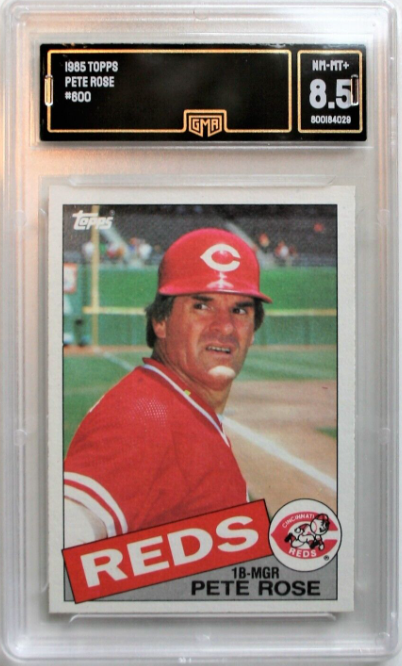
By the 1980s, Pete Rose was a household name, but his career was entering its twilight. Still, the decade produced some of the most sought-after Rose cards, thanks to his continued relevance and the sheer volume of cards produced. The 1985 Topps card is a prime example. While not as valuable as his rookie or 1970s issues, a high-grade 1985 Topps Pete Rose can still command $500 to $1,500. But the real story here is the 1982 Fleer card, which features Rose in his Montreal Expos uniform. Fleer’s 1982 set is a cult favorite among collectors, and Rose’s card is no exception. In top condition, it can fetch $2,000 or more. Then there’s the 1989 Upper Deck card, one of the first modern-era cards to gain significant traction. Upper Deck’s premium quality and Rose’s final years in the majors make this a compelling hold for collectors. The 1980s were a transitional period, but for Pete Rose collectors, it’s a decade rich with opportunity—and potential pitfalls. The sheer number of cards produced means condition is everything. A well-centered, sharp-cornered 1980s Pete Rose card is a unicorn worth chasing.
Modern Era Cards: The Double-Edged Sword of Hype and Scarcity
Fast forward to the modern era, where autographed cards, relics, and limited-edition parallels have turned baseball card collecting into a high-stakes game. Pete Rose’s modern cards are a mixed bag. On one hand, you’ve got autographed cards from brands like Topps, Bowman, and Leaf, which can range from $100 to $1,000 depending on the edition and authentication. On the other hand, you’ve got the flood of memorabilia cards—jersey relics, bat pieces, and patches—that promise exclusivity but often deliver disappointment. The challenge? Separating the wheat from the chaff. Not all modern cards are created equal, and the market is rife with overproduced junk. That said, there are gems to be found. The 2016 Topps Tribute Pete Rose autographed card, for example, has seen steady appreciation due to its limited print run and Rose’s enduring appeal. Then there’s the 2020 Topps Project 2020 card, part of a modern art collaboration that turned Rose’s image into a pop-art masterpiece. These cards aren’t just collectibles; they’re conversation starters. But beware: the modern market is a minefield of hype. Do your homework, and don’t fall for the “limited edition” trap unless the numbers truly justify the price.
The Wild Cards: Error Cards, Variations, and the Hunt for the Uncommon
Every collector dreams of stumbling upon a hidden gem—a card that’s rare not just in condition, but in its very existence. Pete Rose’s error cards and variations are the stuff of legend. Take the 1975 Topps “Record Breaker” card, which was printed with a misspelled name (“Rosie” instead of “Rose”) on some versions. These error cards can sell for a premium, especially if they’re in high grade. Then there’s the 1983 Topps Traded card, which features Rose in a Phillies uniform but was printed with a white border instead of the standard gray. These variations are the holy grail for specialists, and their prices reflect that. The challenge? Spotting them in the wild. Error cards are often buried in stacks of commons, and variations can be easy to overlook. But for those who know what to look for, the hunt is half the fun. The thrill of finding a $500 card for $5 at a garage sale is unmatched in the collecting world. It’s the ultimate test of patience, knowledge, and a little bit of luck.
The Investment Angle: Is Pete Rose Worth the Gamble?
So, you’re considering diving into the Pete Rose card market. Is it a smart investment? The answer, as with most things in collecting, is: it depends. Pete Rose’s legacy is complicated, and that’s reflected in the market. His cards aren’t as universally beloved as, say, Mickey Mantle or Babe Ruth, but they’re not as polarizing as, say, Shohei Ohtani’s early cards. The key is to focus on the cards with the strongest fundamentals: strong print runs, iconic moments, and high-grade survival rates. The 1963 and 1975 Topps cards are safe bets. The 1985 Topps and modern autographed cards? Proceed with caution. The market for Pete Rose cards is niche but growing, and as long as his legacy continues to fascinate fans, his cards will hold value. But remember: investing in sports cards isn’t like investing in stocks. There’s no dividend, no guaranteed return. It’s a game of patience, knowledge, and a little bit of luck. The real reward? The joy of owning a piece of baseball history—and the bragging rights that come with it.
The world of Pete Rose baseball cards is a labyrinth of history, nostalgia, and potential profit. From the pristine corners of a 1963 rookie to the autographed relics of the modern era, each card tells a story—not just about Pete Rose, but about the collectors who’ve chased them for decades. The challenge? Knowing which cards are worth your time, your money, and your heart. But for those who take the plunge, the rewards can be as sweet as a game-winning hit in the bottom of the ninth. So, dust off those shoeboxes, fire up the grading services, and start hunting. The next Pete Rose card gem might be hiding in plain sight.