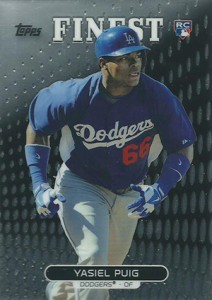
The rookie card of Yasiel Puig is more than just a piece of cardboard; it’s a time capsule, a frozen moment where raw talent, unbridled passion, and the intoxicating allure of the unknown collided in a single frame. When Puig burst onto the MLB scene in 2013, he wasn’t just another prospect—he was a comet, streaking across the baseball firmament with a flair that made even the most jaded observers sit up and take notice. His rookie card, minted in the same year, encapsulates that fleeting magic, a tangible artifact of a player who played with the intensity of a man who knew he was living a dream. But is this card a hidden gem buried in the sands of time, or merely a victim of hype that has long since faded? To answer that, we must dive into the story behind the card, the market forces that shape its value, and the intangible qualities that make it resonate with collectors.
The Mythic Arrival: Puig’s Rookie Season as a Cultural Phenomenon
Yasiel Puig’s rookie season was less a performance and more a spectacle. From his first at-bat—a towering home run that announced his arrival like a sonic boom—Puig became the embodiment of baseball’s most intoxicating promise: unfiltered talent, unapologetic style, and an almost mythic connection to the game’s soul. His rookie card, issued in 2013, didn’t just document his debut; it captured the essence of a player who played as if every swing, every sprint, every high-five was a love letter to the game itself. Collectors weren’t just buying a piece of cardboard; they were acquiring a slice of that electric energy, a tangible link to a season where Puig wasn’t just a player—he was a phenomenon.

The card’s imagery often mirrors Puig’s own style—vibrant, dynamic, and impossible to ignore. Whether it’s a Topps flagship issue with its bold, almost cinematic framing or a limited-edition autograph card that feels like a signed contract with destiny, the rookie card serves as a visual echo of Puig’s rookie-year persona. It’s not just a collectible; it’s a relic of a time when baseball felt alive in ways it hadn’t in years.
The Market’s Whims: Why Puig’s Rookie Card Defies Easy Valuation
Valuing Yasiel Puig’s rookie card is like trying to predict the trajectory of a fly ball in a hurricane—it’s messy, unpredictable, and often defies logic. The card’s market value has been a rollercoaster, swinging wildly between peaks of enthusiasm and valleys of indifference. Part of this volatility stems from Puig’s polarizing career trajectory. After his meteoric rise, Puig’s performance became a Rorschach test for fans: some saw a superstar whose potential was tragically unfulfilled, while others viewed him as a cautionary tale of unchecked talent squandered. This duality has seeped into the card’s market, creating a divide between those who see it as a relic of greatness and those who dismiss it as a product of fleeting hype.
Scarcity plays a role, too. While Puig’s rookie card isn’t as rare as a 1952 Mickey Mantle, certain parallels exist in the way collectors chase its most coveted variants. Autographed cards, especially those with on-card signatures, have become the crown jewels of Puig’s rookie portfolio. The thrill of owning a piece of memorabilia that bears the signature of a player who once seemed destined for immortality is a powerful draw. But even here, the market is fickle. A surge in demand for Puig’s autographed cards in 2020, driven by nostalgia and the resurgence of his cult following, sent prices soaring—only for the bubble to deflate as quickly as it formed.
Then there’s the grading factor. A PSA 10 Puig rookie can command a premium that feels almost irrational, a testament to the card’s ability to transcend its physical form and become a symbol of what could have been. But grading is as much art as science, and the subjectivity of it all adds another layer of unpredictability to the card’s value. Is the Puig rookie card a hidden gem, or is it a house of cards built on the shaky foundation of “what if”? The answer depends on who you ask—and when you ask.
The Intangible Allure: What Makes Puig’s Rookie Card More Than Just Ink and Cardstock
To reduce Puig’s rookie card to its market value is to miss the point entirely. This card is a vessel for storytelling, a blank canvas onto which collectors project their memories, their hopes, and their regrets. For some, it’s a reminder of a time when baseball felt unpredictable and thrilling. For others, it’s a symbol of a player whose career didn’t live up to the hype—a bittersweet keepsake of a dream deferred. The card’s value isn’t just in its price tag; it’s in the emotions it evokes, the narratives it inspires, and the way it connects fans to a fleeting moment in time.
Consider the design of Puig’s rookie cards. Many feature him in action, his body coiled with the kinetic energy of a player who plays every game like it’s his last. The color schemes are bold, the photography is dynamic, and the overall aesthetic is one of unbridled exuberance. These aren’t just cards; they’re visual symphonies, compositions that capture the essence of Puig’s rookie-year persona. Even the most mundane Puig rookie card—say, a base Topps issue—feels weighty because of the player it depicts. It’s as if the card itself is imbued with Puig’s spirit, a silent cheerleader for the player he once was and the legend he could have become.
There’s also the cultural context to consider. Puig’s rookie season coincided with the rise of social media’s influence on sports fandom. His viral moments—whether it was his bat flips, his celebratory dances, or his sheer joy in playing—were tailor-made for the digital age. The rookie card, in turn, became a physical extension of that digital phenomenon. Collectors weren’t just buying a piece of memorabilia; they were buying a piece of internet history, a tangible artifact of a time when baseball’s stars were as likely to trend on Twitter as they were to grace the cover of Sports Illustrated.
The Investment Paradox: Is Puig’s Rookie Card a Smart Bet or a Gamble?
If you’re viewing Puig’s rookie card through the lens of pure investment, the calculus is fraught with uncertainty. The card’s value has been a rollercoaster, and while there have been moments where it’s soared to dizzying heights, those peaks have often been followed by steep declines. The question isn’t just whether Puig’s rookie card will appreciate over time—it’s whether it will ever regain the luster it had during his rookie season. For some collectors, that uncertainty is part of the appeal. There’s a thrill in betting on a player whose legacy is still being written, a gamble that feels more like a labor of love than a cold financial calculation.
Yet, there’s a case to be made for Puig’s rookie card as a long-term hold. Baseball cards, like fine wine, often appreciate in value as nostalgia deepens and the player’s legacy crystallizes. Puig may never be enshrined in Cooperstown, but his rookie card could become a sought-after artifact of a bygone era, a relic of a time when baseball was as much about spectacle as it was about statistics. The card’s value isn’t just in its potential to appreciate; it’s in its ability to serve as a conversation starter, a bridge between generations of fans who remember Puig’s rookie season and those who are discovering his legend for the first time.
The key, as with any collectible, is patience. The market for Puig’s rookie card may ebb and flow, but its cultural significance is unlikely to fade entirely. It’s a card that tells a story—a story of a player who captivated the world, a story of a game that never fails to produce larger-than-life characters, and a story of a hobby that thrives on the intangible magic of what could have been.
The Yasiel Puig rookie card is a paradox wrapped in cardboard—a tangible artifact of a fleeting moment, a market anomaly that defies easy valuation, and a vessel for the emotions of a fanbase that refuses to let go. It’s not just a piece of memorabilia; it’s a time machine, a way to revisit the heady days of 2013 when Puig’s arrival felt like the dawn of a new era. Whether you see it as a hidden gem or a product of hype depends on your perspective, but one thing is certain: this card is more than just ink and cardstock. It’s a testament to the power of baseball to captivate, to inspire, and to leave an indelible mark on the hearts of those who love the game. And in a world where so much feels transient, that’s a legacy worth holding onto.