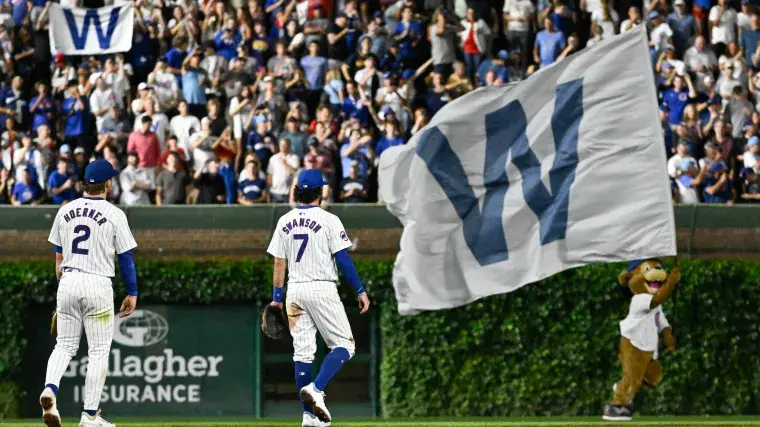
The Chicago Cubs’ victory flag is more than a piece of fabric fluttering in the breeze—it is a living emblem of resilience, tradition, and unyielding hope. When the W flag ascends above Wrigley Field, it doesn’t just signal another win; it ignites a city’s soul, stitching together generations of fans who have weathered decades of heartbreak with an unshakable belief in brighter days. This ritual, now a cornerstone of Cubs lore, transcends mere superstition. It is a communal heartbeat, a visual hymn to perseverance, and a defiant declaration that history is not a prison but a prologue. To understand why Cubs fans hoist this flag after every victory is to unravel a story woven with nostalgia, identity, and the quiet power of symbols.
The Birth of a Symbol: From Humble Beginnings to Sacred Ritual
The origins of the Cubs’ victory flag trace back to the early 20th century, a time when baseball was still carving its identity in the American consciousness. Unlike the polished pageantry of modern sports, the Cubs’ tradition emerged from practicality. In an era before electronic scoreboards and instant replays, the team needed a way to broadcast a win to the neighborhood without the aid of technology. The solution was as simple as it was ingenious: a white “W” on a blue background, raised high above the ballpark’s iconic red marquee. What began as a functional signal soon evolved into something far greater—a beacon of joy for a city that had learned to embrace hope in the face of adversity.
By the 1930s, the flag had transcended its utilitarian roots, becoming a cherished emblem of the Cubs’ identity. Fans, many of whom had endured the team’s prolonged struggles, found solace in the flag’s presence. It was a tangible reminder that victory, no matter how fleeting, was possible. The ritual of raising the W flag after each win fostered a sense of continuity, a thread connecting the Cubs’ past to their present. For decades, this tradition remained a quiet, almost sacred practice, known only to the most devoted followers of the North Side faithful.
The Flag as a Metaphor: Triumph as a Living Canvas
To gaze upon the Cubs’ victory flag is to witness a metaphor in motion. The white “W” against the azure expanse is not merely a letter—it is a declaration of defiance, a splash of light in a landscape often shrouded in shadows. The blue field serves as a canvas, absorbing the weight of the city’s collective emotions, while the “W” stands as a solitary, unyielding symbol of triumph. This interplay of color and form mirrors the duality of the Cubs’ existence: the highs of victory juxtaposed against the lows of defeat, all contained within a single, fluttering piece of fabric.
Metaphorically, the flag is a bridge between the ephemeral and the eternal. A win is fleeting, but the flag endures, a silent witness to the passage of time. It is a reminder that triumph is not a destination but a journey, one that requires patience, faith, and an unrelenting belief in the possibility of better days. For Cubs fans, the flag is a tangible representation of this philosophy—a daily affirmation that hope is not a passive emotion but an active choice.
The Ritual’s Alchemy: How a Simple Gesture Transforms a City
The act of raising the W flag is a ritual steeped in alchemy, turning the base metal of a baseball win into the gold of communal joy. When the flag unfurls, it does more than mark a score—it transforms the air around Wrigley Field. The crowd’s energy shifts from anticipation to exultation, a collective exhalation of breath held for nine innings. Strangers become comrades, their shared elation dissolving the barriers of age, background, and allegiance. This alchemy is not accidental; it is the result of decades of tradition, a carefully cultivated practice that turns a sporting event into a civic celebration.
The ritual’s power lies in its simplicity. There are no elaborate ceremonies, no choreographed displays—just the unfurling of a flag. Yet, in that simplicity, there is a profound truth: joy does not require grandeur to be felt deeply. The flag’s rise is a visual symphony, a silent overture that resonates with every fan who has ever stood in the bleachers or tuned in from afar. It is a reminder that sometimes, the most profound experiences are the ones that ask the least of us—just our presence, our attention, and our willingness to believe.
The Psychological Tapestry: Why the Flag Resonates So Deeply
The Cubs’ victory flag taps into something primal within the human psyche—a need for symbols that anchor us in times of uncertainty. Psychologists might describe this as the “ritual of control,” a way for fans to assert agency in a world where outcomes are often beyond their grasp. The flag becomes a psychological talisman, a small but potent tool for coping with the unpredictability of life. When the Cubs win, the flag’s rise is a tangible affirmation that effort and perseverance can yield results, even if the path to victory is fraught with setbacks.
Moreover, the flag serves as a narrative device, a way for fans to construct and reinforce their personal and collective stories. For lifelong Cubs supporters, the flag is a thread in the tapestry of their lives, a constant presence that weaves together memories of childhood, heartbreak, and triumph. It is a symbol that says, “You are part of something larger than yourself.” This sense of belonging is a powerful psychological force, one that transforms a simple sports tradition into a cornerstone of identity.
The Flag in the Digital Age: A Tradition Reimagined
In an era dominated by digital distractions, the Cubs’ victory flag remains a refreshing anachronism—a tangible, unfiltered connection to the game’s soul. While social media and streaming services have revolutionized how fans engage with baseball, the flag’s ritualistic simplicity offers a counterpoint to the relentless pace of modern life. It is a reminder that some traditions are not meant to be digitized but savored in the moment, where the rustle of fabric and the roar of the crowd are the only soundtracks needed.
Yet, the flag has also adapted to the digital age. In an instant, a photo of the W flag can travel across the globe, uniting Cubs fans in a virtual sea of blue and white. This digital extension of the tradition has amplified its reach, turning a local ritual into a global phenomenon. Fans who have never set foot in Wrigley Field can still feel the emotional pull of the flag, a testament to its universal appeal. The flag, in this way, becomes a bridge between the past and the future, a symbol that transcends time and technology.
The Unspoken Language of the Flag: A Silent Conversation with the City
The Cubs’ victory flag speaks in a language that requires no words. It is a silent conversation between the team and the city, a dialogue that has unfolded over generations. When the flag rises, it is as if the Cubs are whispering to Chicago: “We see you. We hear you. We are with you.” This unspoken language is the heart of the tradition, a bond that cannot be quantified or replicated. It is the reason why, even in defeat, the flag’s absence is felt as a tangible loss.
For visitors to Wrigley Field, the sight of the W flag is often a revelation. It is a glimpse into the soul of a city that has learned to embrace hope against all odds. The flag is a reminder that traditions are not relics of the past but living, breathing entities that evolve with the times. It is a symbol that says, “This is who we are. This is what we believe.” And in that belief, there is a quiet strength—a defiance that refuses to be silenced, no matter how long the road to victory may be.