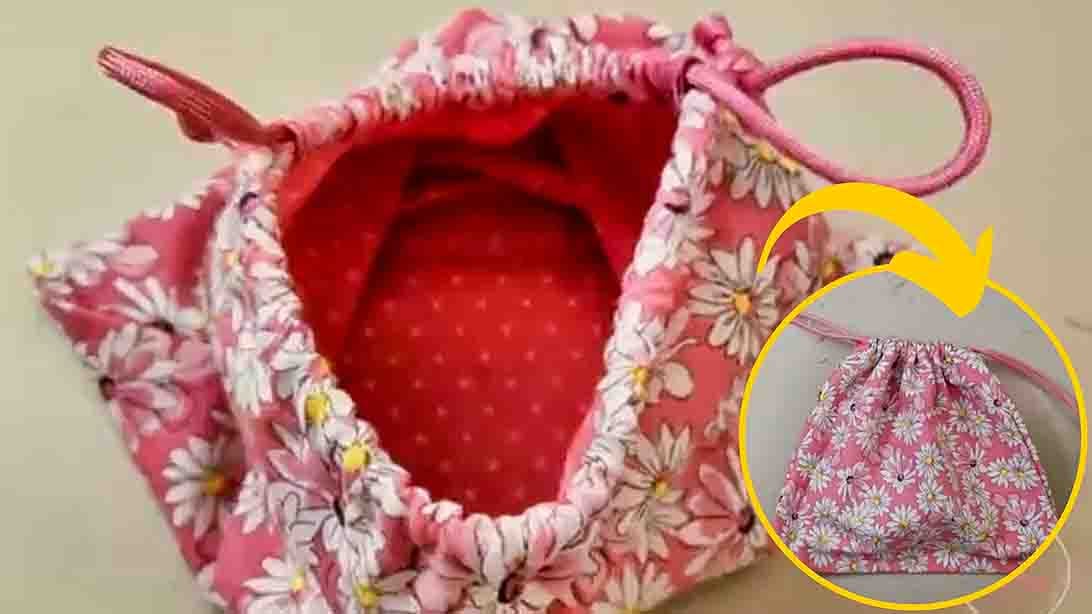
Crafting a drawstring bag is akin to weaving a secret vessel—one that elegantly folds your essentials into its embrace with a charm as timeless as a sailor’s knot. This simple yet versatile creation holds a magnetic appeal, effortlessly blending function and fashion. For those stepping into the realm of DIY, it offers a gratifying journey through textures, stitches, and the subtle dance of fabric and cord. Here lies not just a tutorial, but an invitation into the alchemy of making something uniquely yours, transforming basic materials into a cherished accessory.
Gathering Your Materials: The Foundation of Creation
Before embarking on your stitching adventure, assemble the components that will breathe life into your bag. The canvas of your project is fabric—choose woven cotton, canvas, or lightweight denim for durability and ease of handling. A yard is ample for a standard-sized drawstring bag but consider vibrant prints or textured textiles to imbue personality. Complement this with matching or contrasting thread, maintaining a strong polyester or cotton blend for resilience.
The drawstrings themselves can be made from sturdy cord, ribbon, or even paracord, introducing tactile contrast. Standard measurements hover around ¼ inch to ⅜ inch in diameter, with lengths roughly double the bag’s width plus a few extra inches for ease. Finally, equip yourself with sewing essentials: pins, scissors, a ruler, and a sewing machine or needle for hand stitching, ensuring a smooth workflow.
Cutting the Fabric: Sculpting the Silhouette
Picture the fabric as a blank canvas awaiting geometric precision. Begin by measuring and marking two rectangles of equal dimensions—commonly 15 inches wide by 17 inches tall for a medium-sized bag. Meticulous measuring ensures symmetry, foundational to the bag’s polished appearance.
Cut along the markings with crisp, deliberate motions. Clean edges facilitate easier sewing and prevent excessive fraying. Optional: If your fabric is prone to unraveling, consider finishing edges with a zigzag stitch or pinking shears before the construction phase. These preparatory steps echo the care of a sculptor smoothing details before unveiling the form beneath.
Creating the Channel: Weaving Pathways for Drawstrings
Central to the bag’s allure is the tube where the drawstring will glide seamlessly, much like a serpent within a labyrinth. To create this, fold the top edge of each fabric panel down about one inch towards the wrong side, then press with an iron for a crisp crease.
Stitch along the edge, leaving ample space for the drawstring to thread through without resistance. This channel not only guides functionality but also frames the bag’s opening with professional finesse. When sewn neatly, it mimics architectural details—both form and function harmonizing.
Assembling the Bag: From Fragments to Form
With channels in place, unite the two fabric rectangles, aligning right sides together like pages in a book. Pin along the sides and bottom, ensuring edges meet precisely. Now, stitch all around, leaving top channels untouched. Use a straight stitch with a seam allowance of approximately ½ inch for sturdy seams.
For enhanced robustness, employ a double stitch or backstitch at the beginning and end of your sewing. Once complete, turn the bag right side out. As the fabric flips, the bag begins to take its intended shape—transforming from flat layers into a three-dimensional vessel ready to cradle your treasures.
Inserting the Drawstrings: The Art of Closure
The insertion of drawstrings is a pivotal gesture—it brings the bag to life, allowing it to cinch closed like a treasure pouch. Begin by attaching a safety pin to one end of the cord. This simple yet ingenious tool becomes your guide, threading the cord through the channel on the first side, emerging at the same level on the opposite side.
Repeat the threading with the second drawstring on the other side, creating two loops that, when pulled, draw the bag’s opening tightly closed. Knot the ends of each cord securely to prevent fraying and slipping. Tailor the length to your preference; longer cords may double as straps, while shorter ones serve solely as closures.
Personalizing Your Drawstring Bag: Infusing Character and Style
Beyond construct and function lies the realm of creativity—the opportunity to imbue your bag with personal flair. Consider adding appliques, embroidery, or fabric paint to transform the blank fabric into a canvas of expression. Decorative buttons or tassels at the ends of the drawstrings can elevate the aesthetic, merging practicality with artistry.
Experiment with fabric combinations—contrast inner lining versus outer shell, or introduce pockets within for organization. These touches elevate the piece from mere utility to a statement of individual style, resonating with the intimate spirit woven into every stitch.
Care and Maintenance: Preserving the Integrity of Your Creation
A drawstring bag is a reliable companion, but like any cherished artifact, it benefits from mindful care. Most cotton or canvas bags withstand gentle machine washing. However, to retain colors and structural integrity, opt for cold water and air drying.
Regularly inspect the drawstrings and seams for wear, reinforcing with additional stitches if necessary. Such attentive upkeep extends the lifespan of your creation, ensuring it remains both functional and charming through countless uses.
The Unique Appeal of the Drawstring Bag
The drawstring bag occupies a unique nexus between simplicity and sophistication. It is a symbol of minimalism amplified by multifunctionality. From the casual tote effortlessly cinched at the gym to a stylish accessory echoing bohemian whimsy, its design transcends trends. Crafting your own bag harnesses this timeless quality—each fold, stitch, and drawstring placement echoing the imprint of your hand and spirit.
In an era dominated by mass production, such personalized creations stand as quiet rebellions; testaments to creativity, patience, and the joy of making. The drawstring bag, humble yet profound, embodies that tactile connection to handcraft, inviting you to carry not just belongings but a story etched in fabric and thread.