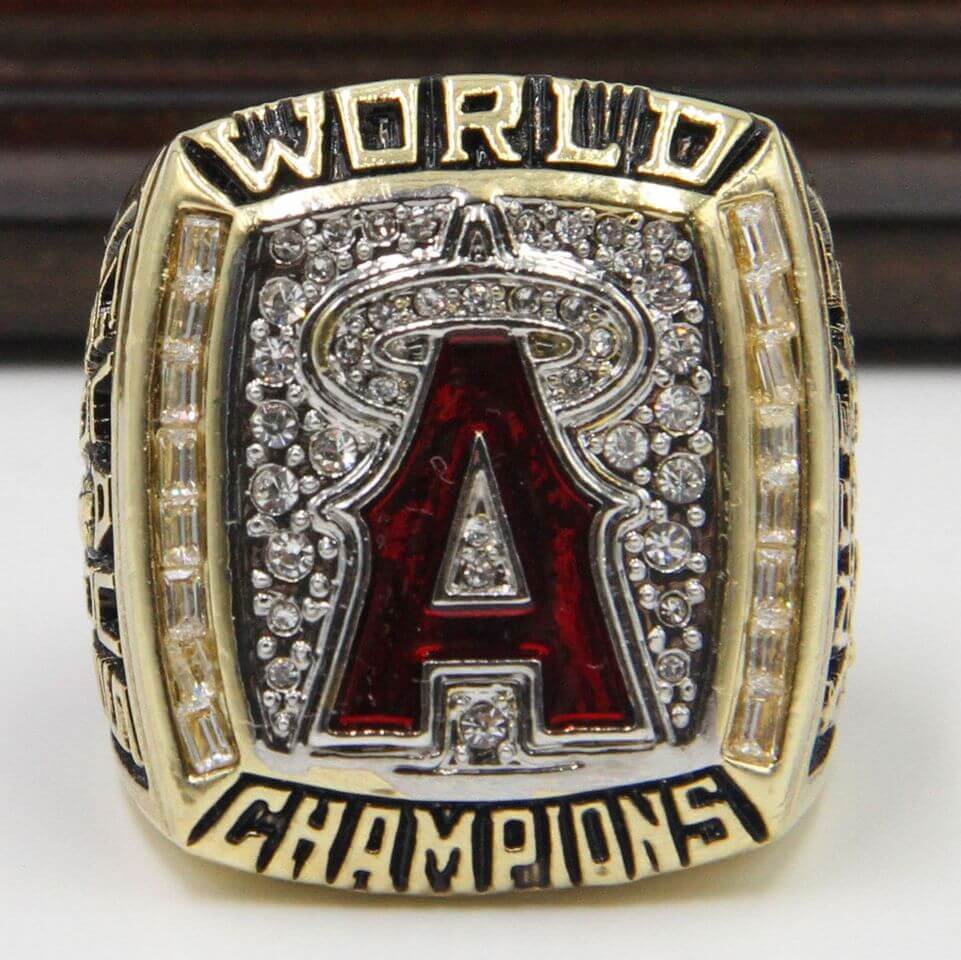
The 2002 Los Angeles Angels of Anaheim were not supposed to win the World Series. In a league increasingly dominated by powerhouse franchises with deep pockets and star-studded lineups, the Angels entered the season as a team of misfits—a motley crew of underappreciated talents, unproven rookies, and a manager whose fiery passion belied his lack of postseason experience. Yet, against all odds, they defied the skeptics, the pundits, and the very fabric of baseball logic to hoist the Commissioner’s Trophy in a triumph that remains one of the most improbable in modern sports history. How does a team with no clear superstar, no dominant rotation, and a bullpen that had been labeled a liability transform into champions? The answer lies not in a single moment, but in a season-long symphony of resilience, chemistry, and a relentless refusal to accept defeat.
The Underdog’s Genesis: A Roster Forged in Obscurity
When the Angels took the field on Opening Day 2002, their roster read like a footnote in the annals of baseball trivia. The starting rotation featured a mix of journeymen and untested arms, with names like Ramon Ortiz and Jarrod Washburn—players who had never been the cornerstone of a contending team. The offense was led not by a slugger with 50-home-run potential, but by a platoon of complementary hitters who thrived in the shadows of bigger markets. Tim Salmon, the team’s lone All-Star, was a steady presence, but his power numbers had waned in recent years. The bullpen, once a glaring weakness, became a fortress under the tutelage of manager Mike Scioscia, who instilled a culture of relentless pressure and tactical precision.
What the Angels lacked in star power, they made up for in cohesion. The roster was a patchwork quilt of players who had been discarded, overlooked, or underestimated by other organizations. Players like Scott Spiezio, a utility infielder with a knack for clutch hits, and Darin Erstad, a converted outfielder turned Gold Glove center fielder, became the unsung heroes of the postseason. The team’s identity was built on a foundation of humility and hard work—a far cry from the superteams of the era, where egos and contracts often overshadowed the game itself.
The Spark That Lit the Fire: The Rally Monkey Phenomenon
No discussion of the 2002 Angels would be complete without acknowledging the Rally Monkey, a furry orange mascot whose antics became a cultural phenomenon. Born from a fan’s spontaneous gesture in the playoffs, the Rally Monkey—a stuffed animal dangling from a noose—became a symbol of the team’s defiance against the odds. The monkey’s appearances during crucial moments of games were met with roaring approval from the Anaheim crowd, a tangible reminder that this team was playing not just for themselves, but for their fans. The Rally Monkey was more than a gimmick; it was a rallying cry, a psychological weapon that amplified the Angels’ underdog mentality and rattled opposing pitchers.
Yet, the monkey’s magic was merely the visible tip of a deeper psychological iceberg. The Angels’ clubhouse was a cauldron of camaraderie, where players like Troy Glaus, the team’s power-hitting third baseman, and Bengie Molina, the defensive anchor behind the plate, fostered an environment where laughter and resilience went hand in hand. Scioscia’s leadership style—a blend of fiery intensity and unwavering calm—created a balance that allowed the team to thrive under pressure. The Angels didn’t just play together; they played for each other, a dynamic that would prove decisive in the crucible of October.
The Postseason Crucible: Where Underdogs Are Forged
The 2002 playoffs were a gauntlet that would test the Angels’ mettle at every turn. In the American League Division Series, they faced the New York Yankees, a team that had steamrolled through the regular season with a record of 103-58. The Yankees were heavy favorites, their lineup stacked with future Hall of Famers like Derek Jeter, Mariano Rivera, and Alex Rodriguez. Yet, the Angels refused to cower. In a dramatic Game 3, they rallied from a 5-0 deficit in the eighth inning, capped by a two-run homer from Glaus that sent the game into extra innings. The Angels won 9-6, a victory that announced their arrival on the national stage.
The American League Championship Series against the Minnesota Twins was another proving ground. The Twins, led by manager Ron Gardenhire, had upset the Oakland Athletics in the Division Series, but they were no pushover. The Angels’ offense sputtered at times, but their pitching staff—anchored by John Lackey’s poise and Francisco Rodriguez’s electric fastball—kept them afloat. Game 5 was a microcosm of the series: a taut, nerve-wracking affair that saw the Angels overcome a late deficit to win 7-5, thanks in part to a two-run single from Spiezio. The victory sent them to the World Series, where the New York Yankees awaited once more.
The World Series Showdown: A Tale of Two Cities
The 2002 World Series was a clash between the Yankees’ dynasty and the Angels’ underdog spirit. The Yankees, with their $125 million payroll and a lineup that struck fear into pitchers, were the prohibitive favorites. The Angels, meanwhile, were dismissed as a fluke, a team that had lucked into the playoffs and would crumble under the weight of October pressure. Yet, from the first pitch of Game 1, the Angels played with a swagger that belied their underdog status. They jumped out to a 4-0 lead in the first inning, a statement of intent that left the Yankees stunned.
The series was a rollercoaster of emotions. The Angels lost Game 2 in a heartbreaking extra-inning defeat, but they responded with a dominant performance in Game 3, winning 10-4 behind a masterful start from Washburn. Game 4 was a nail-biter, with the Angels prevailing 4-3 on a walk-off single by Adam Kennedy, a utility infielder who had become an unlikely postseason hero. The momentum shifted decisively in Game 6, when the Angels rallied from a 5-0 deficit in the seventh inning to win 6-5, thanks to a two-run homer by Glaus and a clutch RBI single by Molina. The stage was set for a Game 7 showdown, a do-or-die moment that would define the franchise’s legacy.
The Final Act: A Championship Forged in Defiance
Game 7 of the 2002 World Series was a masterclass in resilience. The Angels fell behind early, trailing 5-0 in the sixth inning, but they refused to capitulate. A two-run rally in the sixth inning, sparked by a double from Erstad, reignited their hopes. The turning point came in the eighth, when Glaus launched a towering three-run homer to left field, a blast that silenced the Yankees and sent the Anaheim crowd into a frenzy. The Angels added an insurance run in the ninth, and when Troy Percival struck out Alfonso Soriano to end the game, the celebration began in earnest.
The 2002 Los Angeles Angels were not the most talented team in baseball that year. They were not the most experienced, nor the most feared. But they were the most united, the most relentless, and the most unwilling to accept defeat. Their championship was not just a victory for a franchise; it was a testament to the power of belief, the magic of camaraderie, and the indomitable spirit of the underdog. In a sport where dynasties rise and fall, the Angels’ triumph remains a beacon of hope—a reminder that sometimes, the most extraordinary stories are written not by the privileged, but by those who dare to defy the odds.