The changeup is baseball’s most devious illusionist—a pitch that whispers where it’s going before vanishing into the catcher’s mitt like a magician’s sleight of hand. When executed with the same arm speed as a fastball, it becomes a masterclass in deception, turning velocity into a cruel joke for hitters who expect thunder but receive a whisper. This is the art of the changeup: a pitch that doesn’t just fool the eyes but dismantles the very mechanics of timing, leaving batters swinging at shadows while the ball dances just out of reach.
The Physics of Deception: Why Arm Speed is the Ultimate Misdirection
At its core, the changeup is a study in controlled chaos—a pitch that weaponizes physics against the batter’s instincts. The illusion begins with the arm speed. A fastball’s 90+ mph delivery trains the hitter’s brain to expect a high-velocity projectile, but the changeup, thrown with identical arm action, arrives at the plate at a glacial 75-85 mph. This discrepancy isn’t just a difference in speed; it’s a psychological ambush. The batter’s eyes, trained to track a blur, suddenly confront a pitch that moves like molasses in January, its late break amplifying the deception.
Consider the spin rate. A fastball’s backspin creates an upward lift, making it appear to rise, while a changeup’s topspin (or gyrospin, in advanced cases) generates a tumbling, downward trajectory. When thrown with the same arm speed, the batter perceives the ball as a fastball until the final milliseconds, when gravity and spin conspire to send it plummeting into the strike zone. It’s as if the pitch is a time traveler, arriving at the plate long after the batter’s swing has begun.
The Grip: Where Fingers Become the Puppeteers of Chaos
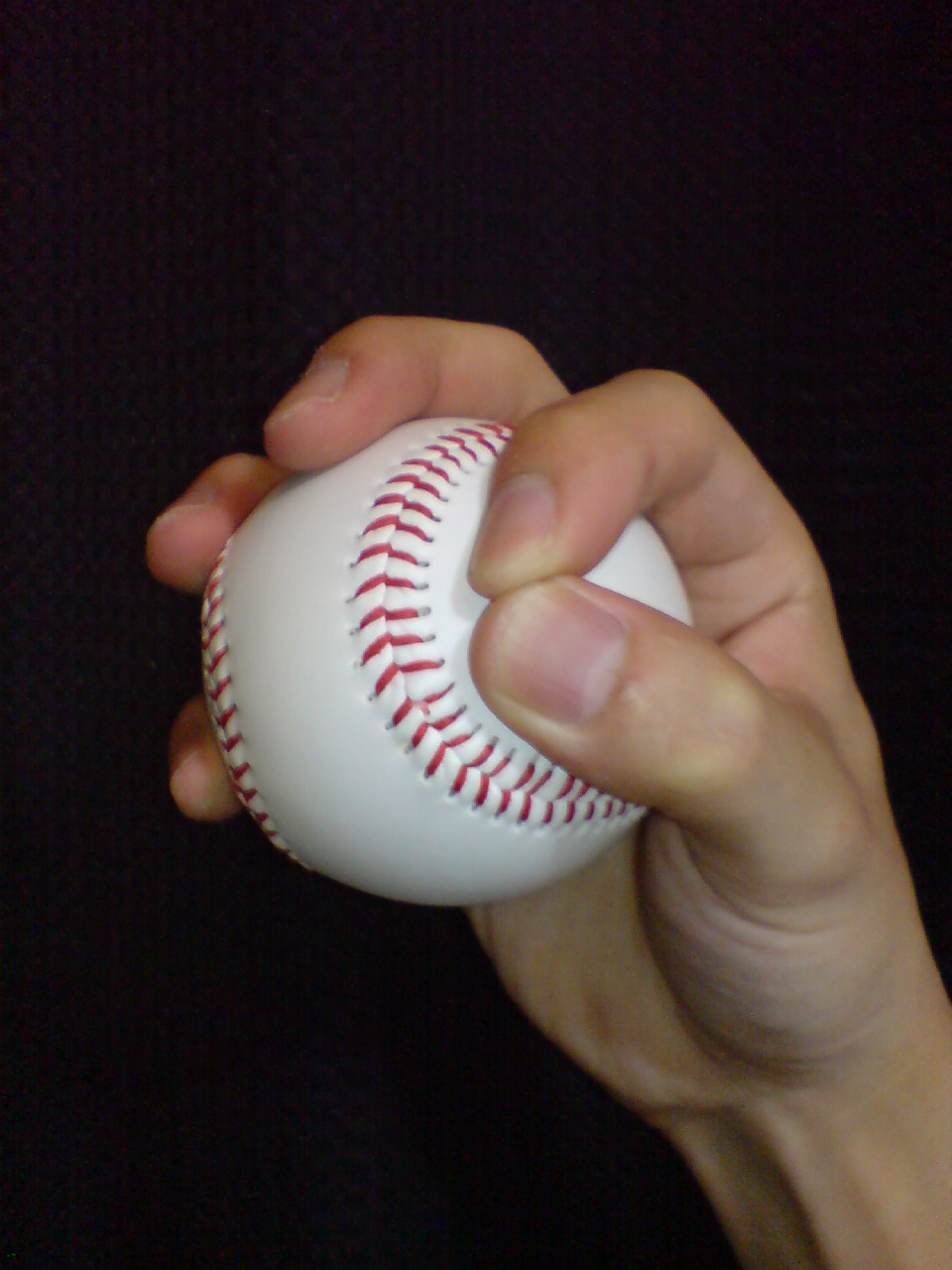
The changeup’s grip is the architect of its subterfuge. Unlike the fastball’s three-finger grip or the curveball’s knuckle bend, the changeup relies on finger pressure and spacing to manipulate the ball’s flight. The most common grip—the circle change—places the thumb and index finger in a loose circle, with the middle and ring fingers draped over the seams. This grip reduces the ball’s spin efficiency, creating a pitch that resists the batter’s expectations.
But the true magic lies in the subtlety. A grip that’s too tight kills the pitch’s movement; too loose, and it becomes a batting practice offering. The pitcher must find the Goldilocks zone—where the ball sits snugly in the hand, fingers exerting just enough pressure to deaden the velocity without compromising control. It’s a tactile ballet, where the slightest misalignment in finger placement can turn a strike into a meatball or a ball into a home run.
Some pitchers experiment with the “pepper grip” or the “split-finger change,” each offering unique movement profiles. The pepper grip, with its three-fingered choke, produces a sharper break, while the split-finger change mimics a fastball’s initial trajectory before diving late. The choice of grip is a personal signature—a fingerprint of deception that defines a pitcher’s arsenal.
The Delivery: A Symphony of Subtle Adjustments
Arm speed alone isn’t enough; the delivery must be a seamless extension of the pitcher’s fastball mechanics. The key lies in the follow-through. A fastball’s release is a whip-like extension of the arm, but the changeup requires a slight deceleration in the wrist and fingers. This isn’t a dramatic slowdown—just enough to rob the pitch of its velocity while maintaining the illusion of a fastball’s intent.
The stride length also plays a crucial role. A shorter stride can help disguise the pitch’s speed, as the batter’s eyes track the pitcher’s momentum rather than the ball’s early flight. Conversely, a longer stride can exaggerate the deception, making the pitch appear to “back up” as it approaches the plate. The pitcher must calibrate their mechanics like a conductor fine-tuning an orchestra, ensuring every motion reinforces the illusion.
Mental cues are equally vital. Some pitchers visualize “pushing” the ball out of their hand, while others focus on a specific release point. The goal is to eliminate any tell that might tip off the batter. Even the pitcher’s facial expressions must remain neutral—no grimaces, no extra effort. The changeup thrives in the shadows of subtlety.
The Psychological Warfare: Breaking the Batter’s Clock
The changeup isn’t just a physical pitch; it’s a mental one. It preys on the batter’s internal clock, a metronome that ticks in milliseconds. A fastball’s 90 mph velocity gives the batter roughly 0.4 seconds to decide whether to swing. The changeup, at 80 mph, extends that window to 0.45 seconds—just enough to make the batter feel like they have time, only to watch the ball vanish into the catcher’s mitt.
This psychological edge is amplified in two-strike counts. A batter who’s already behind in the count is more likely to protect the plate, making them vulnerable to the changeup’s late break. The pitch becomes a psychological trap, luring the batter into a false sense of security before delivering the knockout blow.
Even the best hitters struggle to adjust. The changeup’s deception is so complete that it forces batters to second-guess their instincts. A hitter who fouls off a fastball might adjust their timing, only to be frozen by a changeup that arrives at the same instant. It’s a game of cat and mouse, where the pitcher holds all the cards.
Mastering the Changeup: Drills and Progression
Developing a lethal changeup requires patience and repetition. Start with the grip, practicing the circle change until it feels like an extension of your hand. Then, focus on the delivery, ensuring your arm speed remains consistent with your fastball. Use a radar gun to monitor your velocity—if the changeup is only 5 mph slower, it’s not enough. Aim for a 10-15 mph differential to maximize deception.
One effective drill is the “towel drill,” where you simulate the release without a ball, focusing on wrist and finger pressure. Another is the “long toss changeup,” where you throw the pitch at 60-80 feet to refine your grip and release. Over time, the changeup should feel like a natural extension of your fastball, a pitch that’s just as repeatable as your heater.
Film study is also crucial. Record your sessions and analyze the pitch’s trajectory, looking for any inconsistencies in arm speed or release. Compare it to your fastball—are there any tells? Any hesitation in your delivery? The changeup demands perfection, and even the smallest flaw can give it away.
The Changeup in the Modern Game: A Pitch for the Ages
The changeup has evolved from a novelty to a cornerstone of modern pitching. In an era where velocity dominates, the changeup is the great equalizer—a pitch that doesn’t rely on speed but on deception. Pitchers like Jacob deGrom and Gerrit Cole have elevated the changeup to an art form, using it to neutralize left-handed hitters and set up their fastballs in high-leverage situations.
Its appeal lies in its versatility. A well-thrown changeup can induce weak contact, pop-ups, or even strikeouts. It’s a pitch that works in any count, against any hitter, and in any situation. Whether it’s a 0-2 punch or a 3-2 gamble, the changeup is the ultimate weapon in a pitcher’s arsenal.
But its true beauty is in its simplicity. No windup is too elaborate, no grip too complex. The changeup is a testament to the power of subtlety, a pitch that wins games not with brute force but with cunning. It’s the baseball equivalent of a chess grandmaster outmaneuvering an opponent, a reminder that sometimes, the most effective weapons are the ones you never see coming.