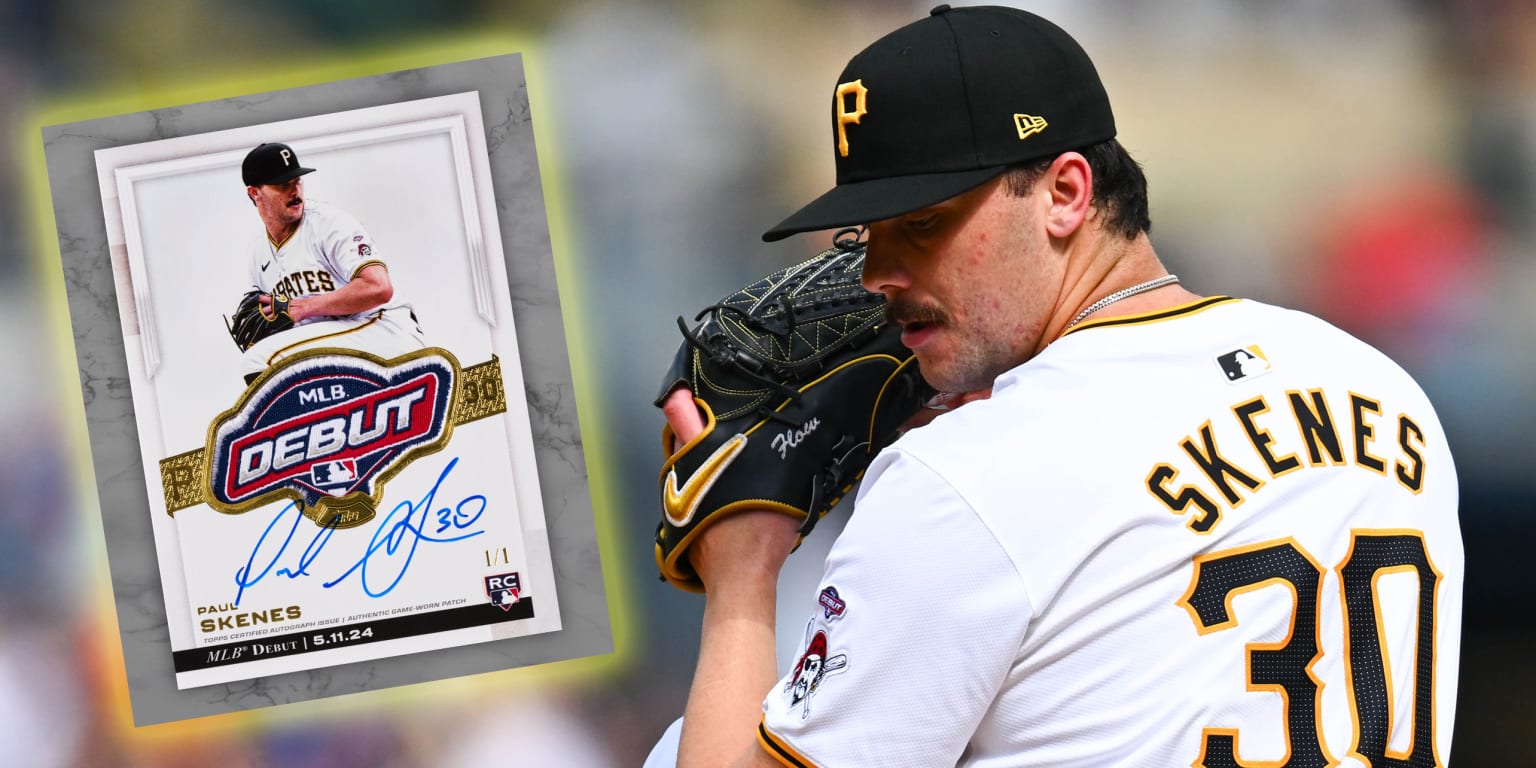
There’s a peculiar alchemy in baseball that transforms a player’s first moments of glory into something far more enduring than mere memory. It’s the way a rookie’s debut—once a fleeting spectacle—becomes a relic, a talisman, a story told and retold until the line between fact and fable blurs. For collectors, this transformation is even more potent. A rookie card, especially one emblazoned with the hallowed “Superfractor” designation, isn’t just cardboard and ink. It’s a vessel of potential, a frozen moment where youth meets destiny. So when I sold my Paul Skenes Superfractor, the decision wasn’t just financial. It was emotional. And like so many before me, I found myself wrestling with the question: Do I regret it?
The Allure of the Superfractor: Why We Chase the Unproven
The Superfractor label is baseball’s version of alchemy—a process that turns the ordinary into the extraordinary. Unlike standard rookie cards, which are bound by the mundane constraints of production runs and market demand, a Superfractor is a limited-edition artifact, often numbering in the mere hundreds. Its value isn’t derived from what it is, but from what it *could* become. A rookie card, no matter how pristine, is just a snapshot until the player on it does something extraordinary.
Paul Skenes arrived in the majors with a reputation that preceded him: a generational arm, a fastball that hums like a freight train, and a presence on the mound that commands attention before the first pitch. The Superfractor, with its glossy finish and bold holographic signature, seemed like a bet on a future that was already unfolding in real time. To hold it was to hold a piece of a story that hadn’t yet reached its climax. That’s the paradox of collecting—we invest not in what is, but in what might be. And in baseball, where careers can pivot on a single pitch, the gamble feels almost sacred.
The Day the Card Changed Hands: A Transaction or a Sacrifice?
Selling the Superfractor wasn’t a decision made in haste. It was the result of weeks of deliberation, of weighing the tangible against the intangible. The offer was substantial—enough to make a dent in student loans, to fund a long-overdue vacation, or to simply pad a savings account that had been stretched thin by the relentless cost of living. On paper, it was a no-brainer. But baseball cards, like baseball itself, are rarely about the numbers on a balance sheet.
There’s a ritual to the transaction. The careful removal of the card from its protective sleeve, the way the light catches the holographic signature, the weight of it in your palm—these are the moments that linger. When the buyer’s payment cleared, it wasn’t just money that exchanged hands. It was a piece of a dream. And dreams, once sold, don’t always return in the same form. Some collectors describe the aftermath as a quiet mourning, a low-grade ache that surfaces when a player they believed in stumbles or, conversely, when they soar beyond expectations. In Skenes’ case, the latter was already happening. His first start was a masterclass in dominance, a performance that left fans and pundits alike whispering about a new era in pitching.
The Double-Edged Sword of Early Investment
Investing in rookie cards is a gamble, but it’s a gamble with rules that feel almost biblical in their fairness. Buy low, sell high. Bet on the underdog. Trust the process. Yet the market has a way of mocking those who take it too seriously. A player’s trajectory is never a straight line. Injuries, slumps, and unforeseen setbacks can turn a prized card into a paperweight overnight. Conversely, a single dominant season can send values skyrocketing beyond all rational explanation.
Skenes’ Superfractor was purchased during a moment of collective optimism, when the idea of a pitcher with his pedigree dominating the majors felt like a foregone conclusion. But baseball has a cruel sense of humor. What if his next outing is a disaster? What if his arm, though gifted, isn’t built for the marathon of a 162-game season? The fear isn’t irrational—it’s the shadow that lingers over every early investment. And yet, that fear is also part of the allure. The thrill of the chase, the rush of conviction, the quiet terror of being wrong—these are the emotions that make collecting more than just a hobby. It’s a relationship with uncertainty.
The Sentimental Weight of a Card: More Than Just an Asset
Financial advisors will tell you that emotions have no place in investment decisions. They’re wrong. The most valuable cards in any collection aren’t the ones that appreciate the most, but the ones that carry the most stories. A Superfractor isn’t just an asset; it’s a time capsule. It captures the moment before a player’s legend solidifies, before the highlight reels and the jersey retirements. It’s the anticipation of greatness, frozen in time.
I remember the first time I watched Skenes pitch in person. The stadium was half-empty, the air thick with the kind of humidity that makes the outfield grass glisten. He struck out the side in the first inning, his fastball painting the black with effortless precision. In that moment, holding the Superfractor in my pocket felt like holding a piece of the future. Now, with the card gone, that future feels slightly more distant, slightly more abstract. It’s a reminder that some things, once sold, can’t be reclaimed—not even by the deepest pockets.
The Market’s Whims: When Logic and Passion Collide
The baseball card market is a microcosm of the sport itself—volatile, unpredictable, and driven by narratives as much as by performance. A player’s value isn’t just a reflection of their stats; it’s a reflection of the stories we tell about them. Mike Trout’s cards appreciate because he’s Mike Trout—a generational talent who defies the aging curve. Meanwhile, a phenom like Julio Rodríguez sees his rookie cards surge after a breakout season, not because of any fundamental change in his skill, but because the market has decided he’s worth the hype.
Skenes’ market trajectory is still unwritten. Will he become a perennial Cy Young candidate? Will injuries derail his career before it truly begins? The market doesn’t wait for answers. It reacts in real time, amplifying the highs and magnifying the lows. Selling the Superfractor was, in part, an acknowledgment of this reality. The card’s value could skyrocket tomorrow, or it could stagnate for years. Either way, the decision to sell was an admission that I couldn’t control the outcome—and that the emotional cost of holding onto it might outweigh the potential financial reward.
The Lingering Question: Was It Worth It?
Regret is a funny thing. It doesn’t always arrive in the form of a glaring mistake, but in the quiet spaces between what was and what could have been. Did I regret selling the Superfractor? Not in the way one might expect. The money was put to good use, and the emotional weight of the decision has faded with time. But the card itself? It’s still there, in the back of my mind, a ghost of a decision that once felt so final.
Perhaps the real question isn’t whether I regret it, but why the question matters at all. Baseball cards, like the game itself, are about more than just outcomes. They’re about the stories we attach to them, the hopes we pin to them, the way they tether us to a sport that has a way of embedding itself in our lives. The Superfractor was never just a card. It was a promise—a promise of greatness, of memories yet to be made, of a future that felt, for a brief moment, within reach.
And maybe that’s the deeper fascination. Not in the card’s value, but in the way it made me feel like a part of something larger than myself. In that sense, selling it wasn’t just a transaction. It was a surrender—a small, necessary loss in the grand scheme of a game that demands we keep betting on the unknown.