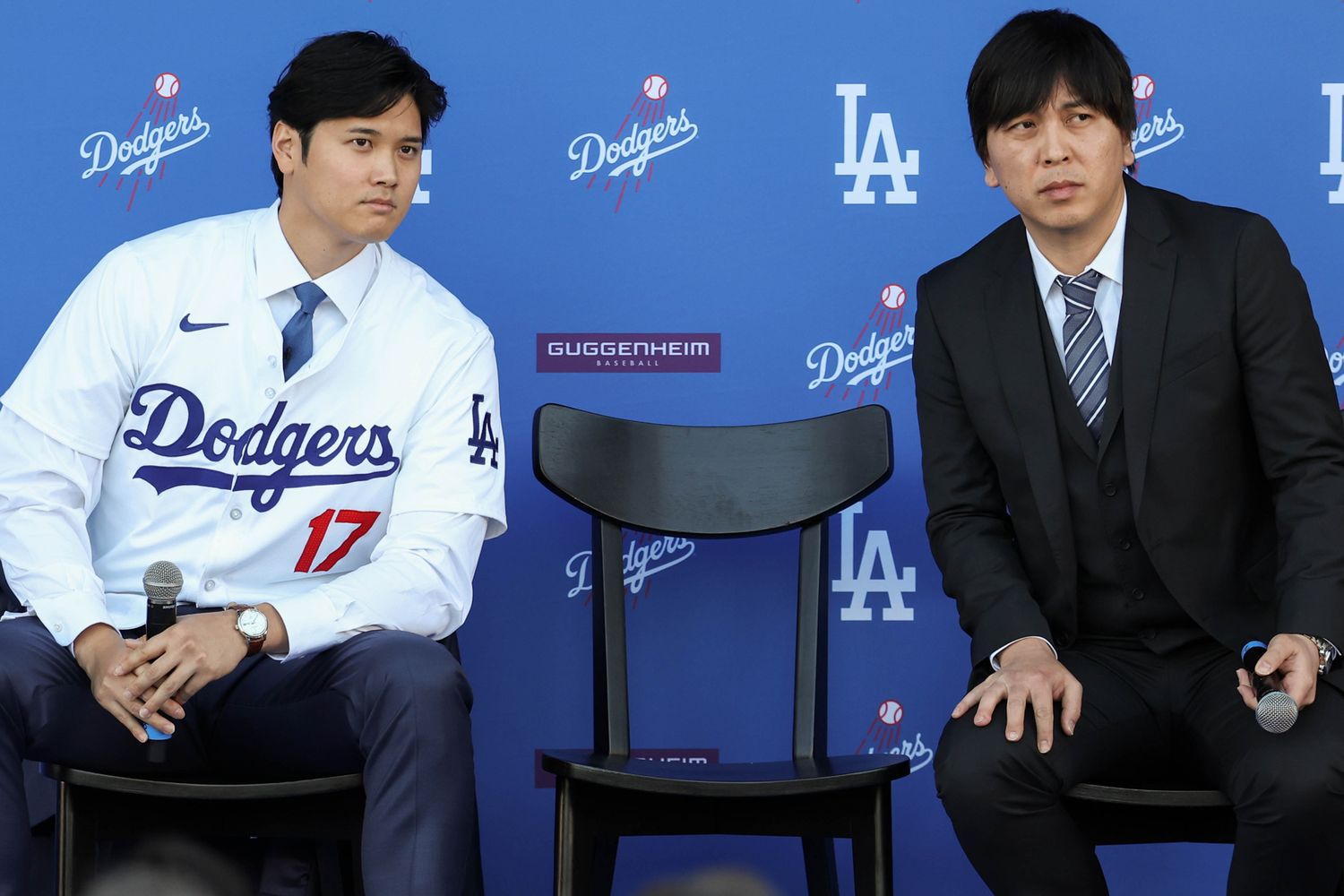
The crack of a bat, the roar of a crowd, the high-stakes drama of a stolen base—baseball is a game of precision, trust, and unwritten rules. But beneath the emerald diamonds and the neon lights of stadiums, another kind of game unfolds: the intricate dance of human relationships, where trust is currency and betrayal leaves a scar. In the heart of this narrative lies a figure once woven into the fabric of one of baseball’s brightest stars—Shohei Ohtani—and the sentence that sent shockwaves through the sport, not for its severity, but for its sheer unexpectedness. This is not just a story of legal consequence; it is a cautionary tale about loyalty, deception, and the fragile architecture of fame.
The Interpreter’s Role: More Than a Translator, a Bridge Between Worlds
In the globalized era of Major League Baseball, where players from Tokyo to Toronto converge under the same banner, the interpreter is more than a linguistic conduit. They are cultural architects, emotional translators, and, at times, the unseen architects of a player’s public persona. Shohei Ohtani, the two-way sensation who redefined the boundaries of the game, relied on an interpreter not just to navigate the nuances of English, but to mediate the expectations of a media ecosystem hungry for access and authenticity.
The interpreter’s role is often invisible until it isn’t. They stand at the intersection of two worlds—one of relentless scrutiny, the other of unspoken pressure. For Ohtani, whose every move was dissected by fans and analysts alike, the interpreter was the silent guardian of his narrative. But when that narrative fractured, the fallout was not confined to the courtroom; it echoed through the dugouts, the front offices, and the living rooms of millions who had come to see Ohtani as something beyond human—a myth in cleats.
The Crime That Shook the Diamond: A Betrayal Writ in Ledger Books
What began as whispers in the backrooms of sports journalism soon erupted into a full-blown scandal. The interpreter, entrusted with Ohtani’s financial and personal affairs, was accused of embezzling millions—sums that, in the world of MLB contracts, are not mere numbers but lifelines to legacy. The crime was not one of violence or malice in the traditional sense; it was a betrayal of trust, a theft not of physical property, but of opportunity. The interpreter allegedly siphoned funds meant for Ohtani’s charitable endeavors, his personal investments, and even his burgeoning brand deals.
In baseball, where every dollar is a statistic, the theft was a home run for the prosecution and a strikeout for the defense. The amounts were staggering—reported in the millions—yet the method was mundane: forged documents, redirected payments, and the slow erosion of a relationship built on mutual dependence. The interpreter, once a confidant, became a cautionary figure, a real-life villain in a sport that often romanticizes its heroes.
The Sentence That Defied Expectations: A Verdict Beyond the Stat Sheet
When the gavel fell, the sentence delivered was not the decade-long incarceration some prognosticators had predicted. Instead, it was a term that left the baseball world—and Ohtani’s legion of fans—stunned into silence. The interpreter was handed a sentence that, while substantial, was far shorter than the maximum allowed under the law. It was a ruling that defied the gravity of the crime, a judicial decision that seemed to weigh mercy over retribution.
Legal analysts scrambled to explain the discrepancy. Was it the interpreter’s cooperation with authorities? The lack of a violent criminal history? The judge’s recognition of the unique circumstances—a case where the victim was not just an individual, but an entire franchise of trust? Whatever the reason, the sentence became a Rorschach test for public opinion. To some, it was justice tempered by nuance; to others, it was a glaring miscarriage of accountability. In a sport that thrives on clear outcomes—wins, losses, ERA, RBI—this verdict was an anomaly, a curveball in a game where the rules are supposed to be immutable.
The Ripple Effect: How a Single Betrayal Alters the Entire League
The consequences of the interpreter’s actions extended far beyond the courtroom. For Ohtani, the betrayal was not just financial; it was existential. The player who had been hailed as a paragon of integrity now faced the unenviable task of rebuilding a reputation tarnished not by his own actions, but by those he had trusted. Sponsors paused. Agents recalculated. The narrative of Ohtani as baseball’s untouchable hero was suddenly punctured by the mundane reality of human fallibility.
For the league, the scandal served as a wake-up call. MLB, already grappling with issues of player safety and mental health, now had to confront the vulnerabilities of its stars in an era of hyper-connectivity. The interpreter’s role, once an afterthought, became a liability. Teams scrambled to implement stricter vetting processes, financial audits, and psychological screenings for those granted access to players’ inner circles. The lesson was clear: in a sport where the margin for error is measured in inches, trust is the most fragile asset of all.
The Human Cost: Beyond the Box Scores and Broadcast Deals
Amid the headlines and the legal jargon, it is easy to forget the human toll. The interpreter, now a convicted felon, faces a future where opportunities are scarce and redemption is a long shot. For Ohtani, the emotional weight of the betrayal lingers. Baseball is a game of resilience, but resilience is tested when the people you rely on become the architects of your undoing. The interpreter’s sentence may have been delivered, but the scars remain—on Ohtani’s career, on the league’s reputation, and on the collective psyche of a sport that prides itself on its purity.
In the end, this is not just a story about a fallen interpreter or a tarnished superstar. It is a parable about the fragility of trust in an age where fame is both a shield and a target. Baseball, with its timeless rhythms and its modern pressures, is a microcosm of society itself—a place where heroes are made, and where even the most carefully constructed facades can crumble under the weight of human error.