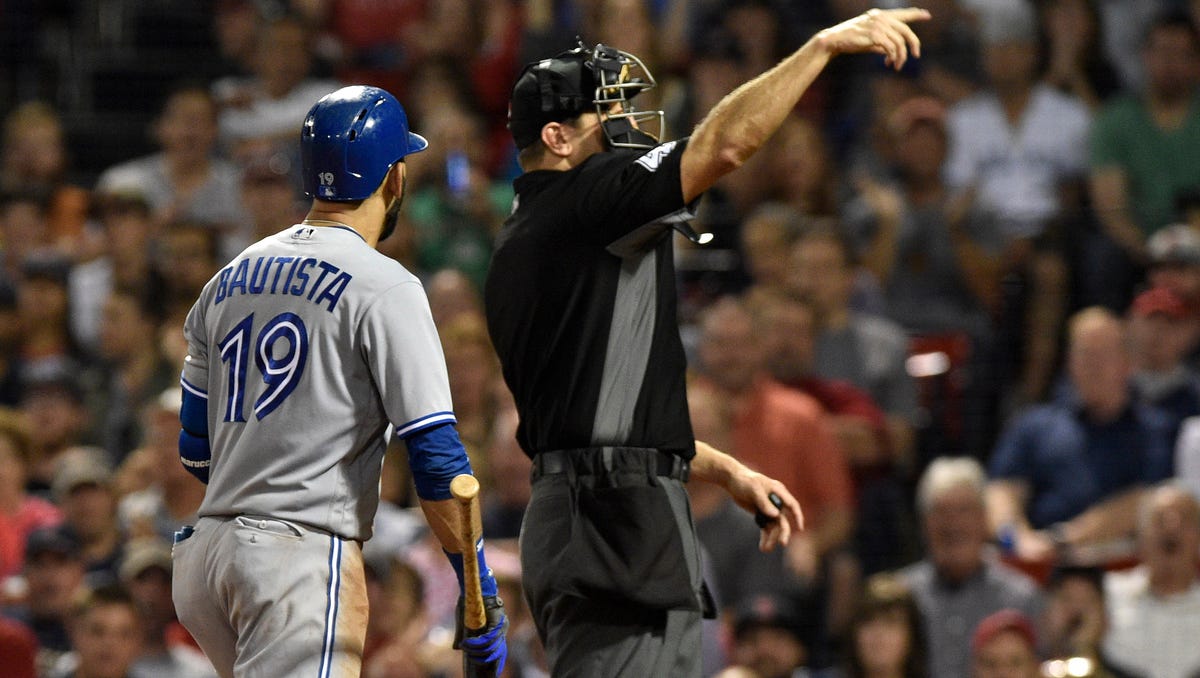
The crack of the bat, the roar of the crowd, the umpire’s emphatic arm sweep—baseball’s ejections are usually dramatic, fiery, and etched into lore. But what happens when the most infamous ejection of the season isn’t a volcanic eruption of outrage, but a quiet, almost comical surrender? This isn’t a tale of outrageous tirades or bench-clearing brawls. It’s the story of the softest ejection in MLB history—a moment so subdued, so uncharacteristically gentle, that it left fans, players, and analysts alike questioning the very fabric of baseball’s emotional extremes.
The Unlikeliest Culprit: A Manager’s Whispered Defeat
In a sport where managers are often portrayed as fiery tacticians, quick to challenge calls with the intensity of a Shakespearean protagonist, one skipper recently redefined the art of the ejection—not with a bang, but with a whisper. The incident unfolded in the bottom of the seventh inning, bases loaded, the game hanging in the balance. A pitch, deemed ball four by the home plate umpire, sent the dugout into a frenzy. Yet, instead of the customary tirade, the manager merely turned, offered a polite nod, and trudged toward the umpire’s chair. No shouting. No gesticulating. No dramatic pause for effect. Just a quiet, almost resigned acceptance of the call.
What made this ejection so peculiar wasn’t the call itself, but the manner in which it was contested—or rather, not contested. The umpire, taken aback by the lack of resistance, almost seemed to hesitate before signaling the ejection. It was as if the very concept of ejecting a manager had been reduced to a formality, a bureaucratic checkbox rather than the explosive climax of a high-stakes drama.
Baseball’s Emotional Spectrum: From Fire to Ice
Baseball has always thrived on extremes. The crackling tension of a full count, the explosive anger of a disputed call, the cathartic release of a bench-clearing fracas—these are the moments that define the sport’s emotional DNA. Yet, in this ejection, we witnessed the opposite end of the spectrum: a moment of such emotional restraint that it bordered on the surreal. Where were the histrionics? The dramatic pauses? The pointed fingers aimed at the sky in divine accusation?
This wasn’t just a deviation from the norm; it was a challenge to the very expectations of baseball’s emotional language. For generations, ejections have been a barometer of a manager’s passion, a litmus test for their investment in the game. But what does it mean when that passion is replaced by something far more subdued? Is this the evolution of managerial strategy, a calculated move to avoid further escalation? Or is it a sign of a deeper shift in the culture of the sport, where even the most heated moments are being tempered by a newfound sense of decorum?
The Ripple Effect: How One Ejection Could Reshape the Game
The implications of this ejection extend far beyond the individual incident. If managers begin to treat ejections with such nonchalance, what does that say about the future of player-manager-umpire dynamics? Could this be the first domino in a trend where ejections become as rare as a triple play, reserved only for the most egregious of transgressions? Or, conversely, does this moment inadvertently trivialize the significance of an ejection, reducing it to a mere footnote in the annals of baseball history?
Already, analysts are speculating about the potential domino effect. If one manager can be ejected with such quiet dignity, why not others? Could we see a wave of “soft ejections” where the drama is replaced by a stoic acceptance of fate? The possibilities are as intriguing as they are unsettling. Baseball, after all, has always been a sport of contrasts—power and precision, aggression and restraint. But when the most explosive moments are met with silence, it forces us to question whether the game is evolving or simply losing a part of its soul.
A Playful Provocation: The Challenge to the Next Manager
So, here’s a playful challenge to the next manager who finds themselves on the wrong side of an umpire’s call: Can you top the softest ejection in MLB history? Can you make the act of being removed from the game feel as anticlimactic as a rain delay in the fourth inning? The bar has been set—low, perhaps, but undeniably unique. Will we see a manager tip their cap before walking off? Perhaps a polite “thank you, sir” to the umpire before departing? The possibilities for comedic understatement are endless.
Yet, beneath the humor lies a more serious question: Is baseball at risk of losing its emotional edge? The sport has always thrived on the raw, unfiltered passion of its participants. When that passion is replaced by stoicism, does the game risk becoming something far less compelling? Or is this simply a natural evolution, a sign that even in America’s pastime, the times they are a-changin’?
The Legacy of the Soft Ejection: A Moment for the Record Books
Regardless of how one feels about the ejection itself, there’s no denying that it has carved out a niche in baseball’s vast and varied history. It’s a moment that defies convention, a gentle rebellion against the fiery norms of the sport. Whether it becomes a footnote or a footnote to a footnote remains to be seen, but for now, it stands as a testament to the unpredictability of baseball—a game where even the most mundane moments can become legendary.
As the season progresses, fans and analysts alike will be watching closely. Will this be an isolated incident, a quirk of personality, or the beginning of a new trend? Only time will tell. But one thing is certain: in a sport defined by its extremes, the softest ejection in MLB history has already made its mark.