In the labyrinthine world of baseball mechanics, few debates ignite as much fervor as the discourse surrounding a pitcher’s stride length. It’s a topic that seems deceptively simple—after all, how much can a single stride really matter in the grand symphony of pitching? Yet, when you peel back the layers, you uncover a fissure in conventional wisdom, a schism between tradition and innovation that reveals deeper truths about the sport’s evolution. The stride isn’t just a step; it’s a fulcrum, a lever, a silent architect of velocity, command, and longevity. To dismiss it as mere footwork is to overlook the alchemy of physics and physiology that transforms a pitcher’s motion into artistry.
The Myth of the “Ideal” Stride: Why One Size Doesn’t Fit All
For decades, the baseball establishment has clung to a gospel of stride length, preaching a gospel of uniformity. The narrative goes something like this: a longer stride equals more power, a shorter one equals better control. But this oversimplification ignores the kaleidoscope of human anatomy and biomechanics. A pitcher’s stride is as unique as their fingerprint, shaped by hip mobility, leg strength, and even the quirks of their delivery. A 6’4” flamethrower might stride a full 36 inches, while a wiry knuckleballer could get by with a mere 24. The obsession with a “perfect” stride length is a relic of a bygone era, when coaches treated players like interchangeable cogs in a pitching machine rather than the complex organisms they are.
Consider the case of two pitchers with identical fastball velocities but radically different stride patterns. One, a former collegiate hurler, strides a towering 38 inches, his lead leg snapping down like a whip. The other, a journeyman minor leaguer, glides forward with a compact 28-inch step, his body whipping around his front hip with surgical precision. Both throw 95 mph. Both have ERAs under 3.00. The difference? Their stride lengths are diametrically opposed, yet both have optimized their mechanics to exploit their physiological advantages. The lesson is clear: the “ideal” stride is a myth, a construct of confirmation bias that blinds coaches to the nuance of individual adaptation.
The Physics of the Stride: How Momentum Becomes Velocity
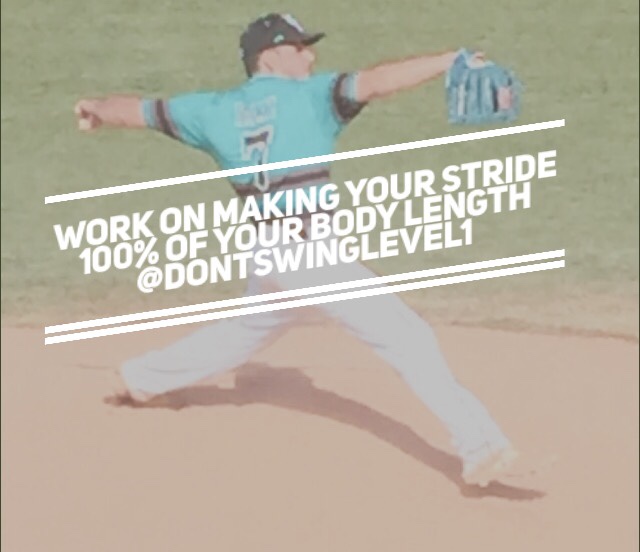
To understand why stride length matters, you must first grasp the physics at play. A pitcher’s stride isn’t just a transfer of weight—it’s a kinetic chain reaction, a domino effect of force that begins in the legs and culminates in the release point. The longer the stride, the greater the ground force reaction (GFR), the upward and forward thrust that propels the pitcher’s body toward home plate. This isn’t mere speculation; it’s Newtonian mechanics in action. A 30-inch stride generates more horizontal force than a 20-inch stride, which translates to more velocity at the fingertips. But here’s the catch: more force doesn’t always mean better results. If the stride is too long, the pitcher risks overstriding, which can lead to a loss of balance, a breakdown in sequencing, and a catastrophic drop in command.
The interplay between stride length and rotational power is where the magic—and the danger—lies. A pitcher with a longer stride can generate more torque, but only if their lead leg stabilizes efficiently. If the front knee collapses inward or the stride foot lands too far out in front, the kinetic chain seizes up. The result? A hitch in the delivery, a loss of deception, and a fastball that tails like a misguided comet. The most devastating pitchers—think Randy Johnson’s high leg kick or Max Scherzer’s violent stride—aren’t just long; they’re *controlled*. Their strides are extensions of their bodies, not crutches for their weaknesses.
The Injury Nexus: When Stride Length Becomes a Liability
For all its benefits, an unchecked stride can be a ticking time bomb. The human body is not designed to absorb the repetitive stress of a 36-inch stride landing on a rigid front leg thousands of times per season. Overstriders are prime candidates for knee tendinitis, hip impingement, and even lower back stress fractures. The reason? The lead leg acts as a shock absorber, and when the stride is too long, the knee absorbs more force than it’s built to handle. Compound this with the torque of a high-velocity delivery, and you’ve got a recipe for disaster. Pitchers like Stephen Strasburg and Chris Sale have battled injuries linked, at least in part, to their aggressive stride patterns.
Yet, the solution isn’t as simple as shortening the stride. A shorter stride can lead to a different set of problems: a loss of leverage, a reduction in velocity, and a pitching motion that feels cramped and unnatural. The key lies in *controlled* adaptation. Pitchers like Jacob deGrom and Gerrit Cole have refined their strides over years, tweaking their landing points and lead leg angles to mitigate injury risk without sacrificing power. It’s a delicate balance, one that requires constant monitoring and, often, the guidance of advanced biomechanics experts. The modern pitcher isn’t just a thrower; they’re a data-driven athlete, their stride length a variable to be optimized, not dictated.
The Psychological Dimension: Confidence and the Illusion of Control
Beyond the physical, the stride length debate touches on something far more intangible: psychology. A pitcher’s stride is their first act of aggression, the initial step toward dominance. A long, aggressive stride can be a psychological weapon, a visual cue to batters that the pitcher is in command. Conversely, a shorter stride might feel more controlled, more deliberate—a trait prized by pitchers who rely on precision over power. The problem arises when a pitcher’s stride becomes a crutch, a psychological anchor that they believe is essential to their success. This is where the danger of dogma rears its head. A pitcher who insists on a 34-inch stride because “that’s how [they’ve] always done it” may be sacrificing adaptability for the sake of comfort.
Consider the case of a young pitcher who transitions from college to professional ball. In college, their 30-inch stride worked wonders, but in the minors, they struggle with command. The coach suggests shortening the stride, but the pitcher resists, clinging to the familiar. The result? A mechanical breakdown, a loss of confidence, and a spiral of poor performance. The lesson is clear: the stride isn’t just a physical tool; it’s a mental one. Pitchers who view their stride as a fixed entity are doomed to stagnate. Those who treat it as a malleable variable—something to be adjusted based on the situation—are the ones who thrive in the long run.
The Future of Stride Optimization: Data, AI, and the Death of Dogma
The baseball world is on the cusp of a revolution, one that will render the stride length debate obsolete—or at least, redefine it entirely. With the advent of high-speed cameras, force plates, and AI-driven biomechanics software, pitchers no longer have to rely on gut feelings or outdated coaching axioms. They can see, in real time, how their stride length affects their velocity, spin rate, and joint stress. They can experiment with different stride patterns and receive instant feedback on their efficiency. The result? A new era of personalized pitching mechanics, where the “ideal” stride is whatever works best for the individual pitcher.
Already, teams like the Houston Astros and the Tampa Bay Rays are leading the charge, using data to fine-tune their pitchers’ deliveries. Pitchers like Justin Verlander and Blake Snell have seen their careers revitalized by biomechanical adjustments, their stride lengths tweaked to maximize performance while minimizing injury risk. The old guard may scoff at this approach, dismissing it as “overcomplicating” a simple game. But the truth is, baseball has always been a sport of evolution. The pitchers who embrace this new frontier—who treat their stride as a variable to be optimized rather than a doctrine to be followed—are the ones who will define the next generation of pitching greatness.
The stride length controversy isn’t just about feet and inches. It’s about the soul of pitching itself—a sport where artistry and science collide, where tradition and innovation dance on the edge of a razor. The pitchers who master this balance won’t just throw harder or command better; they’ll redefine what it means to be a pitcher in the modern era. And that, more than any statistic, is the true fascination of the game.