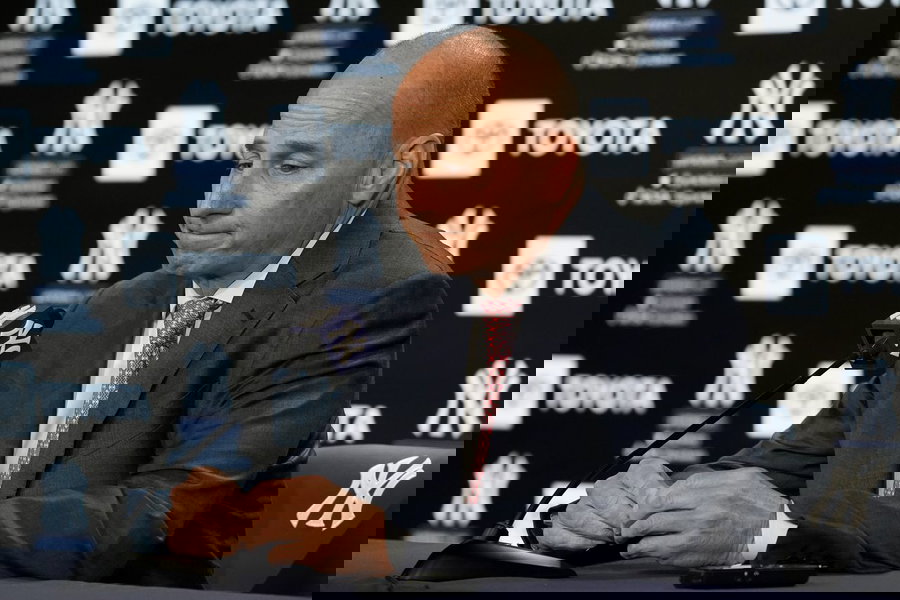
The news has rippled through the baseball world, echoing loudest in the five boroughs and across the vast Yankees fan diaspora: Brian Cashman, the venerable General Manager, has agreed to a new three-year deal, extending his record-setting tenure at the helm of baseball’s most storied franchise. For a fan base accustomed to both unparalleled success and, more recently, a prolonged championship drought, the reaction is, as ever, multifaceted. It’s a decision that, on the surface, speaks to continuity, but beneath the headlines, it unearths a myriad of complex dynamics, strategic considerations, and the enduring questions that define the modern New York Yankees. His continued presence invites a deeper look into the intricate tapestry of a franchise always under the microscope.
The Enduring “Lifer” Status
It’s a common refrain among baseball observers, particularly those outside the Bronx: Brian Cashman has been the Yankees’ General Manager for what feels like an eternity. Indeed, his tenure, now extended to three decades, is almost unprecedented in professional sports. Yet, the fascination isn’t just with the raw longevity; it’s about what that stability signifies. For some, it represents a steadfast hand, a consistent vision, and a testament to an organization that values continuity. For others, it sparks questions about insularity, a potential resistance to truly fresh perspectives, and whether such prolonged tenure at the helm of an organization obsessed with championships can truly innovate when the ultimate prize has remained elusive for over a decade. His omnipresence becomes a mirror reflecting the team’s journey.
The Championship Drought’s Weight
The most undeniable observation regarding Cashman’s recent tenure is the absence of a World Series trophy since 2009. This stark reality forms the backdrop of every major decision and every new contract. The fascination here lies not just in the drought itself, but in the paradox it presents: a team that consistently contends, makes deep playoff runs, and boasts a roster replete with superstars, yet cannot seal the deal. This hints at deeper structural issues or perhaps an ongoing philosophical struggle to build a club capable of navigating the high-pressure, single-elimination scenarios of October, rather than just accumulating regular-season wins.
Hal Steinbrenner’s Unwavering Trust
One of the most intriguing aspects of Cashman’s extended stay is the consistent backing he receives from principal owner Hal Steinbrenner. While fans and media often debate his performance, the internal trust appears to be unshakeable. This dynamic suggests that Steinbrenner views Cashman as indispensable, perhaps valuing his detailed organizational understanding, his loyalty, and his ability to navigate the complex landscape of MLB’s financial and competitive demands. It hints at a deeper, shared strategic vision that prioritizes stability and a methodical approach over impulsive changes driven by immediate public dissatisfaction.
The Pursuit of the Next Dynasty
The Yankees, under Cashman, have always seemed to operate with the ambition of building not just a contender, but a sustainable dynasty. Common observations focus on the big free-agent signings and blockbuster trades. However, the deeper fascination lies in how these moves, combined with a revitalized farm system, are meant to fit into a long-term plan. It addresses the challenge of balancing immediate competitive windows with future sustainability, navigating salary caps and luxury tax thresholds while attempting to replicate the kind of multi-championship success the franchise experienced in the late ’90s.
Navigating the Luxury Tax Tightrope
It’s often simply stated that the Yankees are a high-spending team, but the deeper truth is their strategic dance around the luxury tax. Cashman’s management of the payroll is a constant balancing act, often dictating which free agents are pursued, which trades are feasible, and when prospects are called up. The fascination stems from understanding that even a team with the Yankees’ resources operates under constraints, and how those constraints influence roster construction, often leading to calculated risks or measured conservatism in a way that belies their “Evil Empire” moniker.
The Farm System Rebirth
After years where the Yankees’ farm system was perceived as lagging, there’s been a clear effort under Cashman to prioritize and invest in player development. Common observations now point to the emergence of talents like Anthony Volpe and Oswald Peraza. The deeper reason for fascination is the shift in organizational philosophy this represents – a renewed commitment to homegrown talent as a cornerstone, not merely a supplement, to a championship roster. This hints at a more sustainable model for success, reducing reliance solely on expensive external acquisitions.
Trade Deadline Acumen: A Mixed Bag?
The Yankees’ trade deadline activity often sparks passionate debate. Critics highlight trades that didn’t pan out, while supporters point to key acquisitions. The deeper fascination lies in the high-stakes poker game that Cashman consistently plays. Each deadline move is a calculated gamble, reflecting the immediate needs of the team balanced against the long-term cost of prospects. It highlights the immense pressure to make a splash and the inherent difficulty of predicting how acquired talent will perform under the bright lights of New York.
The Analytics-Driven Approach
The Yankees are widely perceived as a modern, analytics-driven organization. While this is a common observation, the fascination delves into how deeply these metrics truly influence every decision. It’s about the ongoing tension between traditional scouting instincts and the cold, hard data. Does the reliance on analytics sometimes lead to a particular type of player (e.g., high strikeout, high power) that struggles in playoff baseball? Or is it a necessary evolution that the Yankees are mastering better than most?
Managerial Loyalty to Aaron Boone
The relationship between Cashman and manager Aaron Boone is a frequent talking point, especially given Boone’s consistent employment despite the team’s playoff shortcomings. This isn’t just about loyalty; it hints at a deeper alignment in their baseball philosophies and a shared understanding of how the organization should operate. It suggests that Cashman values stability in the dugout and a manager who can effectively communicate and execute the front office’s vision, rather than one who acts as an independent entity.
The Long-Term Mega-Contracts
The Yankees have not shied away from handing out massive, long-term deals to superstars like Gerrit Cole and Aaron Judge. A common observation is simply the sheer size of these contracts. The deeper fascination, however, explores the strategic rationale behind tying up significant portions of the payroll for a decade or more. It reflects a commitment to core talent but also the inherent risks of aging curves, injuries, and the impact on future payroll flexibility. These deals become anchors, for better or worse, for the entire organizational strategy.
The Pressure Cooker Environment
No other GM operates under the consistent, intense scrutiny faced by the Yankees’ general manager. The common observation is that fans simply demand championships. The deeper fascination is how Cashman navigates this relentless pressure, year after year, without succumbing to rash decisions or internal strife. It hints at an incredible resilience and a thick skin, but also raises questions about whether this constant external noise can subtly influence decision-making, even for the most experienced executive.
The Juan Soto Saga: An All-In Play
The acquisition of Juan Soto was a seismic move, clearly signaling an “all-in” mentality. While the immediate observation is the sheer talent added to the roster, the deeper fascination lies in the profound strategic commitment it represents. It hints at a recognition of a narrow championship window and a willingness to mortgage future assets for immediate, undeniable impact. It’s a high-wire act, with the potential for both immense glory and significant long-term repercussions depending on the outcome of the next season.
Cultivating a Specific Offensive Identity
For years, the Yankees’ offense under Cashman has often been characterized by power and home runs, often at the expense of contact and batting average. This isn’t just a statistical observation; it hints at a deliberate philosophical choice in roster construction. The fascination lies in understanding the ongoing debate within the organization and among fans about whether this “boom or bust” approach is sustainable for deep playoff runs, especially when faced with elite pitching in October. It reveals a commitment to a modern, analytical approach to scoring runs.
The Quest for Pitching Depth
While the Yankees have consistently built dominant bullpens, the sustained development of starting pitching has often been a more challenging endeavor. Common observations note the reliance on free-agent aces. The deeper fascination explores the continuous organizational effort to cultivate internal starting pitching talent, from scouting to development, and how that ongoing quest impacts trade decisions and long-term roster planning. It highlights a critical area where continuous improvement is sought to complement the high-priced arms.
Maintaining the “Evil Empire” Aura
Despite the championship drought, the Yankees continue to be perceived as a top-tier, intimidating franchise, often referred to as the “Evil Empire.” The re-signing of Cashman reinforces this perception of continuous competitiveness and unwavering ambition. The deeper fascination is how this image, carefully cultivated over decades, is maintained even without the ultimate prize. It hints at the strategic importance of projecting power and success, regardless of recent outcomes, and how that intangible factor plays into player acquisitions and overall brand identity.