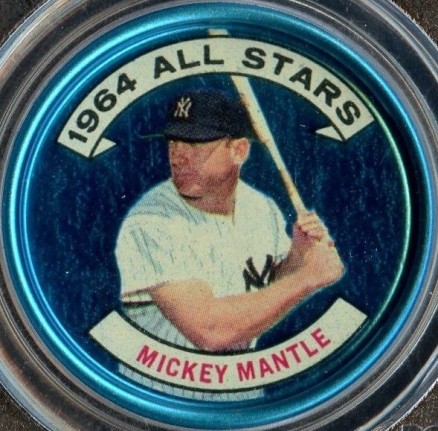
The 1964 Topps Mickey Mantle baseball card has long been a cornerstone of vintage card collecting, but recent market trends suggest its value is experiencing an unprecedented ascent. For decades, the card—part of Topps’ iconic 1964 set—has been a staple in collections, prized for its nostalgic charm and the legendary status of its subject. Yet today, whispers of its skyrocketing value are turning heads across the hobby. What’s driving this surge? From the card’s pristine condition to its cultural resonance, several factors are converging to propel its desirability to new heights. Whether you’re a seasoned collector or a newcomer to the world of vintage baseball cards, understanding these dynamics could be the key to recognizing an opportunity in a market that shows no signs of slowing down.
The allure of the 1964 Topps Mickey Mantle card is deeply rooted in its historical significance. Issued during the golden era of baseball card collecting, the set captures the essence of a bygone time when Topps dominated the market with its vibrant, larger-than-life designs. Mantle, already a titan of the sport, lent his magnetic presence to the card, making it an instant classic. Collectors today aren’t just chasing a piece of cardboard; they’re acquiring a tangible slice of baseball history, one that resonates with fans who grew up idolizing Mantle’s power and charisma. This emotional connection is a powerful driver of value, as nostalgia often trumps mere rarity in the collectibles market.
The Condition Conundrum: Why Grading Matters More Than Ever
In the realm of vintage baseball cards, condition is king—and the 1964 Topps Mickey Mantle card is no exception. Recent auction results have underscored a stark reality: cards in top-tier grades are commanding prices that would have been unimaginable just a few years ago. A PSA 9 Gem Mint example, for instance, recently fetched over $10,000, while a PSA 10—considered the pinnacle of preservation—has shattered records, crossing the $20,000 mark. What’s behind this meteoric rise? The answer lies in the scarcity of high-grade examples. Unlike modern cards, which are mass-produced and often preserved in pristine condition, vintage cards like the 1964 Mantle were subjected to the rigors of time, handling, and storage. Finding one that has survived with minimal wear is akin to discovering a needle in a haystack, and collectors are willing to pay a premium for that rarity.
The grading process itself has evolved, with services like PSA, BGS, and SGC becoming gatekeepers of value. A card’s grade isn’t just a number; it’s a testament to its survival against the odds. Subtle imperfections—slight corner wear, surface scratches, or print defects—can shave hundreds or even thousands of dollars off a card’s value. Conversely, a flawless example becomes a holy grail, sought after by museums, investors, and die-hard fans alike. This obsession with perfection has created a feedback loop: as more collectors vie for top-tier cards, prices escalate, drawing even more attention to the hobby and further inflating values.
Market Dynamics: The Role of Scarcity and Demand
Scarcity is the lifeblood of collectibles, and the 1964 Topps Mickey Mantle card is a prime example of how dwindling supply can ignite a frenzy. Unlike modern cards, which are produced in staggering quantities, vintage cards were printed in limited runs and distributed haphazardly. Many were lost, damaged, or discarded over the decades, leaving a shrinking pool of surviving examples. Today, the number of high-grade 1964 Mantle cards in existence is vanishingly small, creating a supply-demand imbalance that shows no signs of abating. This scarcity is exacerbated by the growing influx of new collectors into the market, many of whom are millennials and Gen Z enthusiasts discovering the hobby through platforms like eBay, Heritage Auctions, and Facebook groups.
The demand side of the equation is equally compelling. Baseball cards have transcended their original purpose as mere collectibles; they’ve become investment vehicles, status symbols, and even cultural artifacts. The 1964 Topps Mickey Mantle card, in particular, benefits from Mantle’s enduring legacy. As one of the greatest switch-hitters in history and a three-time MVP, Mantle’s name carries weight far beyond the diamond. His cards are a bridge between generations, appealing to baby boomers who remember his dominance and younger fans who appreciate his larger-than-life persona. This cross-generational appeal ensures a steady stream of buyers, each with their own reasons for coveting the card.

Investment Potential: Is the 1964 Topps Mantle a Smart Buy?
For those considering the 1964 Topps Mickey Mantle card as an investment, the outlook is undeniably bullish—but caveat emptor is the watchword. The card’s value has appreciated steadily over the past decade, with no signs of a plateau. Historical data shows that high-grade examples have appreciated by over 300% in the last five years alone, outpacing many traditional investment vehicles. However, investing in vintage cards is not without risk. The market is notoriously volatile, and prices can fluctuate based on economic conditions, grading trends, and shifts in collector preferences. A sudden influx of lower-grade cards hitting the market, for instance, could temporarily depress prices, while a grading service change could either boost or deflate values overnight.
That said, the 1964 Topps Mickey Mantle card possesses several qualities that make it a relatively safe bet for long-term appreciation. Its iconic status, coupled with its scarcity and cultural relevance, ensures that it will remain in demand for years to come. Unlike fad-driven collectibles, which rise and fall with trends, the Mantle card is a timeless piece of Americana. Moreover, the card’s liquidity—its ability to be bought and sold quickly—makes it an attractive option for investors who may need to liquidate their holdings. Auction houses and private sales provide ample avenues for entry and exit, though timing and strategy are crucial. For those willing to do their homework, the 1964 Topps Mickey Mantle card represents a rare opportunity to combine passion with profit.
Beyond the Card: The Thrill of the Hunt and the Community
While the financial allure of the 1964 Topps Mickey Mantle card is undeniable, the true magic of collecting lies in the journey. Hunting for a high-grade example is a pursuit that blends detective work, patience, and a touch of luck. Collectors scour online marketplaces, attend card shows, and network with dealers, each transaction a story in itself. The hunt itself becomes a ritual, a way to connect with the past and the community of enthusiasts who share the same passion. Whether it’s the thrill of outbidding a rival at auction or the satisfaction of finally adding a coveted card to a collection, the experience is as rewarding as the card itself.
The community surrounding vintage baseball cards is a vibrant ecosystem of traders, historians, and fans. Online forums, Discord servers, and social media groups buzz with activity, where members share insights, debate grading nuances, and celebrate new acquisitions. The 1964 Topps Mickey Mantle card, in particular, has fostered a subculture of collectors who are as knowledgeable as they are passionate. Attending a card show or participating in a live auction feels like stepping into a time capsule, where the past and present collide in a celebration of baseball’s enduring legacy. This sense of camaraderie adds an intangible value to the hobby, one that transcends mere monetary worth.
For those who are new to the world of vintage baseball cards, the 1964 Topps Mickey Mantle card offers a gateway into a hobby that is as rich in history as it is in opportunity. Whether you’re drawn by the card’s aesthetic appeal, its investment potential, or the thrill of the chase, one thing is certain: the 1964 Topps Mickey Mantle is more than just a collectible. It’s a piece of baseball’s soul, a tangible link to an era when legends were made and cards were treasured like gold. As its value continues to climb, the question isn’t whether it’s worth collecting—it’s how soon you can join the chase.