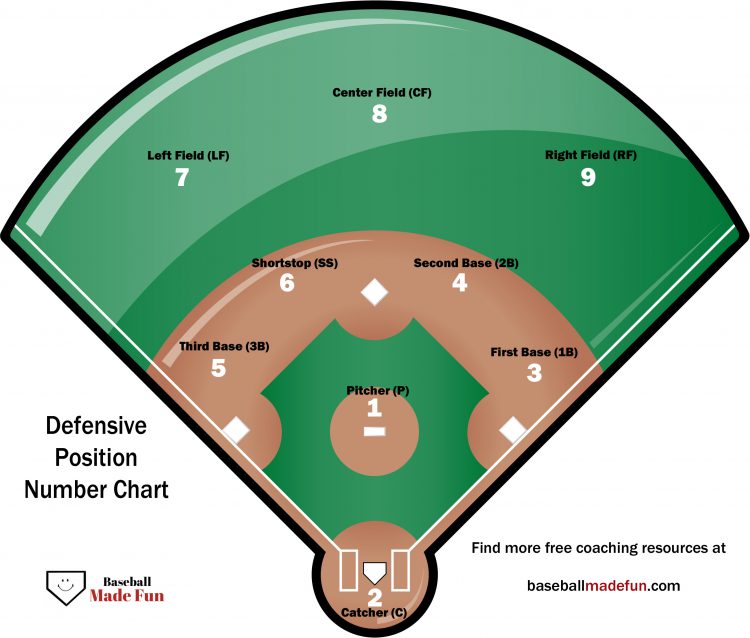
The 2006 St. Louis Cardinals entered the season as a team that, by all conventional metrics, should have been destined for mediocrity. Yet, against the odds, they not only claimed the National League pennant but also seized the World Series title in a five-game triumph over the Detroit Tigers. This improbable championship run has left an indelible mark on baseball history, not merely for its outcome but for the way it unfolded—unscripted, unplanned, and utterly unforeseen. The Cardinals of 2006 were not a team of superstars, nor did they boast the financial firepower of their contemporaries. Instead, they were a collective of understated talents, late bloomers, and tactical masterstrokes that coalesced into something far greater than the sum of their parts.
The Underdog Ethos: Rejecting the Cult of the Superstar
In an era where baseball’s narrative was increasingly dominated by the spectacle of free agency and the allure of marquee contracts, the 2006 Cardinals stood apart as a testament to the power of cohesion over individual brilliance. While teams like the Yankees and Red Sox assembled rosters brimming with All-Stars, St. Louis fielded a lineup where no single player ranked among the league’s top 20 in Wins Above Replacement (WAR). Instead, they thrived on a distributed excellence—players like David Eckstein, a diminutive middle infielder, and Yadier Molina, a defensive savant behind the plate, became the unlikely linchpins of their success. This was baseball stripped of its glamour, where the grind of small-ball and the unyielding pursuit of fundamentals eclipsed the dazzle of home runs and highlight-reel catches.
Their approach was not born of ideology but of necessity. The Cardinals’ payroll ranked 12th in the league that year, a far cry from the financial titans of the sport. Manager Tony La Russa, ever the pragmatist, leaned into this reality, crafting a strategy that emphasized situational hitting, defensive versatility, and relentless baserunning. The result was a team that played not like a collection of individuals but like a single, well-oiled machine—each part moving in harmony, each player fulfilling a role that, while unsung, was indispensable.
The Pitching Paradox: From Rotation to Bullpen
If the Cardinals’ offense was a study in understated efficiency, their pitching staff was a masterclass in adaptability. The rotation, anchored by Chris Carpenter and Jeff Suppan, was solid but unspectacular, with Carpenter’s 3.09 ERA standing as the team’s best among starters. Yet it was the bullpen that became the heartbeat of the club, a relentless octet of arms that turned late-inning deficits into opportunities for comebacks. The bullpen’s collective 3.64 ERA was not just good—it was a weapon, a rotating door of relievers who could stifle rallies before they gained momentum.
This was no accident. La Russa, a former pitcher himself, understood the psychological edge that a dominant bullpen could provide. The Cardinals’ relievers—Jason Isringhausen, Adam Wainwright, and Randy Flores among them—were not household names, but they were masters of their craft. Isringhausen, the closer, converted 47 of 51 save opportunities, while Wainwright, then a swingman, emerged as a late-inning stalwart. Their ability to pitch in high-leverage situations, often with multiple innings on the line, redefined the term “clutch.” In a postseason where every game was a war of attrition, St. Louis’s bullpen was the trench warfare that broke the enemy’s spirit.
The Cardiac Kids: A Postseason Defined by Resilience
The Cardinals’ postseason run was not merely a series of victories—it was a gauntlet of near-defeats, comebacks, and moments that defied probability. They faced elimination three times in the National League Division Series against the Padres, twice rallying from deficits in the ninth inning. In the NLCS against the Mets, they dropped the first two games at home before storming back to win four straight, including a 12-inning marathon in Game 7 that remains one of the most harrowing in recent memory. Each victory felt less like a triumph and more like a reprieve, as if the baseball gods themselves were testing the team’s resolve.
This resilience was not born of blind optimism but of a collective belief in their process. The Cardinals played with a swagger that belied their underdog status, a quiet confidence that manifested in clutch hits, defensive gems, and pitchers who refused to crack under pressure. Albert Pujols, the team’s lone superstar, was the embodiment of this ethos. While he delivered prodigious home runs and jaw-dropping defensive plays, it was his leadership—his ability to will his team forward in moments of despair—that set him apart. In Game 5 of the World Series, with the Cardinals clinging to a one-run lead in the ninth, Pujols made a running catch in left field that preserved the victory, a play that encapsulated the team’s entire season: unglamorous, unexpected, and utterly decisive.
The Managerial Alchemy: La Russa’s Tactical Brilliance
To understand the 2006 Cardinals, one must first understand Tony La Russa. A man of meticulous preparation and unorthodox thinking, La Russa was the architect of a team that played chess while the rest of the league played checkers. His use of the bullpen was revolutionary, his bullpen matchups a chessboard of matchups and platoons. He deployed platoons in the outfield, platoons at second base, and even platoons at designated hitter—a rarity in the National League. This flexibility allowed him to maximize matchups, to exploit weaknesses in opposing pitchers, and to keep his own players fresh.
La Russa’s in-game decisions were equally audacious. He was not afraid to pull a starter early, to lift a reliever after just one batter, or to use his bench in unconventional ways. In Game 3 of the World Series, with the Cardinals trailing by a run in the eighth, he pinch-hit for his pitcher—a move that defied convention but paid off with a game-tying single. His willingness to eschew tradition in favor of pragmatism was the cornerstone of the team’s success. La Russa did not just manage the Cardinals; he sculpted them into a team that could adapt, improvise, and outthink their opponents at every turn.
The Legacy of the Unlikeliest Champions
More than a decade and a half later, the 2006 Cardinals remain a touchstone for baseball fans who cherish the sport’s unpredictability. They were not a team built on draft-day pedigrees or blockbuster trades but on a foundation of grit, adaptability, and an unshakable belief in their collective identity. Their championship was not a coronation but a conquest—a series of battles won through sheer willpower and tactical ingenuity.
In an era where analytics and advanced metrics increasingly dictate the game, the Cardinals of 2006 serve as a reminder that baseball is still, at its core, a human endeavor. It is a game of inches, of split-second decisions, and of players who rise to the occasion when the stakes are highest. Their story is one of defiance—against the odds, against the conventions of their time, and against the very notion that a team must be stacked with superstars to claim a title. In the end, they were not just champions. They were a phenomenon.