Picture this: a crisp autumn afternoon, the crack of a bat echoing through Tiger Stadium, the scent of popcorn mingling with the cool breeze off Lake St. Clair. In the stands, a young fan clutches a wax pack, heart pounding as he flips through the cards—until his eyes land on a certain Detroit Tigers legend, his name emblazoned in bold across the front. That card, my friend, could be worth more than your first car today. But is it really a vintage treasure worth thousands, or just another overhyped relic from baseball’s golden age? Let’s dive into the world of Al Kaline baseball cards, where nostalgia meets numismatics, and where even the most casual collector might stumble upon a fortune—or at least a very expensive mistake.
Al Kaline, affectionately known as “Mr. Tiger,” wasn’t just another Hall of Famer. He was the kind of player who made you believe in baseball’s magic. A 22-year-old rookie in 1953, he won the batting title in 1955 at just 20 years old—the youngest in American League history at the time. For 22 seasons, he patrolled right field with the grace of a ballerina and the arm strength of a cannon. He collected 3,007 hits, 399 home runs, and 10 Gold Gloves. But it’s not just his on-field heroics that make his cards so alluring; it’s the era he represents. The 1950s and 60s were a golden age of baseball cards—when Topps ruled the hobby, when wax packs were currency, and when every kid dreamed of pulling a Mickey Mantle or a Sandy Koufax. Kaline, with his quiet intensity and timeless elegance, became a staple of that dream. So, when you hold a Kaline card, you’re not just holding cardboard—you’re holding a slice of history, a frozen moment where a future Hall of Famer steps into the batter’s box for the first time.
The Crown Jewels: Kaline’s Most Coveted Cards
Not all Kaline cards are created equal. Some are mere footnotes in the hobby’s ledger, while others are the kind of cards that make collectors weak in the knees. At the top of the heap sits the 1954 Topps #127 Al Kaline Rookie Card. This isn’t just a card—it’s a relic. Printed during Topps’ first year in the baseball card business, the 1954 set is notorious for its chaotic design, with Kaline’s image slightly off-center and the colors often faded. But that’s part of its charm. In top-grade condition, this card can fetch anywhere from $5,000 to $20,000, depending on eye appeal and centering. Imagine a 70-year-old piece of cardboard, once tucked into a shoebox under a bed, now selling for more than some people’s first homes. That’s the power of scarcity and nostalgia.
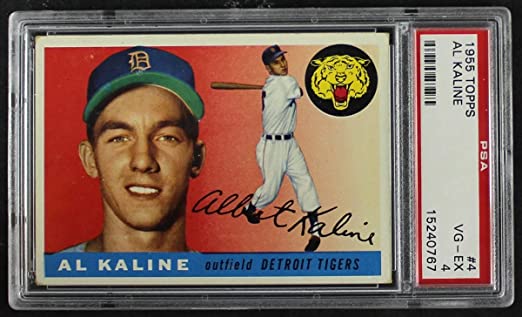
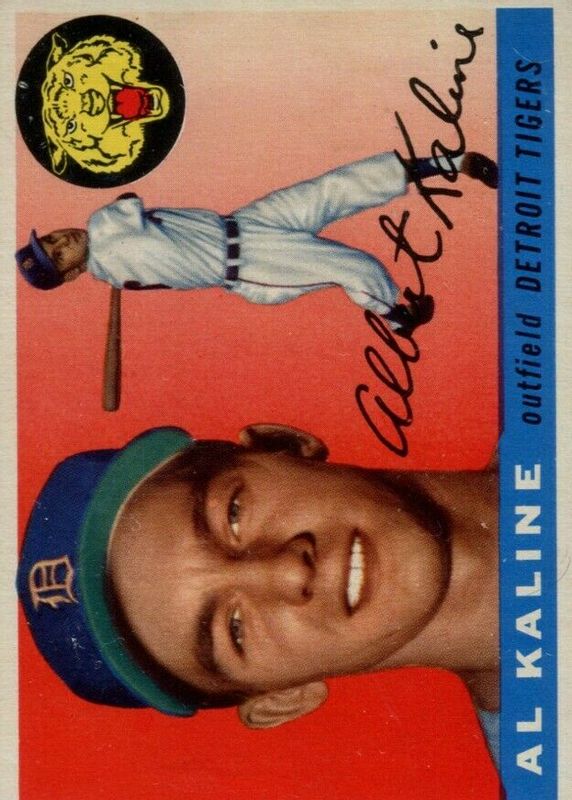
Then there’s the 1955 Topps #4 Al Kaline, a card that’s almost as iconic as its rookie counterpart. This one features Kaline in a classic batting stance, his uniform crisp against the vibrant Topps design. In high-grade, it’s a six-figure card, with recent sales pushing past $100,000. Why? Because it’s not just a card—it’s a snapshot of a young superstar at the peak of his powers. The 1955 set is beloved for its bold colors and innovative design, and Kaline’s card is a centerpiece. But beware: condition is everything. A crease, a corner ding, or even a slight off-center cut can drop the value by 50% or more. It’s a brutal market for imperfections.
For those who prefer the raw, unfiltered aesthetic of the pre-war era, the 1933 Goudey #144 Al Kaline (as a tribute to the Detroit legend) is a fascinating anomaly. While Kaline didn’t play in the 1930s, Goudey’s 1933 set included a “Hall of Fame” subset featuring legends of the game. Modern reprints and tribute cards have blurred the lines, but original Goudey cards featuring Kaline’s likeness (or a stylized version) are exceedingly rare. These cards often sell for thousands, not because of their historical accuracy, but because of their sheer novelty. It’s like finding a vintage wine labeled “2050 Bordeaux”—technically incorrect, but irresistibly intriguing.
The Condition Conundrum: When a Card is Worth More Than a House
Here’s where things get tricky. Baseball cards, like fine wine, degrade over time. A card that’s been tucked into a shoebox for 60 years, exposed to sunlight and humidity, might look like a priceless treasure—until it’s graded. That’s when the harsh reality sets in. Professional grading companies like PSA, BGS, and SGC have turned the hobby into a science, assigning numerical grades based on centering, corners, edges, and surface quality. A PSA 10 Gem Mint Kaline card? That’s a unicorn. A PSA 9 Mint? That’s a life-changing score. But a PSA 5? That’s a paperweight with sentimental value.
The grading process isn’t just about slapping a number on a card—it’s about determining its soul. A card with a single, almost invisible scratch might drop from a 9 to a 7, costing the owner tens of thousands. And grading fees? They’re not cheap. A single card can cost $50 to $500 to grade, with no guarantee of a high score. It’s a gamble, a high-stakes poker hand where the pot is your childhood memories. For many collectors, the risk isn’t worth it. They’d rather keep their cards in a protective sleeve, untouched and ungraded, than risk the heartbreak of a low grade. But for those chasing the big bucks, grading is the only path to legitimacy—and legitimacy means money.
Then there’s the issue of fakes. The vintage card market is rife with counterfeits, from crude photocopies to near-perfect forgeries. Kaline’s cards, especially his rookie and 1955 Topps, are prime targets. How do you spot a fake? Look for the paper quality—modern stock is thinner and brighter. Check the font—Topps’ 1950s printing was slightly uneven. And always, always compare to a known authentic example. Even experts get fooled. In 2021, a supposed PSA 10 1952 Mickey Mantle card sold for $12.6 million—only to be revealed as a counterfeit months later. The lesson? If it seems too good to be true, it probably is.
The Market’s Rollercoaster: When Kaline Cards Hit the Jackpot
The baseball card market is a beast of its own, prone to booms and busts like the stock market. Kaline cards have ridden every wave, from the 1980s boom (when kids traded entire shoeboxes for a single Rickey Henderson) to the 2020 pandemic surge (when bored collectors rediscovered the hobby). In 2021, a PSA 8 1955 Topps Kaline sold for $110,000. In 2023, a PSA 9 1954 Topps Kaline rookie went for $22,800. But prices aren’t always predictable. A card that sold for $5,000 in 2019 might fetch $3,000 today. The market is volatile, driven by nostalgia, speculation, and the whims of wealthy collectors.
Who’s buying these cards? Mostly deep-pocketed investors and die-hard Tigers fans. The 1955 Topps Kaline, in particular, has become a trophy for Detroit collectors. But there’s a new wave of buyers too—young professionals who see cards as an alternative investment, like fine art or rare coins. They’re not just in it for the love of the game; they’re in it for the potential ROI. And that’s where the challenge lies. Baseball cards aren’t stocks. They don’t pay dividends. Their value is entirely subjective, tied to emotion and scarcity. A Kaline card might be worth a fortune today, but in 20 years? Who knows? The market could crash. The player could fall out of favor. The card could be deemed “overrated” by the next generation of collectors.
The Future of Kaline Cards: Will They Stand the Test of Time?
So, are Al Kaline baseball cards truly vintage treasures worth thousands? The answer, as with most things in life, is: it depends. If you’re holding a PSA 10 1954 Topps Kaline rookie, congratulations—you’re sitting on a goldmine. If you’ve got a creased, off-center 1955 Topps in a shoebox, you might want to temper your expectations. The market for Kaline cards is strong, but it’s not invincible. It’s tied to the legacy of a player who retired in 1974, long before the modern era of analytics and social media stardom. Will future generations care about Al Kaline the way we care about Babe Ruth or Jackie Robinson? Or will he fade into obscurity, his cards becoming relics of a bygone era?
One thing’s for sure: the hunt for Kaline cards is part of the fun. There’s a thrill in flipping through a stack of vintage cards, wondering if the next one will be your ticket to riches—or just another piece of cardboard. It’s a hobby that blends history, art, and a little bit of madness. And whether you’re a collector, an investor, or just a fan who loves the game, that’s something special.
So, go ahead—dig through that old shoebox. Check the attic. Ask your grandpa if he still has those cards from 1955. You never know what you might find. And if you do stumble upon a Kaline gem? Well, let’s just say it might be the closest thing to striking oil you’ll ever experience.