In the pantheon of baseball’s most electrifying outfielders, few names resonate with the same blend of raw athleticism and quiet dominance as Andre Dawson. Nicknamed “The Hawk” for his piercing gaze and relentless pursuit of fly balls, Dawson didn’t just play the game—he redefined the art of center field defense while terrorizing pitchers with a bat that could sting a fastball at 400 feet. But beyond the highlight reels and the Hall of Fame plaque, there’s another dimension to Dawson’s legacy: the cardboard that immortalizes his greatness. Vintage Andre Dawson baseball cards aren’t just collectibles; they’re time capsules of a bygone era, when the crack of the bat echoed through packed stadiums and the thrill of a stolen base felt like a revolution. If you’ve ever wondered why these cards command attention—and why their value is poised to shift—buckle up. What follows isn’t just a guide to collecting; it’s a revelation of the hidden narratives etched into every glossy surface and sharp corner.
The Hawk Takes Flight: Why Dawson’s Cards Soar Beyond the Ordinary
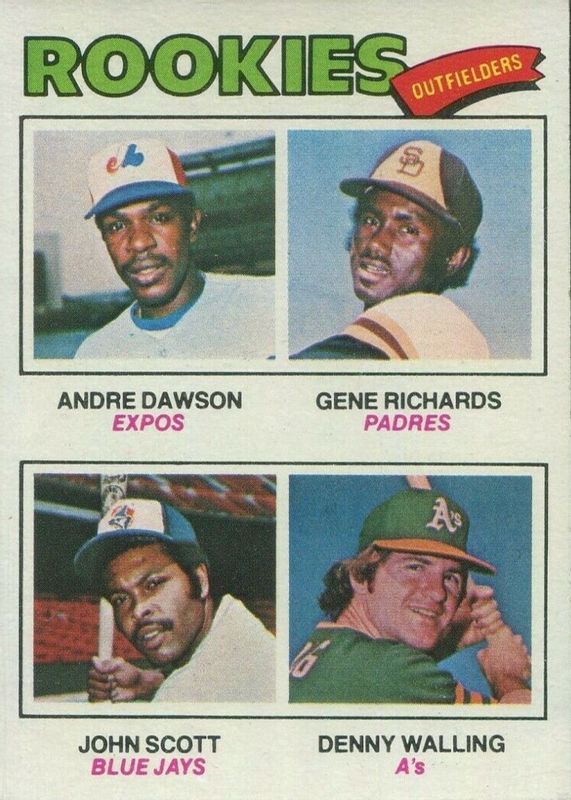
Andre Dawson’s rookie card from 1977 is more than a piece of cardboard—it’s a gateway to an era when baseball cards were as much about artistry as they were about statistics. Issued by Topps, the card captures Dawson in his Montreal Expos uniform, bat cocked and eyes locked on the pitcher, a snapshot of the 22-year-old phenom who would soon become the face of a franchise. What makes this card special isn’t just its age; it’s the story it tells. Dawson wasn’t a phenom who arrived fully formed. He was a raw talent plucked from the Florida panhandle, a player whose journey from obscurity to superstardom mirrored the rise of the Expos themselves. Collectors who hold this card aren’t just owning a piece of Dawson’s career—they’re holding a fragment of baseball’s last great underdog narrative.
But here’s where perspective shifts: the 1977 Topps Dawson rookie isn’t just a card—it’s a cultural artifact. In the late 1970s, baseball cards were still a child’s treasure, a way to connect with the game beyond the television screen. Dawson’s rookie card, with its bold colors and dynamic pose, became a symbol of that connection. Today, as the hobby evolves into an investment-driven market, the Dawson rookie has quietly ascended to the upper echelons of vintage cards. Its value isn’t just in its condition or scarcity; it’s in the emotional resonance. When you hold a graded PSA 10 Dawson rookie, you’re not just holding a card—you’re holding a piece of the 1970s, when baseball was raw, unfiltered, and brimming with possibility.
The Montreal Expos Factor: A Franchise’s Legacy in Cardboard
To understand the true value of Andre Dawson baseball cards, you have to understand the Montreal Expos. The franchise, which existed in a state of perpetual underdogdom, found its soul in Dawson. His arrival in 1976 coincided with the Expos’ first taste of relevance, and his departure in 1986 marked the beginning of the end for a team that would soon be uprooted. Dawson’s cards, particularly those from his Expos tenure, carry the weight of that fleeting glory. The 1980 Topps Dawson card, for instance, captures him in the prime of his career, his uniform a vibrant blue against the stark white border. This isn’t just a card—it’s a relic of a team that could have been great, had history not intervened.
What’s fascinating is how Dawson’s cards from this era have flown under the radar compared to his Cubs or Red Sox issues. The Expos’ relatively short lifespan means their cards are scarcer, especially in high-grade condition. A mint-condition Dawson Expos card isn’t just a collectible; it’s a piece of a lost franchise, a tangible link to a team that played in a city that loved baseball like nowhere else. Collectors who seek out these cards aren’t just chasing value—they’re preserving a chapter of baseball history that might have been forgotten. And as the market begins to recognize the scarcity of Expos-related Dawson cards, their value is poised to climb.
The 1987 Fleer Revolution: Dawson’s Cards Enter a New Era
By the mid-1980s, the baseball card landscape was changing. Topps, long the undisputed king of the hobby, faced competition from Fleer, Donruss, and Score. Dawson’s 1987 Fleer card is a perfect example of this shift—a card that not only captures Dawson in his Cubs uniform but also represents the dawn of a new collecting era. What makes the Fleer Dawson special isn’t just its design; it’s the context. This was the year Dawson won the National League MVP, a season where he slashed .287/.328/.538 with 49 homers and 137 RBIs. The Fleer card is a celebration of that dominance, a visual testament to a player at the absolute peak of his powers.
But here’s the twist: the 1987 Fleer Dawson isn’t just a card from a great season—it’s a card from a transitional period in the hobby. Fleer’s innovative design, with its bold borders and player-focused photography, set the stage for the modern baseball card. Collectors who hold this card aren’t just holding a piece of Dawson’s career; they’re holding a piece of the hobby’s evolution. And as the market begins to recognize the historical significance of these transitional cards, their value is set to rise. A high-grade Dawson Fleer isn’t just a card—it’s a bridge between the old and the new, a tangible link to the moment when baseball cards stopped being just for kids and started becoming a serious investment.
The Grading Game: Why Condition is the Ultimate Wildcard
If you’re going to invest in Andre Dawson baseball cards, you need to understand grading. Not all cards are created equal, and a card’s condition can mean the difference between a modest profit and a life-changing return. Professional grading services like PSA, BGS, and SGC have turned the hobby into a science, where every crease, corner ding, and print flaw is scrutinized under a microscope. A Dawson rookie in PSA 8 might fetch a few hundred dollars, but a PSA 10? That’s a different beast entirely. The premium for perfection isn’t just about aesthetics—it’s about authenticity. A graded Dawson card is a promise, a guarantee that what you’re holding is exactly as it was when it left the factory, untouched by time or mishandling.
But grading isn’t just about chasing perfection. It’s about understanding the market’s psychology. Collectors and investors alike are drawn to the allure of the pristine, the untouched, the flawless. A Dawson card with a perfect grade isn’t just a card—it’s a status symbol, a badge of honor in a hobby that thrives on competition. And as the market becomes increasingly sophisticated, the demand for top-tier graded Dawson cards will only grow. If you’re sitting on a high-grade Dawson card, now might be the time to consider its potential. The grading game isn’t just about protecting your investment—it’s about maximizing it.
The Investment Angle: Why Dawson Cards Are the Sleeper Bet
Let’s talk numbers. The Andre Dawson rookie card, in PSA 10, has seen its value climb steadily over the past decade. In 2013, a top-tier example might have fetched $500. Today? Try $5,000 or more. That’s a tenfold increase in a decade—a rate of appreciation that rivals some of the hottest tech stocks. But here’s the kicker: Dawson’s cards aren’t just a flash in the pan. They’re part of a larger trend in the vintage market, where players from the 1970s and 1980s are finally getting their due. Dawson’s combination of Hall of Fame pedigree, iconic moments, and relative scarcity makes his cards a perfect storm for investment.
What’s even more compelling is the narrative potential. Dawson’s career spans multiple franchises, multiple eras, and multiple collecting niches. A Dawson Expos card appeals to Expos fans and vintage collectors. A Dawson Cubs card speaks to the die-hard Cubs faithful. A Dawson MVP card from 1987? That’s a trophy hunter’s dream. The versatility of Dawson’s cards means they can be marketed to a wide audience, which in turn drives demand. And as the hobby becomes more global, with collectors from Asia and Europe entering the market, the pool of potential buyers for Dawson cards will only grow. If you’re looking for a vintage card with upside, Dawson’s checklist is a masterclass in diversification.
The Future of Dawson Cards: What’s Next for the Market?
The baseball card market is cyclical, but it’s also evolving. Gone are the days when a card’s value was dictated solely by its age or scarcity. Today, the market rewards narrative, storytelling, and emotional connection. Andre Dawson’s cards check all those boxes. They’re tied to a player whose legacy is still being written, whose impact on the game is still being felt. And as the hobby matures, the stories behind the cards will become even more valuable. A Dawson card isn’t just a piece of cardboard—it’s a conversation starter, a way to connect with the past and share a piece of baseball history with the next generation.
So what’s next for Dawson cards? The signs point upward. As more collectors enter the market, driven by nostalgia and the allure of investment, the demand for high-quality Dawson cards will only intensify. The Expos factor alone ensures that his cards from the 1970s and early 1980s will remain in demand, especially as the franchise’s legacy is rediscovered. And with Dawson’s Hall of Fame status serving as a constant reminder of his greatness, his cards will continue to be a staple in any serious vintage collection. If you’re on the fence about investing in Dawson cards, the time to act is now. The market is shifting, and the cards that tell the best stories are the ones that will rise to the top.
The Hawk may have retired decades ago, but his legacy lives on—in the boxes of vintage cards tucked away in attics, in the auction houses where his cards change hands for thousands, and in the hearts of collectors who understand that some stories are too good to be forgotten. Andre Dawson baseball cards aren’t just investments; they’re time machines, windows into a world where baseball was more than a game—it was a way of life. And if you’re smart, you’ll hold onto yours.