Ever held a Catfish Hunter baseball card and wondered if it’s worth more than a bucket of peanuts at a Yankees game? What if I told you that some of these vintage cardboard treasures could fetch enough to buy a vintage convertible—or at least a really nice autographed baseball? Whether you’re a seasoned collector or just dipping your toes into the hobby, understanding the value of Catfish Hunter baseball cards is like trying to hit a curveball: it takes patience, precision, and a little bit of luck. But fear not—this guide will walk you through the key factors that determine their worth, the rare gems to watch for, and why this Hall of Famer’s cards still reel in serious collectors.
The Legend Behind the Card: Who Was Catfish Hunter?
Before we dive into the cardboard, let’s talk about the man behind the name. James Augustus Hunter, better known as “Catfish,” was a pitching titan whose career spanned from 1965 to 1979. With five World Series rings under his belt—four with the Oakland A’s and one with the New York Yankees—Hunter wasn’t just a player; he was a legend. His fastball was as legendary as his mustache was iconic, and his 224 career wins speak volumes about his dominance on the mound. But Hunter wasn’t just a pitcher; he was a cultural icon, a Southern gentleman with a killer curveball and a personality that made him beloved by fans and teammates alike. Collectors don’t just chase his stats; they chase a piece of baseball history that feels as tangible as the leather of a well-worn mitt.
Why Catfish Hunter Cards Still Spark Joy (and Cash)
So, why do Catfish Hunter baseball cards hold such allure decades after they were printed? For starters, Hunter’s career coincided with the golden age of baseball card collecting. The 1960s and 1970s were a time when Topps dominated the market, churning out cards that now feel like time capsules of an era when baseball was America’s pastime. Hunter’s cards aren’t just collectibles; they’re artifacts of a bygone era, each one a tiny snapshot of a player who defined an entire generation. But here’s the kicker: not all Catfish Hunter cards are created equal. Some are as common as a foul ball in the bleachers, while others are as rare as a perfect game. The key to unlocking their value lies in understanding the nuances of grading, scarcity, and demand.
Top Catfish Hunter Cards to Hunt Down
If you’re serious about building a Catfish Hunter collection—or just want to know which cards might pad your wallet—here are the top contenders:

1975 Topps Catfish Hunter #450 – This is the crown jewel for many collectors. The 1975 Topps set is iconic, and Hunter’s card is a standout. High-grade examples (PSA 9 or better) can fetch over $1,000, especially if they’re sharp and centered. The key here is eye appeal; a card with bold colors and minimal wear is worth its weight in gold.

1976 Topps Catfish Hunter #100 – Often referred to as the “Baseball Card Investor” card due to its prominence in price guides, this card is a must-have for completists. Ungraded copies can be found for under $20, but a PSA 9 or higher can soar past $500. The key? Check for centering and surface wear—these are the silent killers of value.
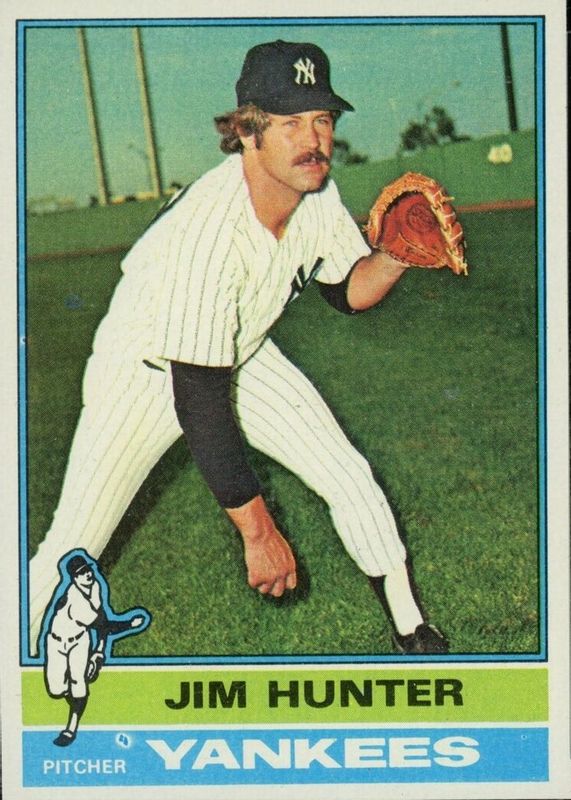
1968 Topps Catfish Hunter #280 – A vintage gem from Hunter’s early years with the A’s. These cards are harder to find in high grades, making them a true challenge for collectors. A PSA 8 can run $300–$500, while a PSA 9 could break the $1,000 barrier. The scarcity of well-preserved examples adds to the allure.
The Grading Gauntlet: How Condition Dictates Value
Grading is where the rubber meets the road in baseball card collecting. A Catfish Hunter card in poor condition might be worth a few bucks, but the same card in pristine condition? That’s a different story entirely. Professional grading services like PSA, BGS, and SGC dissect each card with the precision of a surgeon, evaluating factors like centering, corners, edges, and surface quality. A PSA 10 is the holy grail, but even a PSA 7 or 8 can command a premium if the card is visually stunning. Pro tip: Always compare raw cards to graded examples before buying—what looks good in your hand might not hold up under the grading microscope.
Autographed Hunter Cards: A Whole Different Ballgame
Autographed Catfish Hunter cards are a niche but thrilling segment of the market. Unlike his printed cards, signed copies are rarer and often carry a premium. The key to authenticity is crucial here—counterfeits lurk in the shadows, so stick to reputable sellers or third-party autograph authentication services. A well-signed Hunter card in a high-grade slab can fetch $500 or more, especially if it’s paired with a vintage photo or a team-specific piece. For collectors, these cards offer a personal connection to the legend himself.
The Market Pulse: Where Are Catfish Hunter Cards Headed?
So, are Catfish Hunter cards a smart investment, or are they just a fun trip down memory lane? The market for vintage baseball cards has seen wild fluctuations, but Hunter’s cards have remained relatively stable. High-grade examples continue to appreciate, particularly as younger collectors rediscover the legends of the 1960s and 1970s. However, the market isn’t without its pitfalls. Overgraded cards, fakes, and inflated prices can turn a potential treasure into a costly mistake. The savvy collector stays informed, patient, and disciplined—qualities that Hunter himself would likely admire.
Final Pitch: Should You Add Catfish Hunter Cards to Your Collection?
At the end of the day, collecting Catfish Hunter baseball cards isn’t just about the potential resale value. It’s about owning a piece of baseball lore, a tangible link to a player who defined an era. Whether you’re chasing a PSA 10 gem or just love the nostalgia of a well-worn 1970s Topps card, Hunter’s cards offer something for every collector. Just remember: the market is as unpredictable as a Hunter fastball, so do your homework, trust your instincts, and—above all—enjoy the hunt. After all, in the world of baseball cards, the thrill is in the chase.