Have you ever held a baseball signed by one of the game’s most electrifying sluggers—only to wonder, “Is this a keepsake or a vault-worthy treasure?” Alex Rodriguez, the man who once turned stadiums into his personal batting cages, left behind a legacy that now lingers in the hands of collectors. But here’s the kicker: not all A-Rod autographs are created equal. Some fetch a few hundred dollars at a garage sale. Others? They could buy you a small island. So, how do you tell the difference? And more importantly—how much are these signed baseballs really worth today?
Before you dust off that old shoebox in the attic or eye that pristine Rawlings ball on the shelf, let’s unpack the wild world of Alex Rodriguez signed memorabilia. We’re diving into the factors that turn ink on cowhide into cold, hard cash—and the sneaky pitfalls that could leave you holding a paperweight instead of a fortune.
The Signature Spectrum: What Makes an A-Rod Ball More Than Just a Baseball?
Not all Alex Rodriguez signatures are stamped with the same gravitas. The value of a signed baseball hinges on a delicate alchemy of authenticity, provenance, and sheer star power. A ball signed in the heat of his 2009 World Series victory? That’s a different beast than one scrawled on a batting helmet during a midseason autograph session. The former carries the weight of history; the latter might just be a fan’s lucky charm.
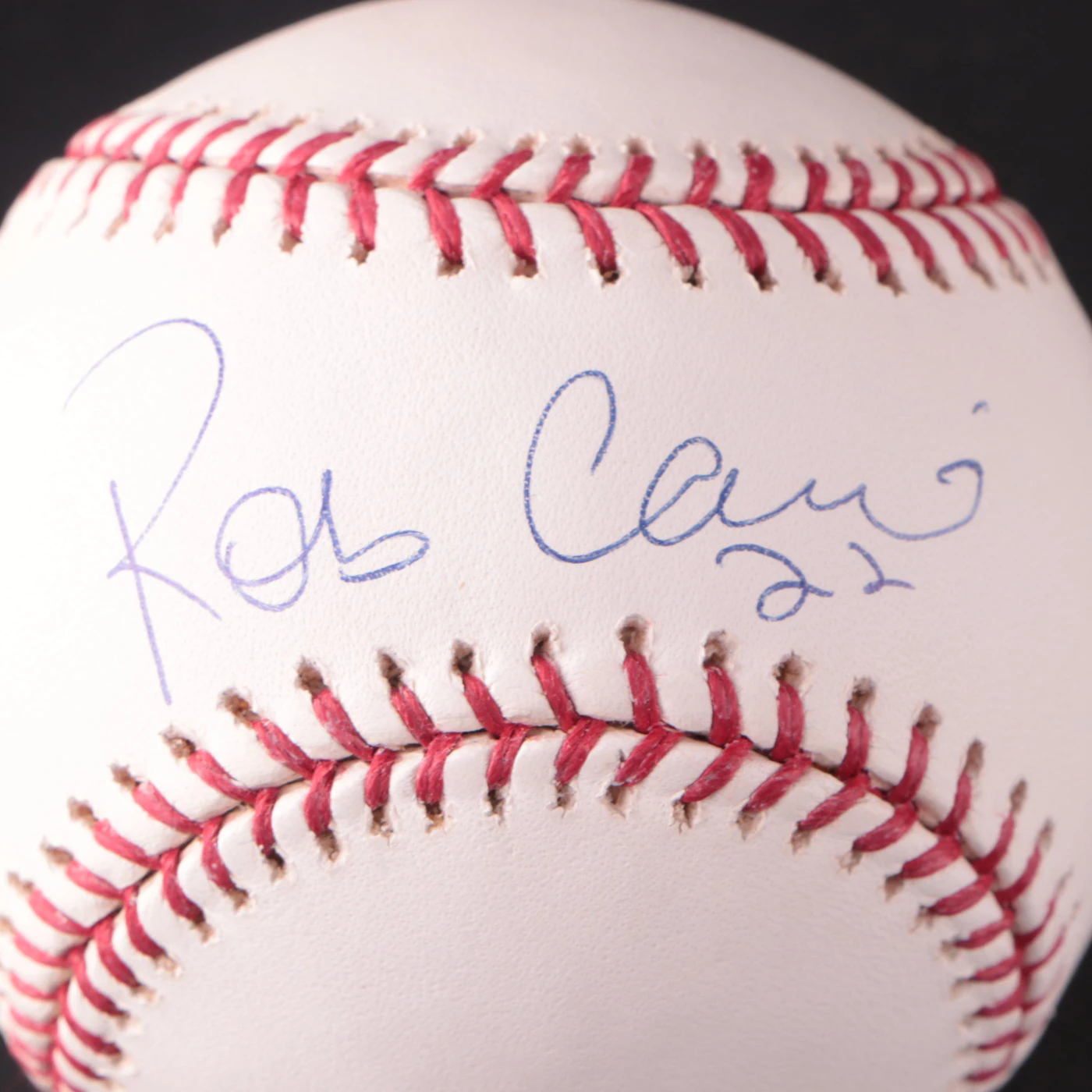
Then there’s the matter of ink integrity. Rodriguez’s signature evolved over time—from the loopy, youthful flourish of his early career to the more refined, deliberate strokes of his later years. A sharp-eyed collector can spot a forgery by the way the pen strokes wobble or the pressure varies. And let’s not forget the medium: a ball signed on a pristine Rawlings Gold Glove model will always outshine one etched onto a cheap, off-brand sphere.
But here’s where it gets tricky. Rodriguez’s autographs aren’t just about the signature. They’re about the context. A ball signed alongside teammates like Derek Jeter or Mariano Rivera? That’s a narrative goldmine. A lone A-Rod scrawl on a generic ball? It’s still cool—but it’s not going to break the bank.
The Authentication Gauntlet: How to Avoid Buying a $20 Lie
Imagine this: you’re at a memorabilia show, and a guy in a too-tight jersey is hawking a “game-used” A-Rod ball for $500. Do you swipe your card or sprint for the exit? The answer depends on whether you’ve done your homework. Authentication is the great equalizer in the signed baseball market—and the difference between a shrewd investment and a costly mistake.
Start with the big names: PSA/DNA, JSA, and Beckett Authentication Services are the gold standard. These third-party graders scrutinize signatures under magnification, check the ball’s materials, and even analyze the ink’s age. A slabbed ball—one encased in a tamper-proof holder with a serial number—commands premium prices. Unauthenticated? You’re rolling the dice.
But authentication isn’t foolproof. Even certified signatures can be fakes if the original autograph was traced or photocopied. That’s why provenance matters. A signed ball with a certificate of authenticity from a reputable dealer or a photo of Rodriguez signing it in person is worth its weight in diamonds. Without it? You’re playing Russian roulette with your wallet.
And then there’s the elephant in the room: team-signed baseballs. A ball signed by Rodriguez and his Yankees teammates might seem like a steal at $1,000—until you realize half the signatures are forged. Always demand to see the full chain of custody. If the seller can’t produce it, walk away.
Condition: The Silent Value Multiplier (or Killer)
You wouldn’t buy a vintage car with a rusted chassis, and you shouldn’t buy a signed baseball that’s seen better days. Condition is the silent assassin of memorabilia value. A ball with scuffs, peeling ink, or water damage might as well be a baseball-shaped paperweight.
Start with the ball itself. Is it a high-quality Rawlings or Wilson model, or a flimsy, mass-produced piece? Game-used balls—those actually used in MLB play—fetch exponentially more than store-bought ones. Then there’s the ink. Is the signature crisp and dark, or has it faded like a tan line? Even the ball’s cover can impact value: a pristine, glossy finish is far more desirable than one dulled by years of handling.
Storage plays a role too. A signed ball left in a damp basement or exposed to sunlight is a ticking time bomb. UV rays bleach ink. Humidity causes paper labels to curl. The ideal environment? A climate-controlled display case, away from direct light and temperature swings. Neglect this, and even a once-pristine A-Rod ball could plummet in value faster than a popup to shortstop.
Market Madness: Where to Buy—and Where to Beware
The hunt for an A-Rod signed baseball is a treasure hunt with more twists than a knuckleballer’s path. Auction houses like Heritage and Sotheby’s are the Mount Everests of the memorabilia world—where pristine, authenticated pieces sell for five or six figures. But if your budget’s more “Little League snack stand” than “private island,” online marketplaces like eBay, Heritage Auctions, and even Facebook groups offer a more accessible (if riskier) hunting ground.
eBay is a double-edged sword. It’s a goldmine for bargains, but also a den of scams. Look for sellers with 100% feedback and detailed photos showing the ball under multiple angles. Avoid listings with stock photos or vague descriptions like “vintage baseball.” And for the love of Cy Young, never wire money to a seller who insists on payment outside the platform.
Specialized dealers and memorabilia shows offer another path, but here’s the catch: they know their worth. A dealer isn’t going to sell a PSA/DNA slabbed A-Rod ball for 50% off. If the price seems too good to be true, it probably is. And always ask for a return policy. A reputable seller will stand behind their merchandise.
But what if you’re not looking to drop six figures? Even mid-tier signed baseballs can be a smart investment. A single-signed A-Rod ball in excellent condition might run you $300–$800, depending on the era. Team-signed pieces? Those can dip as low as $150 or skyrocket past $5,000. The key is knowing what you’re buying—and why.
The Wild Cards: What Could Make—or Break—Your Investment
Baseball memorabilia is a fickle beast. One day, a signed ball is a dusty relic. The next? It’s the centerpiece of a museum exhibit. External factors can turn a modest collectible into a bonanza or a white elephant overnight.
Consider Rodriguez’s legacy. His Hall of Fame induction in 2022 sent shockwaves through the market. Suddenly, anything tied to his playing days—especially post-season heroics—saw a surge in demand. But what if he’d been banned from the Hall? The value of his memorabilia could’ve nosedived. The lesson? A player’s reputation is as volatile as a 3-2 count in the bottom of the ninth.
Then there’s the “dead ball” factor. A signed ball from Rodriguez’s 2009 MVP season? That’s a unicorn. One from a forgettable 2003 slump? Not so much. Scarcity drives value, and not all moments in a player’s career are created equal. A ball signed during a record-breaking home run chase? That’s a ticket to the big leagues of collectibles.
And let’s not ignore the sentimental trap. Just because you watched Rodriguez hit a 500-foot bomb in 2007 doesn’t mean your signed ball is worth a fortune. Emotional attachment is a terrible investment strategy. If you’re buying for love, fine. But if you’re eyeing a profit? Stick to the data.
The Bottom Line: Is an A-Rod Signed Baseball Worth It?
So, you’ve got the ball. It’s authenticated, in mint condition, and tied to a legendary moment. Now what? The answer depends on your goals. If you’re a fan, the value is priceless. If you’re an investor, the math gets trickier.
A single-signed A-Rod ball in excellent condition typically sells for $500–$1,500, with premium pieces—especially those from his peak years—fetching $2,000 or more. Team-signed balls? They’re the lottery tickets of the memorabilia world. A pristine Yankees World Series ball could net you $5,000–$10,000, while a lesser-known team’s version might go for a few hundred.
But here’s the real kicker: the market for Rodriguez’s memorabilia isn’t just about baseball. It’s about nostalgia, legacy, and the stories we tell ourselves. A signed ball isn’t just ink on leather—it’s a time capsule. It’s the crack of the bat in October. The roar of the crowd. The sweat on a jersey after a 162-game grind.
So, is it worth it? If you’re buying with your heart, absolutely. If you’re buying with your wallet, do your homework. And if you’re buying because you think it’s a get-rich-quick scheme? Well, let’s just say the only thing guaranteed in this hobby is that the real winners are the ones who love the game—not the ones chasing the score.
Now, go dust off that shoebox. You never know what might be hiding in the corners.