It’s no secret that vintage football cards have become a cornerstone of sports memorabilia collecting, but few rookie cards from the 1990s command the same reverence as Eddie George’s 1996 Topps Chrome issue. Even decades after his last carry for the Tennessee Titans, the card remains a linchpin in modern football card collections. Walk into any serious collector’s den, and you’ll likely find a graded Near Mint or Gem Mint copy tucked away in a rigid slab, its holographic sheen catching the light like a stadium floodlight on a late-season Sunday. The fascination isn’t merely about nostalgia—it’s about the convergence of athletic excellence, market timing, and the intangible aura that turns cardboard into currency.
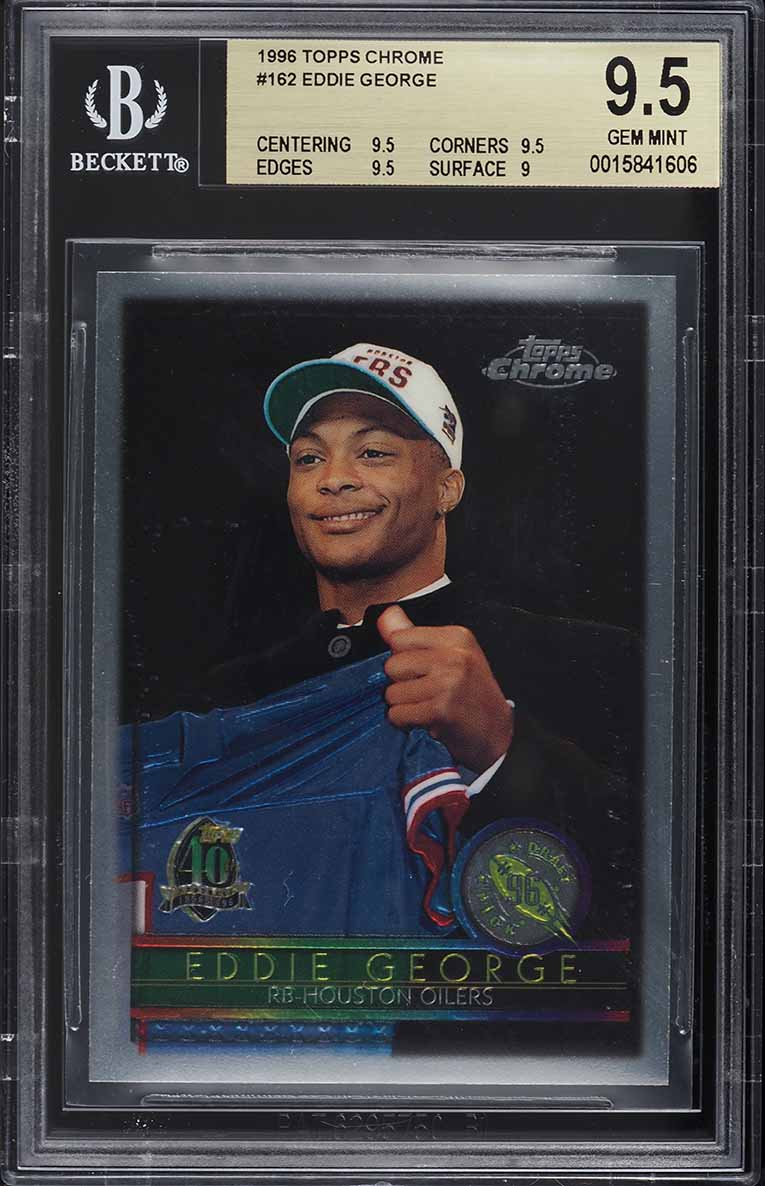
At first glance, the numbers seem modest. A 1996 Topps Chrome Eddie George rookie card graded BGS 9.5 recently sold for over $1,200 on Fanatics, a figure that might raise eyebrows among those accustomed to the stratospheric prices of modern autographed jerseys or game-used cleats. Yet, this price point tells only part of the story. It’s not the raw dollar value that keeps collectors coming back—it’s the story the card tells, the silent narrative of a player who defined an era and the hobbyists who immortalized him in plastic and glue. That’s the deeper pull, the reason why this seemingly simple piece of cardboard still resonates with such fervor.
The Magnetic Pull of a Hall of Fame Career
Eddie George wasn’t just a running back—he was a force of nature during his prime. Drafted fourth overall by the Houston Oilers in 1996, he quickly became the face of the franchise as it transitioned to Tennessee. Over eight seasons, he amassed 10,441 rushing yards, 110 touchdowns, and a 2000 Offensive Player of the Year award. His combination of power, vision, and durability made him a perennial Pro Bowler and cemented his legacy in NFL lore. But it wasn’t just his statistics that captivated fans; it was his style—each thunderous run a statement, each stiff-arm a declaration of dominance.
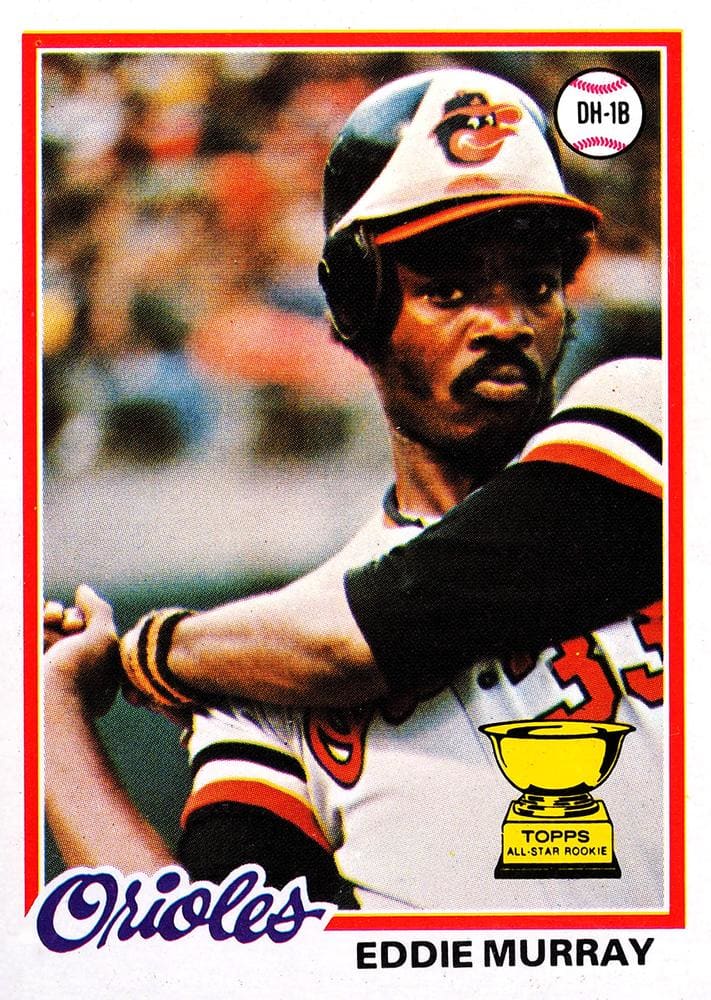
That on-field brilliance translated seamlessly into the cardboard realm. Collectors don’t just chase George’s card because it’s old—they chase it because it represents a player who embodied the grit and glory of late-90s football. The 1996 Topps Chrome set, with its reflective foil and sharp photography, captured George mid-stride, the ball tucked securely in his right arm, his gaze locked forward. The image isn’t just a snapshot—it’s a frozen moment of potential, a visual promise of greatness fulfilled. And when that promise was realized on the field, the card’s significance only deepened. It became more than a collectible; it became a talisman of a golden age.
The Chrome Effect: Why 1996 Topps Stands Apart
The 1996 Topps Chrome set wasn’t just another football card release—it was a technological leap. Introduced as a premium subset of the classic Topps line, the Chrome edition featured a glossy, reflective surface that made the cards shimmer under light, a visual upgrade that set it apart from its matte predecessors. For collectors, this wasn’t just an aesthetic choice; it was a statement of intent. The cards were designed to feel modern, luxurious, even futuristic. George’s rookie card, with its bold colors and dynamic pose, became the crown jewel of the set.
But the Chrome treatment did more than dazzle—it preserved the card’s condition. Unlike traditional cards, which could scuff or fade over time, the foil layer in Chrome cards provided a protective barrier. This durability made high-grade copies more attainable, and as grading standards tightened in the 2010s, collectors began to prioritize BGS and PSA slabs as badges of authenticity. A BGS 9.5 Eddie George isn’t just a card; it’s a certified artifact, its condition a testament to the care of generations of owners. The Chrome finish, once a novelty, now acts as a time capsule, preserving the card’s youthful vibrancy decades after it left the factory.
The Grading Gold Rush: Why Condition Dictates Value
In the world of sports cards, condition is king. A 1996 Topps Chrome Eddie George in raw, ungraded form might fetch a few hundred dollars at best, but once it’s encased in a BGS 9.5 slab, its value skyrockets. The difference isn’t just cosmetic—it’s psychological. A graded card carries the weight of third-party validation, a neutral authority declaring its near-perfection. For collectors, that slab is a shield against doubt, a guarantee that the card they’re holding is as close to mint as humanly possible.
The grading process itself has become a subculture within collecting. Companies like BGS and PSA don’t just evaluate cards—they arbitrate their legacies. A BGS 9.5 Eddie George isn’t just a card; it’s a curated experience. The subgrades—centering, corners, edges, surface—are dissected with the precision of a surgeon, each imperfection a scar that tells a story. Collectors pore over these details, debating the merits of a near-perfect centering versus a pristine surface. It’s a level of scrutiny that borders on obsession, but it’s also what transforms a simple piece of cardboard into a museum piece.
The Market’s Alchemy: Rarity, Demand, and the Hype Cycle
Collecting isn’t just about nostalgia—it’s about economics. The Eddie George rookie card’s value has been shaped by the same forces that drive art auctions or rare wine markets: scarcity, desirability, and perceived prestige. While Topps produced millions of cards in 1996, the Chrome subset was smaller, and high-grade copies were always harder to come by. As interest in vintage football cards surged in the 2020s, fueled by social media and the resurgence of sports card investing, demand for George’s card outpaced supply. The result? A perfect storm of hype and heritage.
But the market’s fascination with the Eddie George rookie card goes beyond mere supply and demand. It’s about the narrative of rediscovery. For years, football cards were overshadowed by baseball’s dominance in the collecting world. Then, platforms like eBay and later Instagram democratized access, allowing niche cards like George’s to find new audiences. Suddenly, a generation of collectors who grew up watching George dominate the gridiron could now own a piece of his legacy. The card became a bridge between eras, a way to connect with a player who defined an entire decade of football.
The Emotional Ledger: Why Collectors Hold On
At its core, collecting is an emotional endeavor. A 1996 Topps Chrome Eddie George rookie card isn’t just an investment—it’s a keepsake. For some, it’s a reminder of their youth, a tangible link to a time when football was simpler and heroes were larger than life. For others, it’s a trophy, a symbol of their dedication to the hobby. And for a select few, it’s a piece of history, a fragment of a player’s journey from rookie to legend.
The card’s value, then, isn’t just measured in dollars—it’s measured in memories. A collector might display their BGS 9.5 George in a shadow box, flanked by photos of his greatest runs or a ticket stub from a playoff game. The card becomes part of a larger story, a chapter in a personal narrative of fandom. It’s why a card that sells for $1,200 feels priceless to its owner. It’s not just cardboard and foil—it’s a vessel for emotion, a physical manifestation of a passion that transcends the game itself.
The Future of the George Legacy
As the years pass, the Eddie George rookie card’s allure shows no signs of waning. If anything, its mystique is growing. With each passing season, George’s legacy becomes more entrenched in football history, and his rookie card becomes a more coveted relic. The rise of graded card collecting has only amplified its appeal, turning what was once a simple sports card into a blue-chip asset. And as new generations of collectors discover the thrill of the hunt, the demand for high-grade copies will likely continue to climb.
Yet, the card’s true power lies in its ability to evoke something intangible—a sense of connection to a bygone era, a reminder of the players who made the game great. In a world where highlights are reduced to 10-second clips and stats are dissected by algorithms, the Eddie George rookie card offers something rare: a moment of stillness, a pause to appreciate the artistry of the past. It’s more than a collectible. It’s a piece of history, preserved in plastic and foil, waiting to be rediscovered by the next generation of fans.
And that, perhaps, is why collectors still care. Not just for the value, not just for the investment potential, but for the stories the card holds—the echoes of a player’s greatness, the whispers of a hobby’s passion, and the quiet promise that some things, no matter how fleeting, are meant to last.