Have you ever wondered if your dusty shoebox of vintage baseball cards could be hiding a fortune? What if I told you that a single Mark McGwire rookie card could fetch more than a down payment on a house? The world of sports memorabilia is a wild, unpredictable beast, and few players embody its whimsical highs and lows quite like the man who once chased—and shattered—Roger Maris’ single-season home run record. Mark McGwire’s baseball cards aren’t just collectibles; they’re time capsules of a bygone era when sluggers swung for the fences and the hobby of card collecting was as much about nostalgia as it was about investment. But here’s the kicker: not all McGwire cards are created equal. Some are rising like a pop-up fastball, while others languish like a weak grounder to shortstop. So, which ones should you be eyeing—and which ones might leave you striking out?
The Allure of the Rookie: Why McGwire’s First Cards Still Rule the Market
Every great player’s legacy begins with their rookie card, and McGwire’s 1987 Topps Tiffany #487 is the crown jewel of his early career. Printed on high-gloss, premium stock, the Tiffany set was a limited-run marvel, making these cards instantly desirable. Today, a graded PSA 10 can command five figures, a staggering leap from its original $0.50 price tag. But why the obsession? Partly it’s the sheer scarcity—Topps only produced a fraction of their usual run for the Tiffany set. Partly it’s the mystique of McGwire’s rookie season, where he announced himself as a power-hitting phenom. And partly? It’s the thrill of owning a piece of history before the world knew just how historic McGwire’s career would—or wouldn’t—become.
Then there’s the 1987 Fleer #583, a more accessible rookie card that still holds its own. While not as flashy as the Tiffany, its bold design and McGwire’s youthful exuberance make it a fan favorite. Graded versions in top condition have seen steady appreciation, especially as collectors seek out affordable entry points into McGwire’s oeuvre. The lesson? Rookie cards aren’t just about pedigree; they’re about the story they tell—and McGwire’s story is one of raw power, untapped potential, and a legacy that’s still being written.
Commemorative Cards: When Sentimentality Meets Speculation
McGwire’s 1998 season—when he and Sammy Sosa’s home run chase captivated the nation—spawned a wave of commemorative cards that blur the line between collectible and investment. The 1998 Upper Deck #276, featuring McGwire’s iconic “chase the record” pose, is a prime example. These cards aren’t just about stats; they’re about the cultural moment they represent. A PSA 9 of this card can sell for hundreds, but pristine copies have fetched over a thousand. The challenge? Separating the truly special from the mass-produced. Many 1998-era inserts were printed in staggering quantities, diluting their long-term value. The key is to focus on those with unique designs, autographs, or serial-numbered parallels that scream “limited edition.”
Then there are the autographed cards, where McGwire’s signature adds a layer of authenticity—and controversy. His autographed relics, especially those paired with game-used jersey swatches, have seen explosive growth. The 1999 Upper Deck Game Jersey #GJ-MG is a standout, blending his rookie-year uniform with a piece of game-worn fabric. These cards appeal to the “game-used” collector, a niche that’s grown exponentially as fans seek tangible connections to their heroes. But beware: not all autographs are equal. Post-career signatures, especially those done en masse for modern sets, lack the cachet of his prime-era autographs. The lesson? Authenticity isn’t just about the card—it’s about the story behind it.
The Parallel Universe: Serial-Numbered Cards and Their Hidden Gems
Parallel cards—those with unique serial numbers, colors, or printing variations—are where the real magic happens in modern collecting. McGwire’s parallels run the gamut from the ultra-rare to the merely uncommon, but the ones that stand out are those with a compelling backstory. The 2000 Playoff Contenders Championship Ticket #CT-MG/100, for instance, is a serial-numbered card tied to a specific event, making it a prized possession for event collectors. Limited to just 100 copies, its value has climbed steadily as the chase for exclusive cards intensifies.
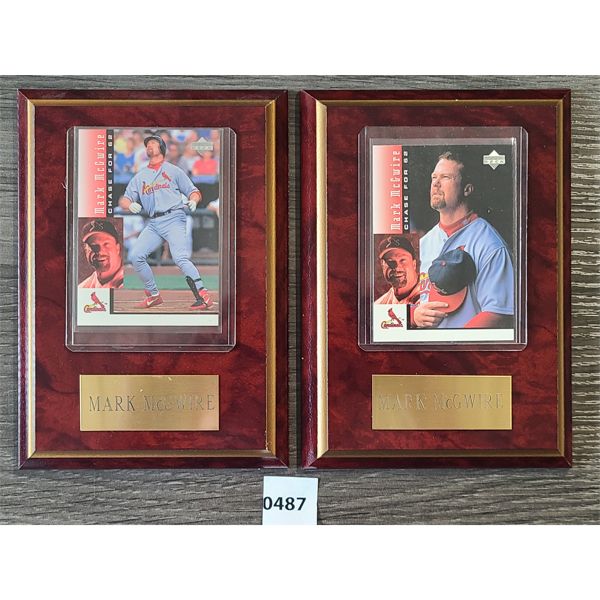
But not all parallels are created equal. Some sets, like the 1993 SP Authentic #276, feature a stunning metallic finish that makes McGwire’s image leap off the card. These “shimmer” parallels are visually striking, but their value hinges on condition. A card with even the slightest corner wear can plummet in value, while a gem mint copy can soar. The challenge for collectors? Navigating the sea of parallels to find those with true scarcity and aesthetic appeal. It’s a game of patience, research, and a bit of luck.
Grading Wars: How Condition Can Make or Break Your Investment
Imagine holding a pristine McGwire rookie card, only to realize a tiny crease in the corner has turned it from a treasure into a trinket. That’s the brutal reality of card grading, where the difference between a PSA 9 and a PSA 10 can mean the difference between a comfortable vacation and a used car payment. Professional grading services like PSA, BGS, and SGC have become the gatekeepers of value, their slabs acting as both armor and albatross for collectors. A McGwire card graded PSA 10 can sell for 10 times the price of a PSA 8, but the grading process is as much art as science. Subtle flaws—ink smudges, print defects, or even the slightest off-center cut—can tank a card’s grade and its value.
The rise of “raw” grading—where ungraded cards are bought and sold based on buyer trust—has added another layer of complexity. Some collectors swear by the thrill of the hunt, trusting their own eyes over a third-party’s opinion. Others insist on the security of a graded slab. The debate rages on, but one thing is clear: condition is king. Whether you’re a seasoned investor or a casual fan, protecting your cards from light, humidity, and the dreaded “jungle rot” of poor storage is non-negotiable. The best McGwire cards aren’t just investments; they’re heirlooms, meant to be passed down through generations.
The Wild Card: McGwire’s Legacy and the Future of His Cards
Here’s the million-dollar question: Will McGwire’s cards continue to rise in value, or is the market due for a correction? The answer lies in the intersection of nostalgia, scarcity, and the player’s legacy. McGwire’s Hall of Fame case remains contentious, with his admission of steroid use casting a long shadow over his accomplishments. Yet, his impact on the game—both as a slugger and a cultural figure—is undeniable. For collectors, this creates a fascinating dynamic: Do you chase cards tied to his on-field heroics, or do you bet on the redemption arc of a fallen icon?
The market seems to be leaning toward the former. Cards from his prime years, especially those tied to his record-breaking 1998 season, continue to appreciate as baby boomers and Gen X collectors seek out their childhood heroes. Meanwhile, modern reprints and tribute cards struggle to gain traction, a reminder that authenticity and era-specific appeal are non-negotiable. The challenge for new collectors? Avoiding the trap of overpaying for hype. Just because a card features McGwire doesn’t mean it’s valuable. Focus on the cards with true scarcity, historical significance, or unique attributes—and always, always do your homework.
So, is it too late to strike gold with Mark McGwire’s baseball cards? Not by a long shot. The market for vintage sports memorabilia is as unpredictable as a ninth-inning rally, but the cards that stand the test of time are those with a story to tell. Whether it’s a rookie card that launched a legend, a serial-numbered parallel that’s truly one-of-a-kind, or an autographed relic that bridges the gap between player and fan, McGwire’s cards offer something for every collector. Just remember: the best investments aren’t just about the numbers—they’re about the passion. And in the world of baseball cards, passion is the ultimate currency.