In the pantheon of baseball memorabilia, few artifacts command the kind of reverence—or price tag—as a Mike Piazza signed baseball. The Hall of Fame catcher’s name alone evokes a bygone era of towering home runs, clutch hitting, and the raw, unfiltered drama of the diamond. But what is a Mike Piazza signed baseball truly worth today? The answer isn’t as simple as checking a price guide. It’s a story of legacy, scarcity, and the intangible magic that turns a piece of cardboard and ink into a collector’s holy grail.
For many fans, the fascination begins with the numbers. Piazza’s career slash line of .308/.377/.545 speaks to his offensive dominance, but it’s his 427 home runs—many of them tape-measure blasts—that cement his place in baseball lore. A signed baseball bearing his name isn’t just a piece of memorabilia; it’s a tangible connection to those legendary at-bats, to the crack of the bat echoing through stadiums like Shea or Dodger Stadium. Yet, the value of such an item transcends mere statistics. It’s about the stories it carries, the emotions it stirs, and the way it bridges the gap between eras.
The Market’s Pulse: What Drives the Price of a Piazza Signed Baseball
At first glance, the market for Mike Piazza signed baseballs seems straightforward. A quick search reveals prices ranging from a few hundred dollars for a basic autograph to tens of thousands for a ball signed in-game or accompanied by a certificate of authenticity. But the real story lies in the nuances. The condition of the ball, the type of ink used, and even the era in which it was signed can dramatically alter its value.
Consider the difference between a ball signed with a Sharpie versus one signed with a more traditional pen. Sharpie signatures, while durable, often lack the aesthetic appeal of a fountain pen’s graceful strokes. Collectors prize the latter, not just for their visual appeal but for the implied authenticity—fountain pens were the tool of choice for many players in the 1990s and early 2000s. Then there’s the matter of the ball itself. A pristine, game-used ball from Piazza’s prime years, signed in the dugout or post-game, carries a premium that a mass-produced, store-bought ball simply can’t match.
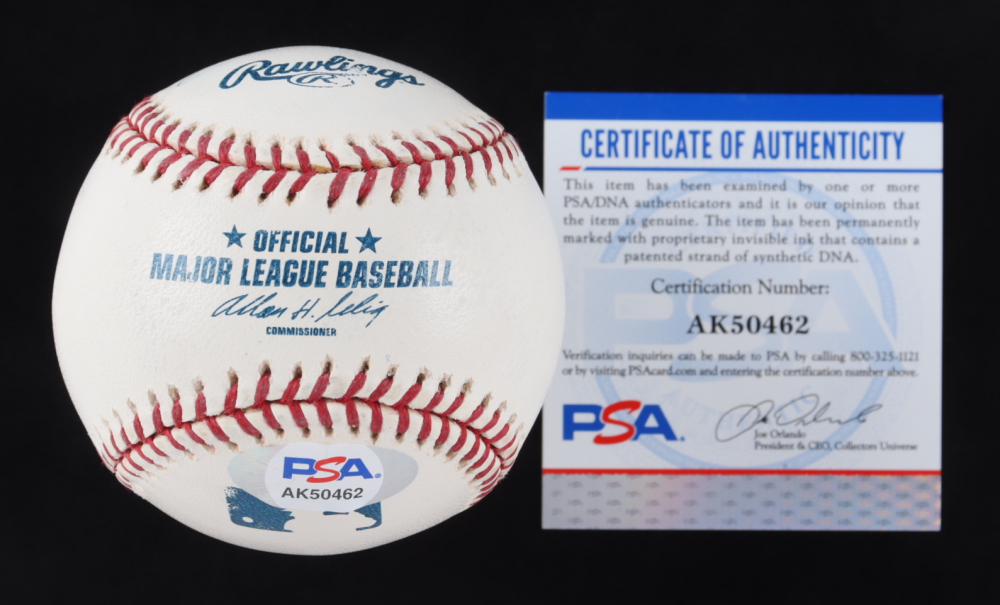
The certification process adds another layer of complexity. A Piazza signed baseball authenticated by PSA or JSA is almost always worth more than an uncertified one. The market has spoken: trust in the grading process is paramount. But even here, not all certifications are created equal. A ball graded PSA/DNA as “game-used” or “in-game” will fetch a higher price than one graded simply as “autograph.” The devil, as they say, is in the details.

The Rarity Factor: Why Some Piazza Signatures Are More Valuable Than Others
Not all Mike Piazza signed baseballs are created equal, and that’s precisely what makes the market so intriguing. The rarest items aren’t just those signed during Piazza’s Hall of Fame induction or in the heat of a playoff run—they’re the ones that carry a story. A ball signed during his rookie season in 1993, for example, is a piece of living history. It’s a snapshot of a player on the cusp of greatness, before the weight of expectations and the glare of the spotlight became permanent fixtures in his career.
Then there are the limited-edition releases. Piazza’s participation in special events, charity auctions, or team-sponsored signings often results in baseballs that are produced in smaller quantities. These items aren’t just autographs; they’re artifacts of a moment, whether it’s a tribute to his 1996 National League Championship Series performance or a celebration of his 1999 All-Star Game appearance. The scarcity of these pieces drives demand, and demand, as any collector knows, is the lifeblood of value.
But rarity isn’t just about quantity—it’s about quality, too. A Piazza signed baseball that’s been preserved in a climate-controlled case, free from the ravages of time and humidity, will always be more desirable than one left to yellow in a shoebox. The condition of the ball, the clarity of the signature, and even the presence of original ink all play a role in determining its worth. It’s a reminder that in the world of memorabilia, preservation is as important as provenance.
The Emotional Ledger: What Makes a Piazza Signature More Than Just Ink on a Ball
If the market for Mike Piazza signed baseballs were driven solely by numbers, the conversation would end there. But it’s the emotional resonance of these items that truly sets them apart. For fans who grew up watching Piazza’s prodigious power, a signed baseball isn’t just a collectible—it’s a talisman. It’s a way to hold onto a piece of their youth, to reconnect with the thrill of a walk-off home run or the tension of a full count in the bottom of the ninth.
This emotional connection explains why some collectors are willing to pay a premium for items with personal significance. A Piazza signed baseball that was gifted to a family member, or one that was signed during a meet-and-greet at a minor league stadium, carries a narrative weight that a generic autograph simply can’t match. It’s the difference between owning a piece of history and owning a piece of *your* history.
There’s also the element of nostalgia to consider. Piazza’s career spanned the late 1990s and early 2000s, a golden era for baseball that was marked by steroid scandals, labor disputes, and the unshakable dominance of the New York Yankees. For many fans, his signature represents a time before the game became mired in controversy—a time when baseball was as much about style as it was about statistics. The crack of Piazza’s bat, the way he’d tip his helmet after a home run, the sheer joy he brought to the field—these are the memories that collectors are paying to preserve.
The Future of Piazza Memorabilia: Trends and Predictions
As with any collectible, the value of Mike Piazza signed baseballs is subject to the whims of the market. But several trends suggest that his memorabilia will only grow in desirability. The first is the passage of time. As Piazza’s career recedes further into the past, the artifacts from his prime become increasingly scarce. Fewer players from the 1990s remain active, and those who do are nearing the end of their careers. This scarcity will inevitably drive up prices for authenticated Piazza items.
Another factor is the rise of digital collecting. Platforms like eBay and Heritage Auctions have made it easier than ever for fans to buy, sell, and trade memorabilia. But they’ve also introduced a level of transparency that can sometimes work against sellers. Buyers are more informed than ever, and they’re quick to spot overpriced or misrepresented items. This means that the market for Piazza signed baseballs will increasingly favor those with impeccable provenance and condition.
Finally, there’s the question of Piazza’s legacy. As one of the greatest hitting catchers in baseball history, his name will continue to resonate with new generations of fans. The recent surge in interest in vintage baseball cards and memorabilia suggests that collectors are hungry for items that tell a story. A Piazza signed baseball does just that—it tells the story of a player who defined an era, who brought joy to millions of fans, and who left an indelible mark on the game.
The value of a Mike Piazza signed baseball isn’t just a number on a screen or a line in an auction catalog. It’s a reflection of his enduring impact on the game, a testament to the memories he created, and a bridge between the past and the present. For collectors, it’s an investment in history. For fans, it’s a way to keep the spirit of Piazza’s greatness alive. And for the market, it’s a reminder that some legacies are simply priceless.