In the pantheon of baseball’s most electrifying shortstops, few names resonate with the same reverence as Nomar Garciaparra. A six-time All-Star, two-time batting champion, and the 1997 American League Rookie of the Year, Garciaparra’s on-field brilliance was matched only by his marketability in the late 1990s. His rookie cards, particularly the 1997 Topps and Bowman brands, became instant classics—coveted not just for their cardboard cachet but as tangible relics of a golden era in the sport. Yet, as the decades have passed and the hobby has evolved, a critical question lingers: Are Nomar Garciaparra rookie cards still a shrewd investment, or have they become overvalued relics of a bygone hype cycle?
To answer this, we must venture beyond the nostalgia-drenched nostalgia of cardboard and examine the card’s journey from minted collectible to modern-day asset. The market for vintage sports cards has undergone seismic shifts in recent years, with once-stable investments now subject to the whims of flippers, grading services, and digital trading platforms. Garciaparra’s rookie cards, once a staple in every collector’s binder, now occupy a precarious position—neither fully embraced as a blue-chip investment nor dismissed as a speculative gamble. The answer lies in a nuanced interplay of supply, demand, and the shifting tides of baseball fandom itself.
The Genesis of a Legend: Why Nomar’s Rookie Cards Captured Hearts
Nomar’s rookie season in 1997 was nothing short of revolutionary. The Boston Red Sox phenom dazzled fans with his defensive wizardry, clutch hitting, and a charisma that transcended the diamond. His rookie cards, particularly the 1997 Topps #313 and Bowman #129, became instant hits, capturing the essence of his rookie-year magic. The Topps card, in particular, is a masterclass in design—its bold red borders, crisp action shot, and the unmistakable “Nomar” signature emblazoned across the front made it an instant classic.
What set these cards apart was their timing. The late 1990s marked the apex of the baseball card boom, a period when manufacturers churned out millions of cards annually, yet Nomar’s rookie cards stood out for their scarcity in high-grade condition. The grading revolution, spearheaded by PSA and BGS, further amplified their allure, turning pristine copies into coveted trophies. For a generation of collectors, owning a Gem Mint Nomar rookie card was akin to possessing a piece of baseball immortality.
The Market’s Pendulum: From Boom to Bust and Back Again
The trajectory of Nomar’s rookie cards mirrors the broader cycles of the sports memorabilia market. In the early 2000s, as the initial hype waned, prices stagnated. Many collectors, lured by the promise of quick profits, found themselves holding depreciating assets. Yet, the 2010s brought a resurgence in vintage card collecting, fueled by millennial nostalgia and the rise of online marketplaces like eBay and Heritage Auctions. Suddenly, Nomar’s rookie cards were back in vogue, with PSA 10 copies of the 1997 Topps card fetching upwards of $5,000—a far cry from the $50 they commanded in the early 2000s.
Today, the market for Nomar’s rookie cards is a study in contrasts. On one hand, high-grade copies remain in demand, particularly among collectors who view them as a gateway to the late-90s baseball boom. On the other, the influx of reprints, graded slabs, and speculative flipping has created a crowded field where only the rarest copies command premium prices. The 1997 Bowman Chrome refractor, for instance, has seen wild price swings, with some copies selling for over $10,000 while others languish unsold. The lesson? Scarcity alone no longer guarantees value—it’s the story behind the card that truly matters.
Grading Wars: The Double-Edged Sword of PSA and BGS
No discussion of Nomar’s rookie cards would be complete without addressing the grading industry’s role in shaping their value. PSA and BGS have become the arbiters of authenticity, their slabs acting as both a seal of approval and a barrier to entry. A PSA 10 Gem Mint Nomar rookie card is a prized possession, often selling for multiples of its ungraded counterpart. Yet, the grading process is not without its controversies. The rise of “grade-flipping,” where sellers submit cards multiple times to achieve a higher score, has introduced an element of risk into the market.
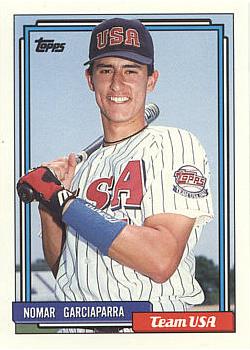
Moreover, the grading industry’s own fluctuations—such as PSA’s recent slowdown in submissions—have created bottlenecks that can artificially inflate prices. Collectors must now weigh the cost of grading against the potential return, a calculation that wasn’t a factor in the pre-grading era. For Nomar’s rookie cards, this means that only the most pristine examples are truly worth the investment, while lower-grade copies may struggle to retain value.
The Nostalgia Tax: Why Emotion Still Drives the Market
At its core, the sports card market is a marketplace of emotions. Collectors don’t just buy cards; they buy memories, nostalgia, and a connection to their favorite players. Nomar Garciaparra’s rookie cards embody this emotional pull. For fans who grew up watching him dominate the American League, owning one of his cards is a way to relive those glory days. This “nostalgia tax” is a powerful force, often driving prices higher than fundamentals would suggest.
Yet, emotion is a fickle mistress. As younger generations of collectors enter the market, their priorities shift. Millennials may chase Nomar’s cards for their historical significance, but Gen Z collectors are more likely to gravitate toward modern stars like Shohei Ohtani or Juan Soto. The result? A generational divide in what constitutes a “valuable” card. For Nomar’s rookie cards to maintain their allure, they must transcend mere nostalgia and prove their worth as long-term investments.
Alternatives and Complements: Diversifying the Nomar Portfolio
For those considering an investment in Nomar’s rookie cards, diversification is key. While the 1997 Topps and Bowman cards are the most iconic, other Nomar-related cards offer compelling alternatives. Autographed cards, particularly those from his early career, have seen steady appreciation. The 1998 Upper Deck Rookie Edition Preview #1 SR, for instance, is a hidden gem that captures Nomar’s burgeoning stardom before the full-blown hype of 1997.
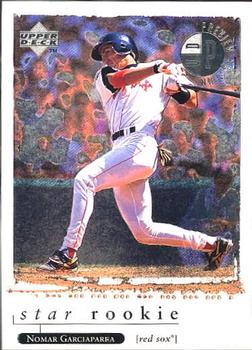
Additionally, modern relics and memorabilia cards featuring Nomar—such as the 2017 Topps Archives card—offer a lower-cost entry point into his collectible universe. These cards often come with autographs or pieces of game-used memorabilia, adding a layer of authenticity that pure rookie cards lack. For investors wary of the vintage market’s volatility, these alternatives provide a balanced approach to building a Nomar-centric collection.
The Future: Will Nomar’s Cards Stand the Test of Time?
The million-dollar question, of course, is whether Nomar Garciaparra’s rookie cards will retain—or even increase—their value in the decades to come. The answer hinges on several factors: the continued growth of the vintage market, the emergence of new baseball legends, and the shifting tastes of collectors. If the past decade is any indication, high-grade Nomar rookie cards will remain desirable, particularly among those who view them as a link to baseball’s late-90s golden age.
Yet, the market’s unpredictability cannot be ignored. The recent surge in interest around vintage cards has already begun to cool, with some high-profile sales failing to meet expectations. For Nomar’s cards, this means that timing is everything. Investors must ask themselves: Is now the moment to buy, or should they wait for a potential dip? The answer may lie in the cards themselves—specifically, in their condition and provenance. A PSA 10 with a pristine centering and sharp corners is far more likely to weather market downturns than a lower-grade copy.
Ultimately, the value of Nomar Garciaparra’s rookie cards is a reflection of more than just cardboard and ink. It’s a story of baseball’s past, the evolution of collecting, and the enduring power of nostalgia. For those who believe in the magic of the hobby, these cards are more than investments—they are time capsules, preserving the spirit of a player who once made the game feel electric. Whether they appreciate further or fade into obscurity depends on forces far beyond the diamond.
One thing is certain: Nomar Garciaparra’s rookie cards will always hold a special place in the hearts of those who witnessed his reign. The question is whether future generations will share that sentiment—or if the market will relegate them to the dustbin of collectible history. For now, they remain a tantalizing blend of art, athleticism, and ambition—a reminder that in the world of sports cards, the past is never truly past.