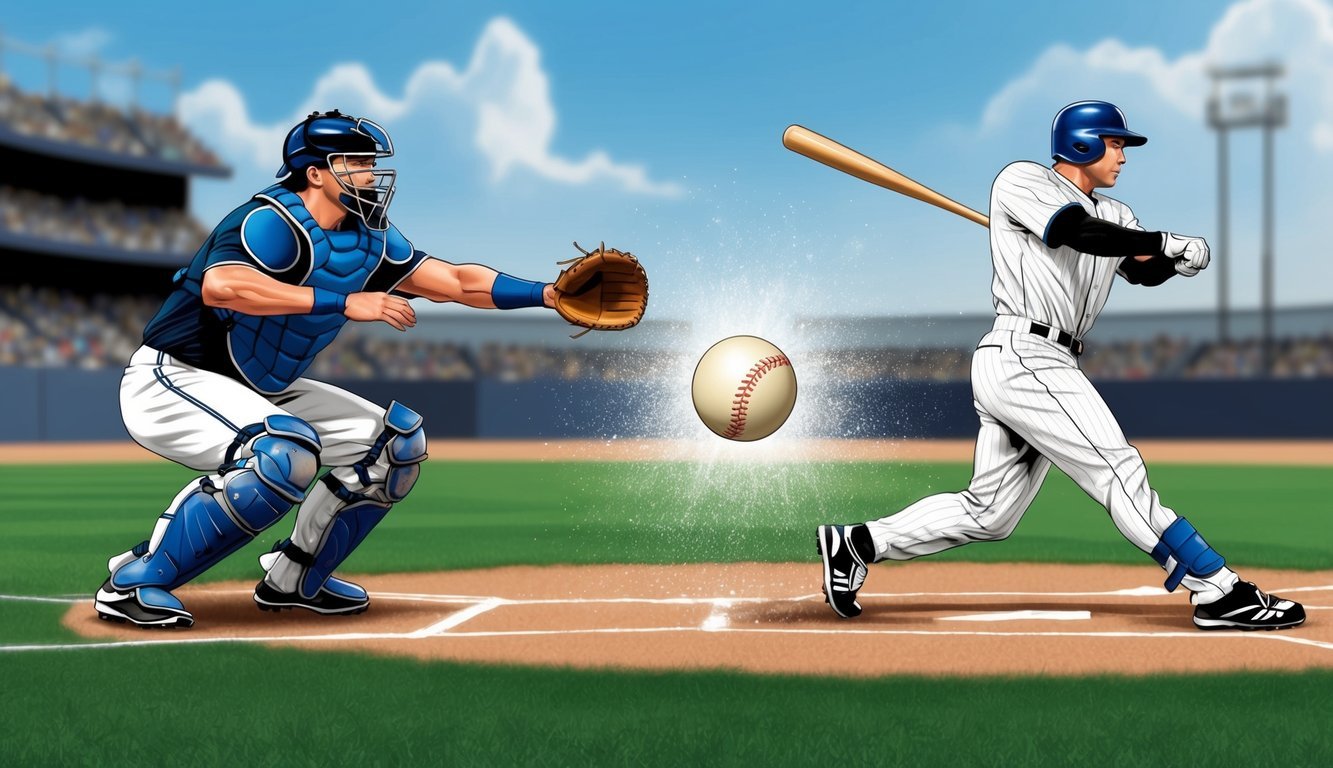
Imagine this: the bases are loaded, the count is full, and the tension in the stadium is as thick as a summer heatwave. The batter digs in, the pitcher winds up, and the catcher crouches like a coiled spring. Then—bam—the bat grazes the catcher’s mitt. The umpire’s arm shoots up. The crowd erupts in a cacophony of confusion. What just happened? Welcome to the enigmatic world of catcher interference, the baseball rule that turns even the most seasoned fans into bewildered spectators.
The Curious Case of the Phantom Interference: What Exactly Is It?
Catcher interference is a rare but pivotal infraction in baseball, where the catcher’s defensive actions impede the batter’s swing. Rule 6.06(c) of the MLB rulebook states that if the catcher’s glove or body obstructs the batter’s attempt to hit, the umpire may call interference. But here’s the twist: the batter is awarded first base, and any runners advance if forced. It’s a penalty that feels almost like a reward for the batter, as if the universe itself conspired to hand them a free pass.
Yet, the rule’s vagueness often leaves fans scratching their heads. What constitutes “interference”? Is it a brush of the glove? A shift in the catcher’s stance? The line between incidental contact and deliberate obstruction blurs like a fastball in the late innings. Umpires must weigh intent, timing, and the batter’s reaction—a trifecta of judgment that can spark heated debates before the next pitch is even thrown.
The Domino Effect: How Interference Reshapes the Game
When interference is called, the repercussions ripple through the game like a stone skipped across a pond. The batter strides to first, but the real drama unfolds in the aftermath. Runners, who may have been poised to steal a base or advance on a wild pitch, are now thrust into an unpredictable scenario. The defense, suddenly on the back foot, must scramble to mitigate the damage. A single play can flip the momentum, turning a potential double play into a bases-clearing rally or snatching victory from the jaws of defeat.
Consider the 2019 World Series, where a controversial interference call in Game 5 altered the course of history. The Astros’ José Altuve reached on a play that left Yankees fans howling in protest. While the call itself was debatable, its impact was undeniable—it shifted the psychological advantage and set the stage for Houston’s eventual championship. Such moments underscore how interference isn’t just a technicality; it’s a narrative device, a plot twist that can redefine a season.
The Umpire’s Dilemma: Deciphering Intent in a Split Second
At the heart of every interference call lies the umpire’s gut-wrenching decision. In the span of a heartbeat, they must parse the difference between a catcher’s natural movement and an intentional obstruction. Was the catcher’s glove in the batter’s swing path by accident, or was it a calculated ploy to disrupt the at-bat? The pressure is immense. One wrong call can ignite a firestorm of criticism, while a missed call might rob a team of a critical advantage.
Technology has attempted to lend a hand—replays and automated strike zones aim to reduce human error—but interference remains a stubbornly subjective call. Umpires must rely on instinct, experience, and an encyclopedic knowledge of the rulebook. It’s a high-wire act where the fallout isn’t just a disputed play but a potential erosion of fan trust in the game’s integrity.
The Psychological Chess Match: How Players Exploit (and Avoid) Interference
Baseball is as much a mental duel as it is a physical one, and interference adds another layer to this cerebral battlefield. Batters, aware of the rule’s nuances, may subtly adjust their stance or swing path to bait the catcher into a compromising position. Conversely, catchers must anticipate these tactics, balancing aggression with caution to avoid gifting the batter a free base.
Pitchers, too, play a role in this dance. A well-placed fastball low and inside might force the batter to check their swing, inadvertently leading to interference if the catcher’s glove is in the way. The interplay between pitcher, catcher, and batter becomes a high-stakes game of cat and mouse, where a single misstep can rewrite the scoreboard.
Controversies and Conundrums: When the Rule Becomes a Flashpoint
Few rules in baseball are as polarizing as interference. Fans and analysts dissect every call, dissecting replays frame by frame to argue whether justice was served or stolen. The rule’s ambiguity fuels endless debates: Should interference be called more often to protect batters? Or should it be reserved for egregious cases to preserve the game’s flow?
Some argue that the current interpretation favors the offense too heavily, while others believe it’s a necessary safeguard against catchers who might otherwise gain an unfair advantage. The debate rages on, with no clear consensus in sight. What’s certain is that interference will continue to be a lightning rod for controversy, a rule that keeps baseball’s most passionate minds perpetually engaged.
The Unseen Impact: How Interference Shapes Strategy and Culture
Beyond the immediate chaos of a called interference, the rule subtly influences how the game is played. Managers must factor it into their defensive shifts, catchers must refine their positioning, and batters must hone their plate discipline. It’s a rule that doesn’t just govern a single play—it reshapes the entire ecosystem of the sport.
Culturally, interference has become a symbol of baseball’s quirks and contradictions. It’s a rule that defies easy explanation, a puzzle that invites fans to lean in, to question, and to debate. In an era where analytics and technology dominate the conversation, interference remains a delightful anachronism—a reminder that baseball’s soul lies in its unpredictability.
Conclusion: The Rule That Keeps Us Guessing
Catcher interference is more than a technicality; it’s a story waiting to unfold. It’s the umpire’s whistle piercing the silence, the batter’s sudden reprieve, the crowd’s collective gasp. It’s a rule that turns the ordinary into the extraordinary, a reminder that in baseball, even the smallest moments can leave the biggest impressions.
So the next time you’re at a game and the umpire’s arm shoots up, take a moment to appreciate the complexity behind that call. It’s not just a rule—it’s a narrative device, a plot twist, a testament to the game’s enduring ability to surprise and delight.