Imagine a world where every curb cut, every reserved space, and every accessible pathway exists not as a courtesy, but as a fundamental right—a world where mobility barriers dissolve into mere afterthoughts. This isn’t a utopian fantasy; it’s the promise embedded within the handicap parking permit system in the United States. Yet, for many, this promise remains shrouded in bureaucratic fog, leaving well-intentioned individuals adrift in a sea of forms, eligibility criteria, and jurisdictional quirks. Navigating this landscape doesn’t have to feel like deciphering an ancient code. With clarity as our compass and accessibility as our destination, let’s embark on a journey through the intricacies of applying for a handicap parking permit in the U.S.—a process that, when demystified, can empower rather than frustrate.
The Bedrock of Accessibility: Understanding Eligibility Criteria
Before the ink dries on any application, one must first confront the threshold question: Who qualifies? The answer, while seemingly straightforward, is layered with nuance. At its core, eligibility hinges on a medical professional’s assessment of a condition that impairs mobility to the extent that walking long distances—typically 200 feet or more—poses a significant challenge. This encompasses a spectrum of disabilities, from permanent conditions like advanced arthritis or spinal cord injuries to temporary impairments, such as post-surgical recovery or severe fractures. Vision impairments that necessitate the use of a cane or guide dog also fall within this purview. Yet, the criteria extend beyond physical limitations. Cognitive disabilities, such as severe dementia or autism, may qualify if they impede safe navigation in public spaces. The key lies in documentation: a licensed physician, nurse practitioner, or other authorized healthcare provider must certify the condition, transforming subjective experience into objective justification. This step is not merely procedural; it is the linchpin that ensures the permit’s legitimacy and purpose.
The Labyrinth Unraveled: State-Specific Variations
If the eligibility criteria form the foundation of the permit system, then the state-specific variations are the architectural flourishes that make each jurisdiction unique. The United States, with its patchwork of 50 states and territories, does not adhere to a one-size-fits-all model. Instead, each state dictates its own rules regarding application processes, fees, permit durations, and even the terminology used—some refer to it as a “disabled parking permit,” while others opt for “handicap placard” or “accessible parking permit.” For instance, California allows temporary permits for short-term disabilities, while New York offers a permanent permit valid for five years. Some states, like Texas, require renewal every four years, while others, such as Florida, mandate annual recertification for certain permit types. The distinctions extend to the application itself: some states accept digital signatures, while others demand wet ink; some require in-person submissions at DMV offices, while others permit mail-in or online applications. Navigating this labyrinth demands more than diligence—it requires a willingness to embrace the idiosyncrasies of local governance, where the devil truly is in the details.
From Paper to Permit: The Application Odyssey
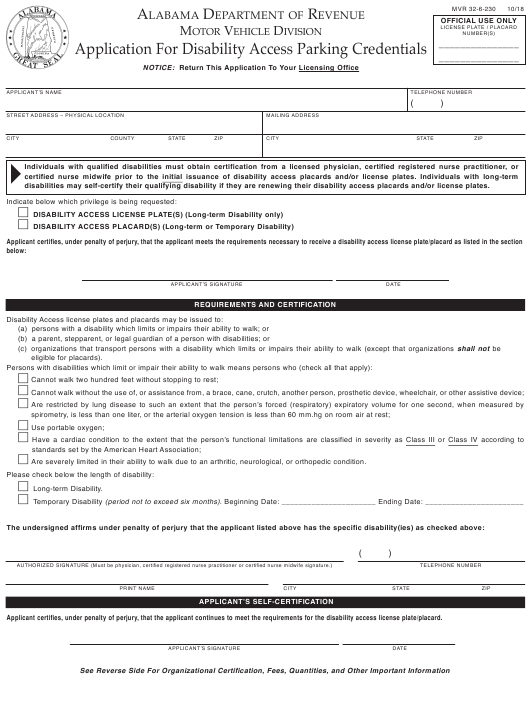
The path from application to permit is a rite of passage, one that tests patience and persistence. For most, the journey begins with a visit to the state’s Department of Motor Vehicles (DMV) website or a local licensing agency, where a trove of forms awaits. The Application for Disabled Person’s Parking Placard or License Plates—a document that varies in name but not in purpose—is the gateway to this process. Completing it requires precision: personal details must align with government records, medical certifications must be meticulously filled out, and signatures must be legible. For those applying for license plates instead of a placard, additional steps may include vehicle inspections or title transfers. Temporary permits, often issued for conditions expected to improve within six months or less, introduce their own complexities, such as requiring a physician’s note for renewal. The application’s submission is merely the first milestone; the waiting period that follows can stretch from weeks to months, a limbo where anticipation and uncertainty collide. Yet, for those who persevere, the reward is a small but potent symbol of autonomy—a permit that unlocks spaces designed for dignity.
The Silent Allies: Healthcare Providers and Advocacy Groups
Behind every successful application stands a network of silent allies, often overlooked in the bureaucratic shuffle. Healthcare providers, from primary care physicians to specialists, play a pivotal role in this ecosystem. Their certification is not a perfunctory checkbox but a critical validation of a patient’s lived experience. Yet, the relationship between patient and provider is not always seamless. Some physicians may hesitate to sign off on applications, either due to unfamiliarity with the process or concerns about liability. In such cases, advocacy groups—organizations like the National Organization on Disability (NOD) or local disability rights coalitions—emerge as beacons of guidance. These groups offer resources, from sample physician letters to step-by-step application walkthroughs, and in some instances, legal assistance for those facing unwarranted denials. Their work underscores a vital truth: accessibility is not a solitary endeavor but a collective responsibility, where every stakeholder, from the healthcare provider to the advocacy group, contributes to the broader goal of inclusivity.
Beyond the Permit: The Unseen Benefits and Responsibilities
Securing a handicap parking permit is not the culmination of the journey but merely the beginning of a new chapter—one that extends far beyond the confines of a reserved space. For many, the permit becomes a gateway to a broader conversation about accessibility in public spaces. It challenges communities to rethink the design of sidewalks, the placement of parking meters, and the availability of ramps. It also imposes a set of responsibilities: the permit must be displayed correctly, typically hanging from the rearview mirror, and it must be surrendered if the holder no longer qualifies. Misuse, whether intentional or negligent, carries consequences, from fines to permit revocation, underscoring the importance of ethical stewardship. Yet, the true power of the permit lies in its ability to foster independence. For individuals with disabilities, it can mean the difference between isolation and participation, between frustration and freedom. It is, in essence, a tool that transforms abstract rights into tangible realities.
Future Horizons: The Evolution of Accessibility Policies
The landscape of handicap parking permits is not static; it is a dynamic entity, shaped by technological advancements, legislative reforms, and shifting societal attitudes. Digital applications, already a reality in some states, promise to streamline the process, reducing wait times and minimizing errors. Pilot programs for digital permits—accessible via smartphone apps—are being tested in jurisdictions like Colorado and Oregon, offering a glimpse into a future where physical placards may become relics of the past. Meanwhile, advocacy efforts continue to push for universal recognition of permits across state lines, eliminating the need for travelers to navigate a patchwork of regulations. Legislative changes, such as the Americans with Disabilities Act (ADA) Amendments Act of 2008, have broadened the definition of disability, ensuring that more individuals qualify for accommodations. As these trends converge, the promise of a more accessible future grows ever closer—one where the act of applying for a permit is not a hurdle but a stepping stone toward a more inclusive society.