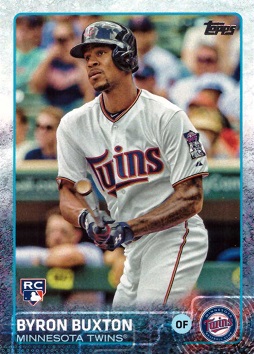
Baseball cards are more than just pieces of cardboard—they’re time capsules, frozen moments of athletic brilliance that transcend the game itself. Among the pantheon of modern rookie cards, few elicit as much debate as the Byron Buxton rookie card. Released in 2015, this Topps Update card has become a lightning rod for collectors, a symbol of both hope and caution. Is it a sleeper pick destined to appreciate, or a bust investment doomed to gather dust? The answer isn’t just about numbers or market trends; it’s about the story behind the player, the psychology of collecting, and the unpredictable nature of fandom itself.
The Allure of the Rookie Card: Why Buxton Stands Out
Rookie cards occupy a sacred space in the world of sports memorabilia. They represent the genesis of a player’s journey, the first tangible proof that greatness might be possible. Byron Buxton’s rookie card, a 2015 Topps Update issue, captures a moment when the baseball world was buzzing with anticipation. Drafted second overall in 2012, Buxton was hailed as a generational talent—a five-tool phenom with speed, power, and defensive brilliance that seemed to defy the laws of baseball physics. His minor league numbers were staggering: a .340 batting average in 2013, 55 stolen bases in 2014, and a reputation for jaw-dropping plays in center field. The rookie card wasn’t just a collectible; it was a promise.
What makes Buxton’s card particularly intriguing is the disconnect between his perceived potential and his actual career trajectory. Unlike some prospects who flame out spectacularly, Buxton’s journey has been a slow burn, marked by injuries, inconsistent performance, and moments of brilliance that leave fans wondering, “What if?” This unpredictability mirrors the collector’s dilemma: Is the card a bet on a player who could still fulfill his destiny, or a relic of a dream that never fully materialized?
The Investment Paradox: Sleeper or Speculative Gamble?
Investing in sports cards is a high-stakes game of patience, intuition, and often, sheer luck. The Byron Buxton rookie card sits at a fascinating crossroads. On one hand, it’s a Topps Update card from a high-profile prospect, a category that has historically appreciated for players who transition from “can’t-miss” to “didn’t-quite-make-it.” On the other, Buxton’s career has been a rollercoaster, with flashes of brilliance that have kept his fanbase loyal but his market value uncertain.
Market trends suggest that Buxton’s card is a sleeper pick for those willing to bet on a resurgence. Unlike players whose careers plateaued early, Buxton’s 2021 and 2022 seasons hinted at a renaissance. His 2022 All-Star campaign, where he slashed .288/.341/.534 with 28 home runs and 20 stolen bases, proved he could still dominate at the highest level. For collectors who see potential in a player who hasn’t yet peaked, the rookie card becomes a long-term hold, a piece of cardboard that could one day reflect a career that exceeded expectations.
Yet, the flip side is equally compelling. The baseball card market is littered with the carcasses of “next big things” who never quite delivered. Buxton’s injury history—multiple wrist, knee, and back issues—raises questions about longevity. If he can’t stay on the field, his card’s value may never reach the stratospheric heights of a Mike Trout or a Fernando Tatís Jr. rookie card. The investment, then, isn’t just about the player’s talent; it’s about his durability, his mental fortitude, and the sheer unpredictability of baseball itself.
The Psychology of the Collector: Emotional vs. Rational Betting
Collecting baseball cards is as much about emotion as it is about economics. The Byron Buxton rookie card isn’t just an asset; it’s a talisman for fans who believe in the player’s untapped potential. There’s a romanticism to holding a card that represents a player who could still rewrite his legacy. It’s the same reason why collectors hold onto cards of players like Bo Jackson or Ken Griffey Jr., even when their careers didn’t pan out as hoped. The card becomes a vessel for hope, a tangible connection to the “what if” scenarios that fuel fandom.
This emotional attachment often trumps cold, hard data. A rational investor might look at Buxton’s career WAR (Wins Above Replacement) and see a player who, while talented, hasn’t lived up to the hype. But the collector sees something else: the potential for a career-defining season, a highlight-reel play that cements his place in baseball lore, or even a late-career resurgence akin to David Ortiz or Paul Goldschmidt. The card’s value isn’t just in its market price; it’s in the stories it allows collectors to tell themselves—and others—about the player’s journey.
There’s also the phenomenon of the “phantom upside.” Buxton’s rookie card is a reminder that baseball is a game of infinite possibilities. A single season can change everything. One year, he’s an All-Star. The next, he’s on the IL. The card captures that volatility, making it a microcosm of the sport itself. For collectors, that unpredictability is part of the appeal. It’s why we’re drawn to the underdog, the player who could go either way, the card that might be worth a fortune or a footnote in a price guide.
Comparative Analysis: Buxton in the Pantheon of Prospect Cards
To understand Buxton’s rookie card, it’s worth comparing it to other high-profile prospect cards that have followed similar trajectories. Take, for example, the Kris Bryant rookie card. Bryant’s 2015 Topps Update card was a hot commodity from the start, thanks to his Rookie of the Year and MVP accolades. His card appreciated steadily, reflecting his consistent performance and marketability. Buxton’s card, by contrast, has remained a niche collectible, beloved by fans but not yet a mainstream darling.
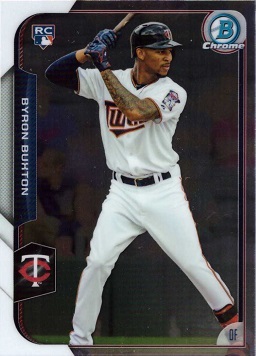
Then there’s the case of Byron Buxton’s Bowman Chrome rookie autograph. While not as widely circulated as the Topps card, the Chrome version has seen more volatility due to its lower print run and the premium placed on autographed cards. The Topps Update card, however, remains the purest representation of Buxton’s rookie status—a card that captures the raw potential of a player before the world had a chance to temper expectations.
What sets Buxton apart is the duality of his narrative. He’s neither a complete bust nor a surefire Hall of Famer. He’s a player whose career has been a series of peaks and valleys, a testament to the fragility of athletic greatness. This duality makes his rookie card a fascinating study in collector psychology. It’s a card that forces us to confront our own biases—our tendency to overvalue potential and undervalue consistency, our willingness to bet on a player’s best days rather than his most likely outcome.
The Market Reality: Where Does Buxton’s Card Stand Today?
The current market for Byron Buxton rookie cards is a study in contrasts. Graded versions of the 2015 Topps Update card (PSA 10) can fetch anywhere from $100 to $300, depending on demand and market conditions. Ungraded copies are far more accessible, often trading hands for under $50. This price range reflects the card’s status as a niche collectible—one that appeals to a dedicated subset of Twins fans and prospect collectors but hasn’t yet broken into the broader market.
What’s interesting is how Buxton’s recent performance has influenced the card’s trajectory. After years of being labeled a “bust,” his 2022 resurgence sparked renewed interest. Collectors who had long since abandoned hope began revisiting their portfolios, wondering if the time to invest had finally arrived. This cyclical nature of the market—where hope springs eternal, even in the face of evidence—is a defining feature of sports card collecting.
Yet, the market’s reaction remains cautious. Unlike cards of players like Juan Soto or Wander Franco, Buxton’s rookie card hasn’t seen a surge in demand. This isn’t necessarily a reflection of his talent but rather a recognition of the risks involved. Baseball is a cruel mistress, and even the most talented players can be undone by injury or inconsistency. The market, it seems, is waiting for more concrete proof before anointing Buxton’s rookie card as a true sleeper pick.
The Long Game: What’s Next for Buxton and His Collectors?
The future of Byron Buxton’s rookie card hinges on two critical factors: his health and his performance. If he can stay on the field and replicate his 2022 success, the card’s value could see a steady climb. A return to the All-Star level would likely spark a wave of nostalgia-driven buying, pushing prices higher as collectors scramble to own a piece of his resurgence. Conversely, another injury or a decline in production could relegate the card to the bargain bin of prospect history.
For collectors, the key is to approach the card with a clear strategy. Is this a long-term hold, a bet on a player who could still fulfill his potential? Or is it a speculative play, a gamble on a market that might not reward patience? The answer depends on one’s tolerance for risk and belief in Buxton’s ability to defy the odds. There’s no right or wrong answer—only the understanding that baseball cards, like the game itself, are a blend of skill and serendipity.
There’s also the intangible value of the card to consider. For Twins fans, it’s a piece of their team’s history, a reminder of a player who embodied the franchise’s highs and lows. For prospect collectors, it’s a trophy from a player who once seemed destined for greatness. And for the broader market, it’s a cautionary tale about the unpredictability of baseball and the fickle nature of fandom.
The Byron Buxton rookie card is more than just a collectible; it’s a mirror held up to the soul of baseball fandom. It reflects our hopes, our doubts, and our unwavering belief in the game’s capacity for magic. Whether it’s a sleeper pick or a bust investment matters less than what it represents: the eternal optimism that defines the sport itself. In a world where careers are measured in WAR and market value, the Buxton rookie card reminds us that baseball is, at its core, a game of stories. And sometimes, the most compelling stories are the ones that haven’t been written yet.