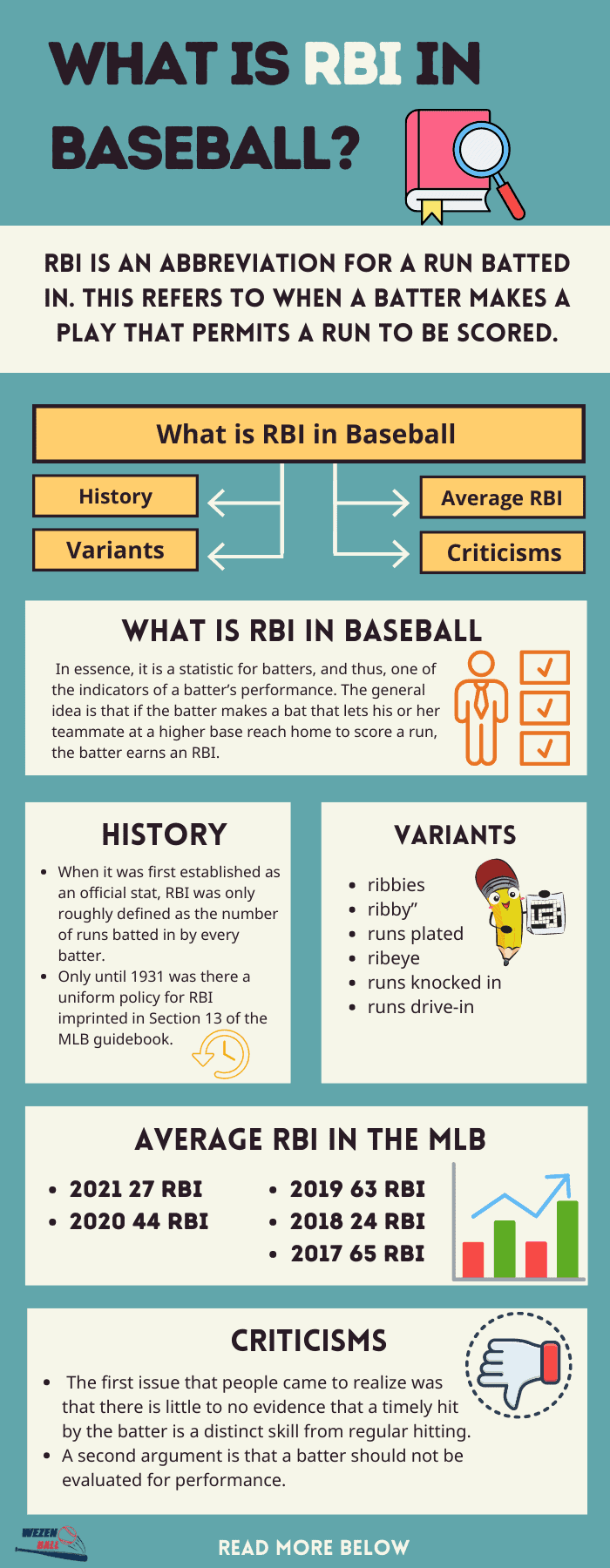
Baseball, a sport steeped in tradition yet constantly evolving, is a game of numbers, strategy, and clutch performances. Among its most telling statistics, the Runs Batted In (RBI) stands as a cornerstone metric, encapsulating a player’s ability to drive in runs and directly influence the outcome of a game. Unlike flashy home runs or lightning-fast steals, the RBI is a quiet yet powerful testament to a batter’s situational awareness, precision, and clutch execution. It’s the art of turning a single into a game-changing play, a double into a lead-extending rally, or a sacrifice fly into a walk-off moment. For fans and analysts alike, understanding the RBI is not just about tracking numbers—it’s about appreciating the nuanced brilliance of a player who can elevate their team when it matters most.
The Anatomy of an RBI: How Runs Are Driven In
At its core, an RBI occurs when a batter’s hit, sacrifice, or walk results in a run scoring. This deceptively simple definition belies the complexity of the scenarios in which it unfolds. A batter doesn’t need to swing for the fences; a well-placed ground ball to the right side can carve through a defense, plating a runner from third. Conversely, a towering home run clears the bases in one fell swoop, but it’s the batter’s ability to capitalize on runners already on base that often defines an RBI hitter. The magic lies in the timing—whether it’s a two-out single that snaps a tie game or a bases-loaded double that buries the opposition. The RBI is the silent architect of momentum, turning ordinary at-bats into pivotal moments that echo through a season.
Types of RBIs: Beyond the Home Run
While home runs are the most celebrated RBIs, they represent only a fraction of the ways runs are driven in. A ground ball RBI occurs when a batter’s grounder finds a gap in the infield, allowing a runner to score from second or third. These plays demand precision, as the batter must avoid turning a double play while still advancing the runner. A sacrifice fly, often overlooked, is another vital RBI type—sacrificing an out to bring a runner home, a strategic maneuver that underscores the batter’s selflessness. Even a walk with the bases loaded counts as an RBI, a testament to patience and the pitcher’s inability to escape a jam. Each type of RBI tells a different story, from the gritty resilience of a ground ball to the tactical patience of a walk.
The Clutch Factor: RBIs in High-Pressure Moments
Not all RBIs are created equal. The true measure of a player’s clutch ability is their performance in high-leverage situations—when the game hangs in the balance, and the pressure is palpable. A walk-off RBI, for instance, is the ultimate display of composure, a single swing that ends the game in a team’s favor. These moments are etched into baseball lore, from Kirk Gibson’s legendary 1988 World Series home run to David Ortiz’s 2013 playoff heroics. The clutch RBI is more than a statistic; it’s a narrative of resilience, a batter’s ability to rise to the occasion when the crowd’s roar drowns out every other sound. It’s the difference between a good player and a legend.
RBI Leaders and Hall of Fame Legacies
Throughout baseball history, RBI leaders have often been the faces of their franchises, their names synonymous with clutch hitting. Hank Aaron’s 2,297 RBIs remain the all-time record, a staggering testament to his consistency and longevity. Babe Ruth, Ty Cobb, and Lou Gehrig are among the immortals who dominated the RBI leaderboards, their careers defined by the ability to produce when it mattered most. Modern legends like Albert Pujols and Alex Rodriguez have continued this tradition, their RBIs not just numbers but milestones that redefine greatness. For a player, leading the league in RBIs is a badge of honor, a recognition of their ability to deliver in the most critical moments. It’s a stat that transcends eras, connecting the dead-ball era to the modern game.
The RBI and Team Success: A Correlation Worth Noting
While individual accolades are important, the RBI’s true significance lies in its reflection of team success. Teams that excel in driving in runs often find themselves in playoff contention, their offenses built on the foundation of timely hitting. The 2022 Houston Astros, for example, led the majors in RBIs, a testament to their balanced attack and ability to manufacture runs. Conversely, teams struggling to produce RBIs often flounder in close games, their lack of clutch hitting exposing deeper issues. The RBI is a barometer of a team’s offensive health, a metric that reveals not just power but the ability to manufacture runs through small ball, situational hitting, and sheer tenacity.
Debating the RBI: Is It Overrated or Underrated?
The RBI is not without its critics. Some argue that it’s a team-dependent stat, influenced by the quality of the lineup around the batter. A player batting behind Mike Trout is far more likely to accumulate RBIs than one batting behind a light-hitting shortstop. Others point out that RBIs don’t account for a batter’s ability to reach base, a skill that’s equally vital to scoring runs. Yet, despite these criticisms, the RBI remains a revered statistic, its value lying in its simplicity and its direct connection to the game’s ultimate goal: scoring runs. It’s a stat that rewards the player who can deliver in the clutch, who can turn a routine at-bat into a game-changing play.
How to Improve Your RBI Totals: Tips for Batters
For aspiring batters looking to boost their RBI totals, the key lies in mastering the art of situational hitting. This means understanding the nuances of the count—when to protect the plate, when to take a pitch, and when to look for a specific pitch location. It also means developing the ability to hit to the opposite field, a skill that can turn a ground ball into an RBI single. Batters should study pitchers’ tendencies, recognizing patterns that can be exploited in high-leverage situations. And perhaps most importantly, they should embrace the role of the RBI hitter, understanding that their job is not just to get on base but to drive in runs when it matters most.
The Future of the RBI: Evolving Strategies and Analytics
As baseball continues to evolve, so too does the way we view the RBI. Advanced analytics now provide deeper insights into the factors that contribute to run production, from exit velocity to launch angle. Teams are increasingly prioritizing players who can deliver in clutch situations, even if their traditional RBI totals are modest. The rise of the “two-way player”—athletes who excel both at the plate and in the field—has also reshaped the RBI landscape, as these players often find themselves in prime run-producing spots. Yet, despite these changes, the RBI remains a timeless metric, a reminder that baseball is, at its heart, a game of moments.