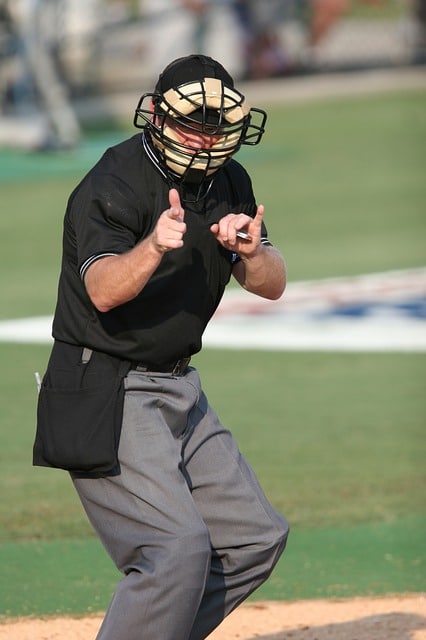
Imagine stepping into the batter’s box, the crack of the bat echoing in the distance, the pitcher winding up with a gleam of mischief in their eye. The ball hurtles toward you. Is it a strike? The umpire’s call sends half the crowd into a frenzy while the other half groans in unison. Baseball’s strike rule is a labyrinth of subjectivity, tradition, and occasional controversy—a rule that has sparked debates from Little League dugouts to the broadcast booths of the World Series. What exactly constitutes a strike, and why does it remain one of the most hotly contested rulings in sports?
The Anatomy of a Strike: More Than Just a Pitch in the Zone
A strike isn’t merely a pitch that crosses the plate within the batter’s reach. It’s a multifaceted judgment call that blends physics, human perception, and the unspoken etiquette of the game. At its core, a strike occurs when a pitched ball enters the strike zone—an invisible three-dimensional space above home plate, extending from the batter’s knees to the midpoint between their shoulders and the top of their uniform pants. But here’s where it gets slippery: the strike zone isn’t static. It’s a living, breathing entity, shifting with each batter’s stance, swing, and even their mood. A pitch that grazes the corner for one hitter might be called a ball for another, depending on the umpire’s interpretation of the zone’s boundaries.
Then there’s the matter of the swinging strike. Even if a pitch is outside the zone, if the batter takes a swing and misses, it’s a strike. This is where the drama intensifies. A batter might lunge at a pitch that’s clearly out of bounds, only to be rewarded with a strike call because the umpire deemed the swing “in the zone.” Conversely, a batter who stands pat as a pitch sails past their shoulder could see it ruled a strike if the umpire believes it was “close enough.” The strike zone, it turns out, is less a geometric shape and more a Rorschach test for umpires.
The Unwritten Rules: When a Strike Isn’t Just a Strike
Baseball’s strike rule is riddled with unwritten codes that govern everything from etiquette to strategy. Take the high-and-inside fastball, a pitch that rides up and in on a right-handed batter. If the batter doesn’t flinch, it’s often called a strike, even if the ball is technically above the zone. Why? Because the unwritten rule dictates that a batter must “protect the plate”—meaning they’re expected to offer at pitches in that area, regardless of their location. Fail to do so, and the umpire may reward the pitcher with a strike call.
Then there’s the check swing, a half-hearted attempt by a batter to avoid a pitch they know is headed for the zone. If the bat crosses the front edge of the plate, it’s a strike. If it doesn’t, it’s a ball. But what if the bat hovers in that ambiguous middle ground? The umpire’s call can hinge on whether they believe the batter “offered at” the pitch. This is where the art of the check swing becomes a psychological battle, with batters and pitchers alike trying to outmaneuver each other in a game of inches.
Even the balk rule—a move by the pitcher that deceives the runner—can result in a strike being awarded to the batter if the umpire deems the deception intentional. It’s a rare but potent reminder that the strike rule isn’t just about the pitch itself, but the entire ecosystem of deception and strategy that surrounds it.
The Umpire’s Dilemma: Technology vs. Tradition
The strike rule’s subjectivity has long been a thorn in the side of purists and modernists alike. Enter Statcast and Pitch f/x, technologies that track every pitch’s trajectory, spin rate, and location with surgical precision. These tools have revealed that umpires, despite their best efforts, are fallible. Studies have shown that even the most experienced umpires miss calls at alarming rates—sometimes as high as 20% in high-stakes games. This has led to calls for automated ball-strike systems, where a computer determines strikes and balls with cold, unfeeling accuracy.
But tradition dies hard. Many argue that baseball’s charm lies in its human element, where umpires are part of the narrative, not just robotic overseers. The “human element” of the game is often cited as a reason to keep the strike rule subjective. After all, baseball isn’t played on a spreadsheet. It’s a game of passion, where a player’s reputation, a manager’s temper, and a fan’s memory can all be shaped by a single call. The strike rule, in this light, becomes more than just a technicality—it’s a story.
Yet the push for technology persists. The Automatic Ball-Strike (ABS) system, used in the minor leagues and some independent circuits, has shown promise in reducing errors. But will fans and players ever fully embrace a world where a machine, not a human, decides the fate of a pitch? The debate rages on, with no clear resolution in sight.
The Psychological Warfare of the Strike Zone
A strike isn’t just a statistical event; it’s a psychological weapon. Pitchers use the strike zone as a canvas, painting corners with precision or daring batters to chase pitches outside it. Batters, in turn, study umpires’ tendencies, memorizing which zones they favor and which they ignore. A pitcher who knows an umpire calls a tight zone might challenge a batter with pitches on the black, while a batter who recognizes an umpire’s generous strike zone might take more pitches, waiting for the perfect offering.
This mental chess match extends to the dugout, where managers and coaches signal pitch sequences designed to exploit an umpire’s tendencies. A pitcher might groove a fastball down the middle, knowing the umpire is likely to call it a strike, or a batter might take a called third strike, knowing the umpire’s history of squeezing batters in tight counts. The strike rule, in this context, becomes a tool of psychological warfare, where every call can shift the momentum of a game.
Even the language of the strike rule is laced with psychological nuance. A “high strike” isn’t just a pitch above the zone—it’s a statement. A “chest-high fastball” isn’t just a location; it’s an invitation to swing. The strike rule, in this way, is as much about communication as it is about rules.
The Future of the Strike: Will Tradition Prevail?
As baseball hurtles toward an increasingly data-driven future, the strike rule remains a bastion of tradition. The “Zone Evaluation” system, used in some leagues, allows umpires to review their own calls in real-time, but it’s a far cry from full automation. The Major League Baseball Players Association has resisted widespread adoption of ABS, arguing that it strips away the human element that makes the game unique. Meanwhile, fans and analysts continue to dissect every strike call, fueling debates that stretch from spring training to the Fall Classic.
Will the strike rule ever be fully standardized? Unlikely. Baseball thrives on its imperfections, its quirks, and its moments of brilliance that defy logic. The strike rule, with all its subjectivity and controversy, is a microcosm of the game itself—a blend of art and science, tradition and innovation, where every call is a story waiting to be told.
So the next time you’re at the ballpark, watching a pitch hang in the air like a question mark, remember: the strike rule isn’t just about whether the ball crosses the plate. It’s about the umpire’s judgment, the batter’s intent, the pitcher’s cunning, and the unwritten rules that bind them all together. And that, perhaps, is why we still argue about it.