There’s a moment, often unspoken, when a child grips a baseball bat for the first time—fingers curled just so, knuckles whitening around the handle, eyes locked on an invisible pitch. The weight of the bat, the balance, the promise of connection with the ball—it’s more than equipment. It’s initiation. For parents and coaches, the question isn’t just “What size bat?” but “What size bat will unlock their swing?” Between ages six and nine, a child’s physical development accelerates unpredictably. One month, they’re swinging at tee-ball pitches with reckless enthusiasm; the next, they’re standing in awe of the crack of a wooden bat in a Little League game. The right bat doesn’t just fit their hands—it fits their moment in time. This guide decodes the science, the feel, and the future behind choosing the perfect baseball bat for young players, ensuring every swing builds confidence, not frustration.
The Physics of the Perfect Fit: Why Size Matters More Than You Think
A bat isn’t merely a tool—it’s an extension of the player’s kinetic chain. The wrong length or weight can disrupt the delicate sequence of hip rotation, shoulder torque, and wrist snap that defines a powerful swing. For children aged six to nine, the average height ranges from 42 to 54 inches, and their bat should reflect that vertical reality. A bat that’s too long acts as a lever, amplifying errors in timing and balance. Conversely, one too short forces compensatory movements, straining the shoulders and elbows. The ideal bat length correlates closely with the player’s height: for every inch of height, the bat should extend roughly an inch beyond the handle when held upright at the player’s side. But length alone isn’t enough. Weight distribution—measured by “drop” (length in inches minus weight in ounces)—matters just as critically. A bat with a high drop (e.g., -13) is lighter and easier to swing, ideal for beginners. As coordination improves, a lower drop (e.g., -8) introduces resistance, building strength and bat speed. The physics here are unforgiving: a poorly sized bat doesn’t just underperform—it teaches bad habits that linger long after the child outgrows it.
Material Matters: Aluminum vs. Composite vs. Wood—The Hidden Trade-Offs
Not all bats are created equal, and the material choice shapes more than just performance—it shapes the player’s relationship with the game. Aluminum bats, the stalwart of youth leagues, dominate for their durability and affordability. They’re forgiving on mishits, their trampoline effect sending balls soaring even on off-center contact. But this forgiveness can be a double-edged sword: it masks flaws in swing mechanics, delaying the development of precision. Composite bats, made from layered carbon fiber, offer a middle ground. They absorb vibration better than aluminum, reducing sting on mis-hits, and can be finely tuned for weight distribution. Their drawback? A higher price tag and a break-in period that requires careful use. Then there’s wood—the purist’s choice. While rare in organized youth play, wood bats force players to refine their swing, teaching the value of bat control over sheer power. The material you choose isn’t just about performance; it’s about the message you send to the player. Do you prioritize immediate success or long-term mastery?
Growth Spurts and Swing Shifts: When to Upgrade (and When to Wait)
Children grow in leaps, not increments, and a bat that fits perfectly in September might feel like a toothpick by December. Growth spurts aren’t just physical—they’re psychological. A child who once swung with abandon may suddenly hesitate, their grip tightening as they grapple with newfound height and coordination. The key to navigating these shifts lies in observation. If a player’s stance widens unnaturally to accommodate a bat that’s too long, or if they struggle to generate power with a bat that’s too heavy, it’s time to reassess. A simple test: have the player extend the bat horizontally with one arm. If they can’t hold it steady for 10 seconds, the bat is too heavy. Another indicator is swing speed. If the player’s hands are slowing mid-swing to “choke up” on the bat, it’s a sign the length is no longer optimal. Upgrading isn’t just about size—it’s about preserving the joy of the game. A bat that’s too cumbersome turns practice into a chore, while one that’s just right becomes an extension of the player’s ambition.
The League Factor: Rules, Regulations, and Why They Exist
Youth baseball isn’t just a game—it’s a microcosm of rules designed to level the playing field. Most leagues enforce bat standards, often limiting length to 32 inches and weight drops to -12 or lower. These rules aren’t arbitrary; they’re safeguards against an arms race where bigger, faster, stronger bats create unsafe conditions. Aluminum bats with excessive trampoline effects, for example, can send line drives back to pitchers at dangerous speeds. Composite bats, while safer, are sometimes restricted to prevent performance advantages that outpace skill development. Understanding these regulations isn’t just about compliance—it’s about advocacy. If a league’s rules seem overly restrictive, it’s worth asking whether they’re protecting players or stifling potential. The right bat isn’t just one that fits the player; it’s one that fits the league’s ethos of fair play and gradual skill-building.
Beyond the Numbers: The Intangibles of Bat Selection
No chart or formula can capture the intangibles—the way a bat feels in a child’s hands, the sound it makes when it connects with the ball, the confidence it inspires with every swing. Some players thrive with a bat that’s slightly heavier, finding rhythm in the resistance. Others prefer the lightning-fast response of a lighter model, reveling in the immediate feedback of a solid hit. The grip, too, plays a role. A bat with a tacky, ergonomic handle can reduce slippage, while a smooth finish might appeal to players who like to feel the wood or composite beneath their fingers. Then there’s the psychological aspect: a bat with a favorite color or team logo can turn practice from a chore into a ritual. These details matter because baseball, at its core, is a game of confidence. A bat that feels like an extension of the player isn’t just a tool—it’s a partner in every at-bat, every hit, every moment of growth.
Practical Steps: How to Choose the Right Bat (Without Overcomplicating It)
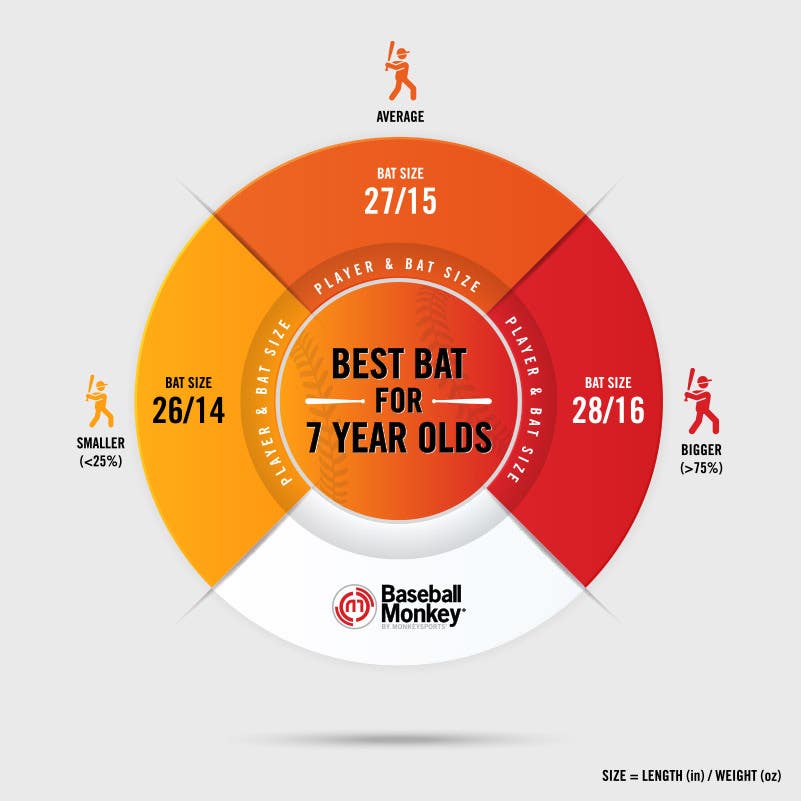
Start with height and weight. Use a sizing chart as a starting point, but don’t stop there. Have the player hold the bat in their stance—if they can comfortably extend their arms without locking their elbows, the length is likely correct. Next, test the weight. A good rule of thumb: the player should be able to swing the bat three times in a row without significant fatigue. If they can’t, opt for a lighter model. Consider the league’s rules before purchasing, and if possible, let the player hold a few bats in the store. The right bat should feel like an extension of their body, not a foreign object. Finally, think long-term. A bat that fits now might not fit in six months, so consider models with adjustable features or ones that can be resold. The goal isn’t just to buy a bat—it’s to invest in a player’s journey, one swing at a time.
The Ripple Effect: How the Right Bat Shapes a Player’s Future
The impact of a well-chosen bat extends far beyond the current season. A player who swings a bat that’s too heavy may develop an uppercut swing that’s difficult to correct later. One who uses a bat that’s too light might never learn to generate power from their legs and core. The right bat, however, becomes a silent coach, reinforcing proper mechanics with every hit. It builds muscle memory that translates to higher levels of play. More importantly, it fosters a love for the game. When a child steps up to the plate and the bat feels like an extension of their arm, the fear of failure diminishes. The crack of the bat becomes a sound of possibility, not pressure. In this way, the bat is more than equipment—it’s a catalyst for growth, a tool that shapes not just a player, but a passion.