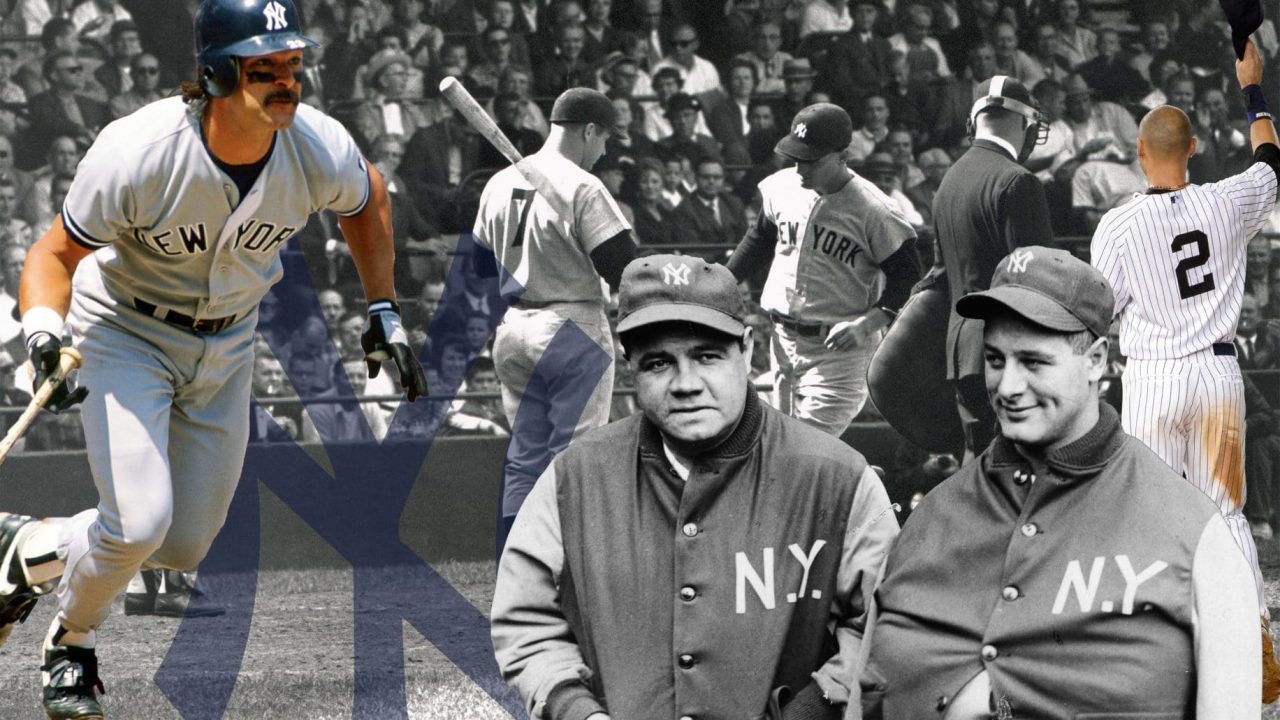
What if the New York Yankees of the mid-1980s had been more than just a team—what if they had been a dynasty in the making, a juggernaut of power and precision poised to dominate baseball for years? The 1985–1986 seasons were supposed to be the dawn of a new era for the Bronx Bombers, a time when their lineup crackled with the kind of offensive firepower that could strike fear into opponents. Yet, despite flashes of brilliance, something always seemed to derail their momentum. Was it bad luck? Poor management? Or perhaps an unseen force that turned their potential into a cautionary tale? Let’s dissect the lineups of these two seasons, exploring the drama, the near-misses, and the lingering question: What went wrong?
The Lineup That Almost Was: A Roster of Superstars
The mid-1980s Yankees were a team brimming with talent, a veritable all-star ensemble that promised to rewrite the record books. At the heart of their lineup stood Don Mattingly, the first baseman whose name became synonymous with grace and power. His 1985 season was nothing short of legendary—hitting .324 with 35 home runs and 145 RBIs, a performance so dominant it earned him the American League MVP award. Surrounding him were sluggers like Dave Winfield, whose cannon arm and consistent bat made him a perennial All-Star, and Rickey Henderson, the electrifying speedster who redefined base-stealing and on-base percentage.
But the Yankees’ lineup wasn’t just about power and speed; it was a carefully crafted machine. Willie Randolph, the steady second baseman, provided stability in the infield, while Ken Griffey Sr. (yes, *that* Griffey’s father) patrolled the outfield with a veteran’s precision. Even the bench was stacked, featuring players like Mike Pagliarulo, a young third baseman whose power would later make him a fan favorite. This wasn’t just a lineup—it was a symphony of talent, each player playing a distinct role in a grand design.
The Season That Slipped Away: 1985’s Near-Miss
The 1985 season began with sky-high expectations. The Yankees, fresh off a division title in 1981 and a strong showing in 1984, were primed to contend for a World Series. And for a while, it seemed they would. Mattingly’s MVP season was the cornerstone, but the team’s offense was a well-oiled machine. They led the league in runs scored, a testament to their ability to manufacture hits and drive in runs with relentless efficiency.
Yet, as the season wore on, cracks began to show. Injuries plagued key players, including Winfield, who missed significant time with a wrist injury. The pitching staff, once a strength, faltered under the pressure, and the bullpen became a revolving door of inconsistency. The Yankees found themselves in a tight race with the Toronto Blue Jays and Detroit Tigers, but as September rolled around, their lead evaporated. A late-season collapse, fueled by poor performances in high-leverage games, sealed their fate. They finished just two games behind the Blue Jays, a heartbreaking outcome that left fans wondering: What if?
The 1986 Season: A Tale of Two Halves
If 1985 was a season of near-misses, 1986 was a rollercoaster of highs and lows. The Yankees started strong, with Mattingly once again leading the charge. His 1986 season was nearly as impressive as his MVP year, though injuries limited him to 106 games. Still, the lineup remained potent, with Henderson’s speed and Winfield’s power providing a formidable one-two punch. The team even managed to stay in the race for much of the summer, thanks in part to a surprising surge from an unlikely source: rookie outfielder Danny Tartabull, whose power bat injected new life into the offense.
But the second half of the season was a different story. Injuries continued to ravage the roster, and the pitching staff, already shaky, collapsed under the weight of fatigue and ineffectiveness. The Yankees’ defense, once a strength, became a liability, with errors piling up and momentum stalling. By the time the season mercifully ended, they were a distant third in the division, their playoff hopes dashed by a combination of bad luck, poor health, and a few too many unanswered questions.
The Unseen Forces: What Really Went Wrong?
So, what derailed the Yankees’ dreams of greatness in 1985 and 1986? The answer is a tangled web of factors, each contributing to the team’s downfall. Injuries were a major culprit, sidelining key players at critical moments. But injuries alone don’t explain everything. The Yankees also struggled with consistency, particularly in high-pressure situations. Their bullpen, once a strength, became a liability, with closers and setup men failing to deliver in clutch moments. And then there was the matter of the schedule—a brutal stretch of games against division rivals that exposed the team’s weaknesses.
But perhaps the most damning factor was the lack of depth. When injuries struck, the Yankees had few reliable options to step in. Their bench was thin, and their minor league system was still developing. This lack of depth meant that every injury carried outsized consequences, turning a manageable setback into a full-blown crisis. It was a stark reminder that even the most talented teams can crumble under the weight of poor planning and bad luck.
The Legacy of the Lineup: What Could Have Been
Looking back, the 1985–1986 Yankees lineups were a study in potential unfulfilled. Imagine, for a moment, what might have been if Mattingly had stayed healthy for both seasons. Or if Winfield had avoided injury. Or if the bullpen had held firm in those late-season games. The Yankees might have not only made the playoffs but dominated them, setting the stage for a dynasty that could have spanned the late 1980s and early 1990s.
Instead, their story became one of what-ifs—a reminder that baseball, for all its statistics and strategies, is still a game of inches, where a single bad bounce or a missed call can change the course of history. The 1985–1986 Yankees were a team on the cusp, a lineup that teased greatness but never quite reached it. Their legacy is a bittersweet one, a testament to the fragility of success in a sport where failure is always just one pitch away.