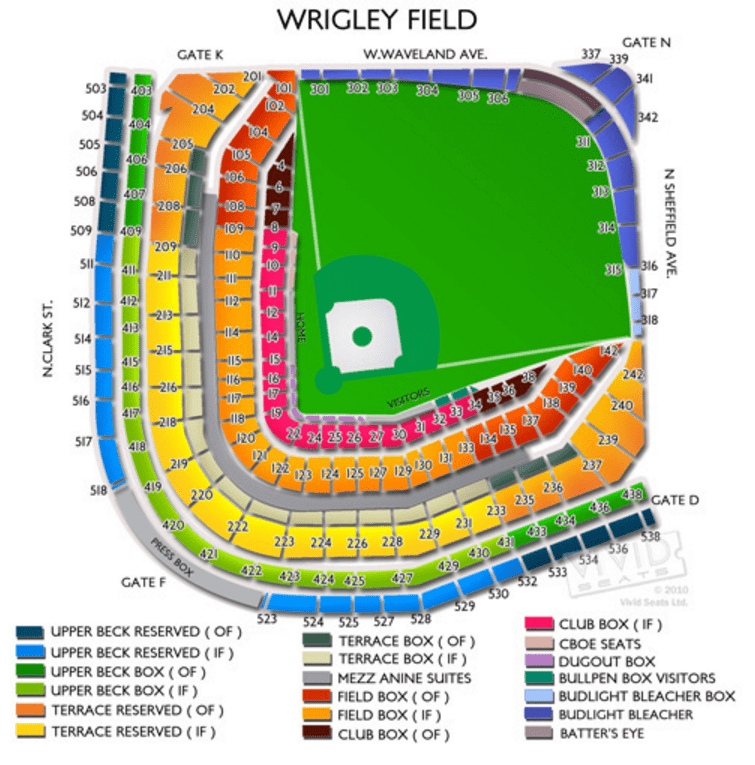
There’s a certain magic to Wrigley Field that transcends the ordinary—a place where the crack of the bat, the roar of the crowd, and the scent of popcorn mingle into an experience unlike any other in baseball. But not all seats are created equal. Whether you’re a first-time visitor or a seasoned Cubs fan, navigating the ivy-covered outfield walls and the historic grandstand requires more than just a ticket—it demands a strategy. This guide isn’t just about where to sit; it’s about discovering the angles that turn a good game into an unforgettable spectacle. From the hallowed upper deck to the sun-drenched bleachers, we’ll uncover the best views, the hidden gems, and the subtle nuances that transform your perspective of America’s second-oldest ballpark.
The Legendary Upper Deck: A Bird’s-Eye Symphony of Steel and Ivy
The upper deck at Wrigley Field is where nostalgia meets elevation. Perched high above the action, these seats offer a panoramic vista of the entire field, framed by the iconic red marquee and the verdant outfield walls. But don’t be fooled by the distance—this is where you witness the ballet of the infield, the arc of a fly ball, and the strategic chess match between pitcher and batter unfold in a single, sweeping glance. The best seats here are in the first few rows, where the railing doesn’t obstruct your view of the pitcher’s mound or home plate. Sit on the third-base side for a clearer sightline to the Cubs’ dugout, where the players’ reactions to close plays can be as riveting as the plays themselves. The upper deck isn’t just a seat; it’s a perch from which to absorb the grandeur of the game in its purest form.
The Infield Boxes: Where the Game Comes Alive
If the upper deck is the symphony, the infield boxes are the front-row seats to the soloist. These prime locations put you within arm’s reach of the action, where the crack of the bat echoes like a gunshot and the scent of freshly cut grass mingles with the tang of hot dogs. The first-base side infield boxes are particularly coveted, offering unobstructed views of the Cubs’ lineup as they step into the batter’s box. Sit in the front row, and you might catch a foul ball ricocheting off the protective netting—or, if you’re lucky, a home run ball soaring into the stands. The downside? These seats come at a premium, and the energy here is electric, which can be overwhelming if you prefer a more contemplative experience. But for those who crave immersion, the infield boxes are where baseball’s drama plays out in real time.
The third-base side infield boxes, while slightly less expensive, offer their own advantages. Here, you’re closer to the visiting team’s dugout, where the tension and camaraderie of the opposing squad unfold in a way that’s often overlooked. Watching a pitcher’s body language as he struggles or a batter’s ritual before stepping into the box can be as compelling as the game itself. And if you’re seated near the foul pole, you’ll witness the rare spectacle of a ball caroming off the green steel—a moment that turns an ordinary play into a highlight reel.
The Outfield: Where the Ballpark’s Soul Resides
Wrigley’s outfield is more than just a stretch of grass and ivy; it’s a character in its own right. The bleachers, with their standing-room-only tradition, are the beating heart of the park, where fans clad in blue and red sing, chant, and heckle with a passion that borders on the sacred. But the outfield also harbors some of the most coveted—and overlooked—seating in the house. The right-field corner, for instance, offers a unique vantage point where you can track a fly ball’s trajectory as it soars toward the ivy-covered wall. The seats here are close enough to hear the outfielders’ shouts but far enough to take in the full arc of a home run.
The left-field bleachers, meanwhile, are a study in contrasts. While the right-field bleachers are the domain of die-hard fans, the left-field side attracts a more eclectic crowd—families, tourists, and locals alike. The seats here are cheaper, but the view is anything but. From this angle, you can watch the game unfold with a backdrop of Chicago’s skyline, where the skyscrapers loom like silent spectators. And if you’re seated in the upper rows, you’ll catch a glimpse of the iconic hand-turned scoreboard, a relic of baseball’s golden age that still updates the game’s progress with mechanical precision.
The Hidden Gems: Seats That Defy Expectations
Not all great views at Wrigley Field are obvious. Some of the best seats in the house are tucked away in corners most fans overlook. The terrace level, for instance, offers a semi-private enclave where you can enjoy the game without the cacophony of the bleachers. These seats are slightly elevated, providing a clear line of sight to the infield while offering a respite from the standing-room crowds. The terrace boxes on the third-base side are particularly underrated, offering a quieter atmosphere with all the amenities of a premium seat.
Another hidden gem? The press box level. While not open to the public, the sightlines from here are unparalleled, with a direct view of the manager’s box and the bullpen. If you’re lucky enough to know someone with access, it’s a perspective that turns the game into a tactical masterclass. For those who prefer to stay on the ground, the seats behind home plate in the lower grandstand offer a middle-ground experience—close enough to feel the energy of the crowd but far enough to avoid the chaos of the infield boxes.
The Sun’s Cruel Jest: Navigating Wrigley’s Light and Shadow
Wrigley Field’s orientation is a double-edged sword. The sun sets in the outfield, which means that afternoon games can turn the bleachers into a solar oven while the infield remains bathed in golden light. If you’re seated on the first-base side in the afternoon, you’ll be staring into the sun during the late innings—a test of endurance as much as fandom. The solution? Arrive early, scope out the shadows, and claim a seat on the third-base side of the upper deck, where the setting sun paints the field in a warm, even glow. For night games, the artificial lights erase the sun’s tyranny, but the outfield seats can still feel like a furnace if the humidity climbs. Hydration is key, and don’t underestimate the power of a wide-brimmed hat.
Beyond the Seat: The Wrigley Experience
Seating is only part of the equation. The true magic of Wrigley Field lies in the rituals that surround the game. The pre-game buzz in the concourse, the organ music echoing through the stands, the seventh-inning stretch where thousands rise as one—these are the moments that linger long after the final out. The best seats in the house aren’t just about the view; they’re about the atmosphere. Whether you’re in the upper deck, soaking in the symphony of the game, or in the infield boxes, feeling the thunder of the crowd, the experience is defined by more than just sightlines. It’s about the smell of popcorn, the taste of a cold beer, and the shared joy of a summer evening under the lights.
So choose your seat wisely. But remember: the best view at Wrigley Field isn’t always the one with the clearest line to home plate. Sometimes, it’s the seat where the ivy sways in the breeze, where the crowd’s roar swells like a tide, and where the game unfolds not just before you, but around you. That’s the promise of Wrigley—a shift in perspective, a new way to see the game, and a memory waiting to be made.