The curveball, that deceptive serpent of the mound, has long been the weapon of choice for pitchers seeking to confound hitters with its dizzying spin and unpredictable trajectory. Yet, in an era where velocity and spin rates dominate pitching narratives, one name has emerged as a master of the curveball’s resurgence: Sonny Gray. Once a pitcher whose career teetered on the precipice of mediocrity, Gray has undergone a metamorphosis, wielding his curveball with the precision of a surgeon and the audacity of a showman. This is the story of how a curveball, often dismissed as a secondary offering, became the cornerstone of Sonny Gray’s renaissance—a tale of craft, adaptation, and the enduring artistry of pitching.
The Curveball’s Renaissance: A Pitching Revolution in the Making
The modern baseball landscape is a high-velocity arms race, where pitchers like Gerrit Cole and Jacob deGrom unleash fastballs that flirt with triple digits. Amidst this cacophony of heat, the curveball has found itself in a curious position: both undervalued and, paradoxically, revitalized. Sonny Gray’s career arc exemplifies this shift. After early struggles in the majors, Gray’s fortunes shifted when he embraced the curveball not as a tertiary option, but as a primary weapon. His 2022 resurgence with the Minnesota Twins was, in many ways, a referendum on the pitch’s enduring effectiveness. While analytics have long championed the fastball’s supremacy, Gray’s success underscores a counterintuitive truth: the curveball, when wielded with intent, can be the most devastating pitch in a pitcher’s arsenal.
What makes Gray’s curveball revival particularly compelling is its adaptability. Unlike the one-dimensional heat of elite fastballs, the curveball thrives on deception and timing. Gray’s ability to tunnel his curveball with his fastball—making both pitches appear identical out of his hand—has left hitters paralyzed by indecision. The pitch’s late break, often described as a “hook” or “12-to-6” by analysts, is a masterclass in physics and deception. When thrown with the right spin axis and velocity differential, it becomes nearly unhittable, a fact Gray has exploited to devastating effect.
The Mechanics of Mastery: Decoding Sonny Gray’s Curveball
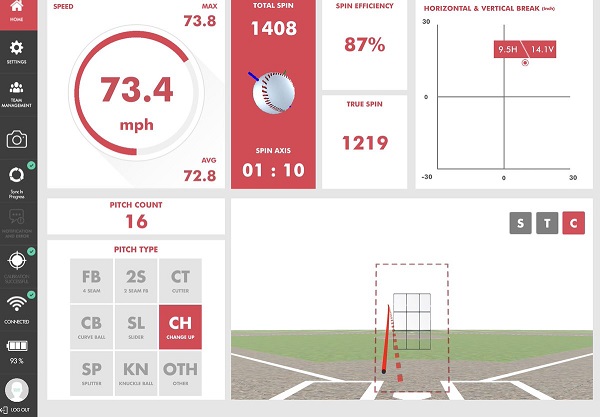
To understand the potency of Gray’s curveball, one must dissect its mechanics with the precision of a biomechanist. The pitch’s success hinges on three critical elements: spin rate, spin axis, and release point. Gray’s curveball boasts a spin rate that hovers around 2,800 RPM, a figure that places it in the upper echelon of MLB curveballs. Yet, spin alone does not make a pitch unhittable; it is the spin axis—the orientation of the ball’s rotation—that dictates its movement. Gray’s curveball features a near-perfect “12-to-6” spin axis, meaning the ball drops almost vertically as it approaches the plate, mimicking the trajectory of a fastball before plummeting at the last possible moment.
The release point is where Gray’s artistry truly shines. By maintaining a consistent release point across his fastball and curveball, he eliminates the telltale signs that often give away secondary pitches. Hitters are left guessing, their timing disrupted by the illusion of a fastball that suddenly transforms into a breaking ball. This mechanical efficiency is the result of years of refinement, a process that saw Gray tinker with grip, wrist angle, and follow-through to optimize the pitch’s movement. The result is a curveball that doesn’t just break—it *drops*, a distinction that separates elite offerings from the merely good.
The Psychological Warfare: How the Curveball Disarms Hitters
Baseball is as much a mental game as it is a physical one, and the curveball is the ultimate psychological weapon. Hitters, conditioned to expect fastballs in fastball counts, are ill-prepared for the sudden descent of a well-thrown curveball. Gray’s ability to exploit this vulnerability has made him a nightmare for opposing lineups. Consider the 2023 season, where Gray’s curveball generated a whiff rate of 38%—a figure that places him among the league’s elite. This staggering statistic is a testament to the pitch’s ability to induce weak contact or, more often, no contact at all.
The psychological edge extends beyond mere deception. Gray’s curveball is not just a pitch; it’s a statement. Each delivery is a reminder to hitters that they are engaged in a battle of wits as much as strength. The late-inning heroics, the strikeout-heavy outings, and the ability to stifle even the most potent lineups all stem from this singular focus. Hitters who face Gray often describe a sense of helplessness, as if the pitch defies the laws of physics. This is the power of the curveball: it doesn’t just get batters out; it *humiliates* them.
Comparative Analysis: Gray’s Curveball in the Pantheon of Pitching Greats
To contextualize Gray’s curveball, one must look to the legends who have wielded the pitch with similar mastery. Clayton Kershaw’s curveball, a sweeping, horizontal breaker, is often cited as the gold standard, while Adam Wainwright’s “Uncle Charlie” is a vertical masterpiece that has baffled hitters for over a decade. Gray’s curveball occupies a unique space in this pantheon. While Kershaw’s pitch is a weapon of precision and Wainwright’s a tool of endurance, Gray’s curveball is a pitch of *violence*—a sudden, violent drop that leaves hitters flailing at thin air.
What sets Gray apart is his ability to deploy the curveball in any count, against any hitter. Unlike pitchers who reserve their curveballs for specific situations, Gray uses it as a primary weapon, a strategy that has redefined his role in the rotation. His curveball usage rate of 35% in 2023 places him among the league leaders, a statistic that underscores its centrality to his success. This approach is a departure from the traditional model of pitch sequencing, where secondary offerings are often relegated to secondary importance. Gray’s curveball is not secondary; it is *primary*.
The Analytics Behind the Revival: Data-Driven Dominance
The modern game is governed by data, and Sonny Gray’s curveball revival is no exception. Advanced metrics like Pitching+ and Statcast’s run value have quantified the pitch’s effectiveness in ways that were once unimaginable. Gray’s curveball boasts a run value of +20.3 in 2023, placing it in the 99th percentile among MLB pitchers. This staggering figure is a reflection of its ability to generate outs at an unprecedented rate. The pitch’s whiff rate, exit velocity suppression, and overall run prevention all contribute to its elite status.
Yet, the analytics only tell part of the story. The intangibles—the late-night bullpen sessions, the adjustments made between starts, the mental fortitude required to trust a pitch that is as likely to be hit as it is to miss—are what truly define Gray’s resurgence. The data provides the roadmap, but it is Gray’s execution that turns potential into dominance. This symbiotic relationship between analytics and artistry is what makes his curveball revival so compelling. It is a reminder that, in baseball, the numbers are only as good as the pitcher who wields them.
Legacy and the Future: What’s Next for Sonny Gray’s Curveball?
As Sonny Gray continues to defy expectations, the question on every baseball fan’s mind is: how long can this last? The curveball, for all its effectiveness, is a pitch that demands precision and endurance. The wear and tear on a pitcher’s arm is a constant concern, and Gray’s ability to maintain his velocity and spin rates deep into games is a testament to his conditioning and mechanics. Yet, the future is uncertain. Will Gray’s curveball continue to be a dominant force, or will hitters eventually adapt?
History suggests that hitters are slow to adjust to elite curveballs, but adaptation is inevitable. The challenge for Gray will be to evolve, to find new ways to deceive hitters as they grow more familiar with his repertoire. Perhaps he will refine his changeup to complement the curveball, or develop a new secondary pitch to keep hitters off-balance. Whatever the case, one thing is clear: Sonny Gray’s curveball has already cemented its place in the annals of pitching greatness. It is a pitch that transcends eras, a reminder that in baseball, the old can be new again.
The curveball, once the forgotten stepchild of the pitching repertoire, has found a new champion in Sonny Gray. His journey from a pitcher on the fringes to a dominant force is a testament to the enduring power of craft and adaptation. As the game continues to evolve, Gray’s curveball stands as a symbol of what is possible when a pitcher dares to defy convention. It is a pitch that doesn’t just get hitters out; it *redefines* the art of pitching.