Baseball is a game of precision, strategy, and tradition—where every player’s role is defined by a simple yet powerful numbering system. These numbers aren’t just digits; they’re the silent language of the diamond, a code that unlocks the deeper mechanics of the sport. Whether you’re a casual fan trying to decode the action or an aspiring coach mapping out defensive alignments, understanding baseball position numbers can transform how you perceive the game. They reveal the hidden choreography of outs, the tactical nuances of positioning, and even the historical evolution of player roles. This guide isn’t just about memorizing numbers—it’s about seeing baseball through a new lens, one where every throw, catch, and play becomes part of a larger, more intricate story.
The Hidden Code of the Diamond: Why Position Numbers Matter
At first glance, baseball’s position numbers might seem like an arbitrary assignment—why is the pitcher always 1 and the catcher 2? The answer lies in the sport’s origins, where a standardized numbering system was introduced to streamline scoring and communication. But these numbers do more than just label players; they create a universal shorthand that transcends language barriers. A coach in Tokyo and an umpire in New York can instantly understand a play described as a “6-4-3 double play” without a single word exchanged. This system also serves as a tactical roadmap, allowing players to visualize defensive shifts and offensive strategies with precision. Without it, the game’s intricate dance of strategy and execution would lose much of its clarity and beauty.
The Pitcher and Catcher: The Dual Axis of the Game
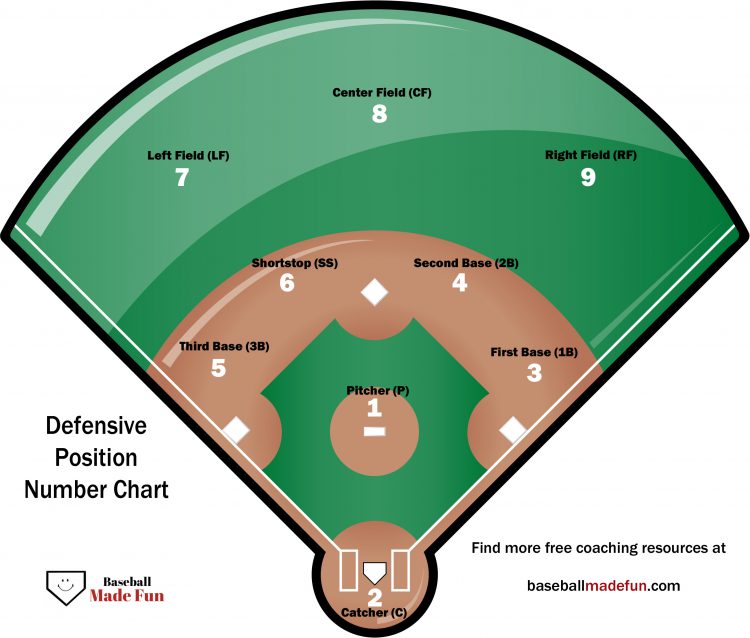
The pitcher (1) and catcher (2) form the game’s central nervous system, dictating the pace and flow of every pitch. The pitcher’s number is the starting point of the defensive sequence, while the catcher’s role is to decode the game’s rhythm, signaling pitches and framing the zone with surgical precision. Together, they orchestrate the duel between batter and hitter, a battle where split-second decisions can shift the momentum of an entire game. Their numbers aren’t just identifiers—they’re a reminder of their unique symbiosis, where one’s strength amplifies the other’s effectiveness. To master baseball is to understand this partnership, where the pitcher’s artistry meets the catcher’s tactical acumen.
Infielders: The Quadrilateral Guardians of the Diamond
The infield is where the game’s most high-stakes plays unfold, and each position’s number reflects its critical role in the defensive puzzle. The first baseman (3) is the anchor of the infield, a position that demands both physical prowess and mental acuity. They must stretch for throws, scoop low liners, and turn double plays with the grace of a ballerina and the reflexes of a cat. The second baseman (4) is the infield’s maestro, a player who bridges the gap between left and right, turning grounders into outs with the precision of a surgeon. The shortstop (6) is the infield’s quarterback, a position that requires a rare blend of range, arm strength, and baseball IQ. They’re the last line of defense against hard-hit balls, the player who turns routine plays into highlight-reel moments. Finally, the third baseman (5) is the infield’s sentinel, standing just yards from home plate, ready to react to line drives that could decide a game in an instant.
Outfielders: The Vanguard of the Outfield’s Expansive Canvas
The outfield (7, 8, 9) is where the game’s most breathtaking athleticism comes to life. The left fielder (7) is often the outfield’s unsung hero, a player who must cover vast distances while tracking fly balls with the focus of a hawk. The center fielder (8) is the outfield’s captain, the player who commands the most territory and dictates the team’s defensive alignment. They’re the first to react to deep hits, the last line of defense against extra-base hits, and the player who turns routine catches into game-changing moments. The right fielder (9) is the outfield’s powerhouse, a position that demands a cannon for an arm and the ability to track line drives that scream toward the warning track. Together, these three players form a defensive wall that can turn a routine fly ball into a three-out inning—or a game-saving catch.
Defensive Alignments: How Numbers Dictate Strategy
Baseball’s defensive alignments are a chess match played out in real time, and the position numbers are the pieces that move across the board. A shift against a pull-heavy hitter might pull the shortstop (6) into the shallow outfield, while the third baseman (5) creeps toward second base. A defensive replacement late in the game could see the center fielder (8) slide to right field, altering the entire outfield’s coverage. These adjustments aren’t just about reacting to the batter—they’re about anticipating their tendencies, exploiting their weaknesses, and turning the game’s geometry to your advantage. The numbers provide the framework, but the strategy is where the magic happens, where a coach’s vision meets the players’ execution.
Offensive Positioning: Decoding the Batter’s Box
While the defensive numbers are fixed, the offensive side of the equation is a fluid dance of numbers and strategy. A batter’s position in the lineup (1 through 9) isn’t just a spot on a card—it’s a role that defines their responsibilities. The leadoff hitter (1) is the team’s engine, a player who must get on base, steal when necessary, and set the table for the middle of the order. The cleanup hitter (4) is the team’s power source, the player who drives in runs and changes the game’s momentum with a single swing. The numbers in between tell a story of balance, where speed, contact, and power are strategically placed to maximize the team’s offensive potential. Understanding these roles is the key to unlocking the deeper layers of baseball’s offensive chessboard.
Historical Evolution: How Position Numbers Reflect the Game’s Past
The position numbering system isn’t just a modern convenience—it’s a living artifact of baseball’s history. The original numbering system, introduced in the early 20th century, reflected the game’s simpler era, where players were less specialized and positions were more fluid. Over time, as the game evolved, so did the numbers. The rise of the designated hitter (DH) in the American League added a new layer to the system, while defensive shifts and specialized roles have blurred the lines between traditional positions. Today, the numbers serve as a bridge between baseball’s past and present, a reminder of how far the game has come—and how much it has stayed the same.
Mastering the Numbers: How to Use Them Like a Pro
To truly understand baseball, you must internalize the position numbers until they become second nature. Start by watching games with a scorecard in hand, marking each play with its corresponding number. Study defensive shifts, noting how coaches use the numbers to counteract hitters’ tendencies. Learn the historical context behind each position, from the dead-ball era’s slugging first basemen to the modern era’s shift-happy infields. The more you engage with the numbers, the more you’ll see them as more than just labels—they’re the DNA of the game, the key to unlocking its deepest secrets.