The symphony of a baseball game is composed of countless individual movements, each playing a crucial role in the grand composition. Among these, the “crow hop” of an outfielder stands as a testament to athleticism, timing, and spatial awareness—an explosive leap that transforms a player from a stationary observer into a dynamic force. Yet, this same motion, when mirrored by a pitcher in a pickoff attempt, becomes a tactical chess move, a calculated deception to disrupt the rhythm of the game. The contrast between these two applications of the crow hop—one a defensive weapon, the other an offensive gambit—reveals the depth of baseball’s strategic layers. This exploration delves into the mechanics, psychology, and situational nuances that distinguish the outfielder’s crow hop from the pitcher’s pickoff, offering readers a comprehensive understanding of two pivotal yet often overlooked facets of the sport.
The Crow Hop: A Fundamental of Outfield Dominance
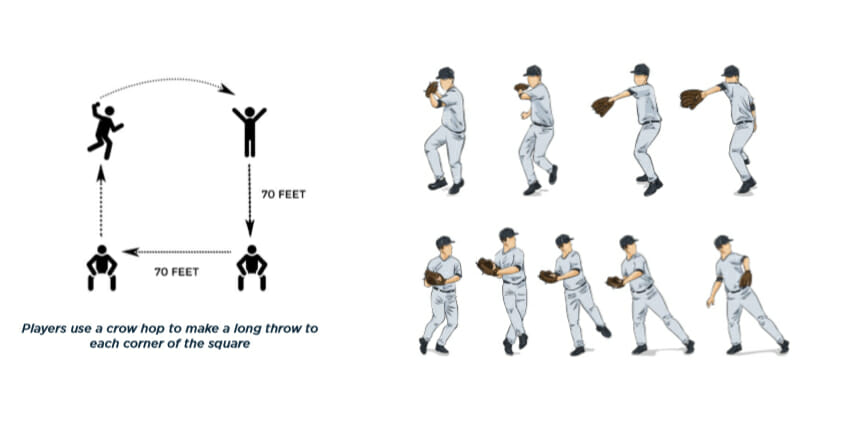
The crow hop is more than a leap; it is a kinetic chain reaction that begins in the outfielder’s lower body and culminates in a burst of forward momentum. When executed correctly, it allows a player to cover ground with unparalleled efficiency, turning what might be a deep fly ball into a playable opportunity. The technique hinges on a sequence of precise steps: a small lateral shuffle to align the body with the ball’s trajectory, followed by a powerful drive off the back leg, and a final leap that propels the outfielder forward and upward. This motion not only extends the player’s reach but also positions them optimally for the catch, reducing the need for last-second adjustments.
What sets the crow hop apart from a simple run is its emphasis on rhythm and timing. The outfielder must read the ball off the bat in milliseconds, adjusting their approach in real time. A well-timed crow hop can mean the difference between a routine out and a game-changing error. Coaches often drill this skill through repetitive drills, such as the “crow hop corners” exercise, where players practice transitioning from a stationary stance to a full sprint while maintaining balance and focus. The result is a fluid, almost dance-like movement that embodies the grace and power of elite outfielders.
The Pitcher’s Pickoff: A Crow Hop in Disguise
While the outfielder’s crow hop is a defensive maneuver, the pitcher’s pickoff is a calculated offensive play, a moment of psychological warfare between the mound and the basepaths. Here, the crow hop is not a leap for a ball but a feint—a sudden, exaggerated step that mimics the motion of throwing to first base. The pitcher’s goal is to deceive the baserunner, forcing them to hesitate or commit prematurely to a steal attempt. The crow hop in this context is a misdirection tool, a way to sell the illusion of a throw while actually holding the ball and preparing for a secondary play, such as a pickoff to second or a pitchout.
The effectiveness of the pitcher’s crow hop lies in its subtlety. A well-executed pickoff requires the pitcher to blend the crow hop into their natural pitching motion seamlessly. The step must be quick enough to catch the runner off guard but controlled enough to avoid tipping off the batter or umpire. Pitchers often combine the crow hop with a quick glance at the base, a subtle shift in body weight, or even a slight hesitation to sell the deception. The crow hop becomes a silent conversation between pitcher and baserunner, a duel of wits where a single misstep can cost a team a crucial run.
Mechanics and Missteps: Where the Two Diverge
Despite their superficial similarities, the crow hop in outfield defense and the pitcher’s pickoff are governed by entirely different mechanical principles. For the outfielder, the crow hop is about maximizing horizontal distance and vertical reach. The leap must be high enough to intercept the ball at its apex, but the focus remains on forward momentum to cover ground quickly. The outfielder’s crow hop is a reactionary move, dictated by the ball’s flight path and the player’s initial positioning.
In contrast, the pitcher’s crow hop is a premeditated act, a deliberate manipulation of the baserunner’s expectations. The pitcher’s leap is not about height or distance but about timing and deception. The pitcher must avoid telegraphing their intentions, ensuring the crow hop appears indistinguishable from their normal pitching motion. A pitcher who overemphasizes the step risks giving away the play, while one who underplays it may fail to draw the runner’s commitment. The crow hop in this context is a study in controlled chaos, where precision and subtlety are paramount.
The Psychological Chess Match: Reading the Opponent
Baseball is as much a mental game as it is a physical one, and the crow hop—whether in the outfield or on the mound—is a prime example of this dynamic. For the outfielder, the crow hop is a response to the batter’s power, a way to neutralize the threat of a deep hit. The player must read the ball’s trajectory, anticipate its landing spot, and time their leap accordingly. A misread can lead to a collision with the fence or a missed catch, turning a potential out into a costly error. The outfielder’s crow hop is a test of focus, where even a split-second lapse can alter the course of a game.
The pitcher’s crow hop, on the other hand, is a psychological probe, a way to unsettle the baserunner. The pitcher must gauge the runner’s tendencies—do they take large leads? Are they aggressive on the steal?—and tailor their crow hop to exploit those habits. A pitcher who can consistently sell the pickoff threat forces the runner to second-guess their instincts, leading to hesitation or poor jumps. The crow hop becomes a weapon of intimidation, a way to assert dominance over the basepaths without even throwing a pitch. In this sense, the crow hop is not just a physical tool but a psychological one, a way to tilt the balance of power in favor of the pitcher’s team.
Situational Nuances: When and How to Use the Crow Hop
The crow hop’s effectiveness is highly situational, and its application varies dramatically between outfield defense and pickoff attempts. For outfielders, the crow hop is most critical in deep centerfield or when tracking a high fly ball. The player must adjust their approach based on the ball’s hang time, wind conditions, and the game situation. A crow hop in the late innings of a close game carries far more weight than one in a blowout, where the urgency to make a play is lessened. Coaches often emphasize the crow hop in high-leverage moments, drilling players to maintain composure under pressure.
Pitchers, meanwhile, must consider the game’s context when employing the crow hop. A crow hop in the early innings might be used to test a runner’s aggressiveness, while one in the late innings could be a high-risk play to prevent a stolen base. The pitcher must also account for the batter’s tendencies—if the hitter is prone to swinging at pitches out of the zone, a pickoff attempt might be ill-advised. The crow hop in this context is a strategic decision, one that must align with the broader game plan. A well-timed crow hop can shift momentum, while a poorly executed one can hand the opposing team a free base.
Training and Refinement: Mastering the Crow Hop
Mastering the crow hop requires relentless repetition and a keen eye for detail. Outfielders spend hours perfecting their footwork, ensuring that each step of the crow hop is fluid and explosive. Drills often involve simulated game scenarios, where players practice reading fly balls and transitioning into their crow hop seamlessly. Video analysis is a critical tool, allowing players to dissect their mechanics frame by frame and identify areas for improvement. The goal is to make the crow hop an instinctive response, a movement so ingrained that it becomes second nature in the heat of a game.
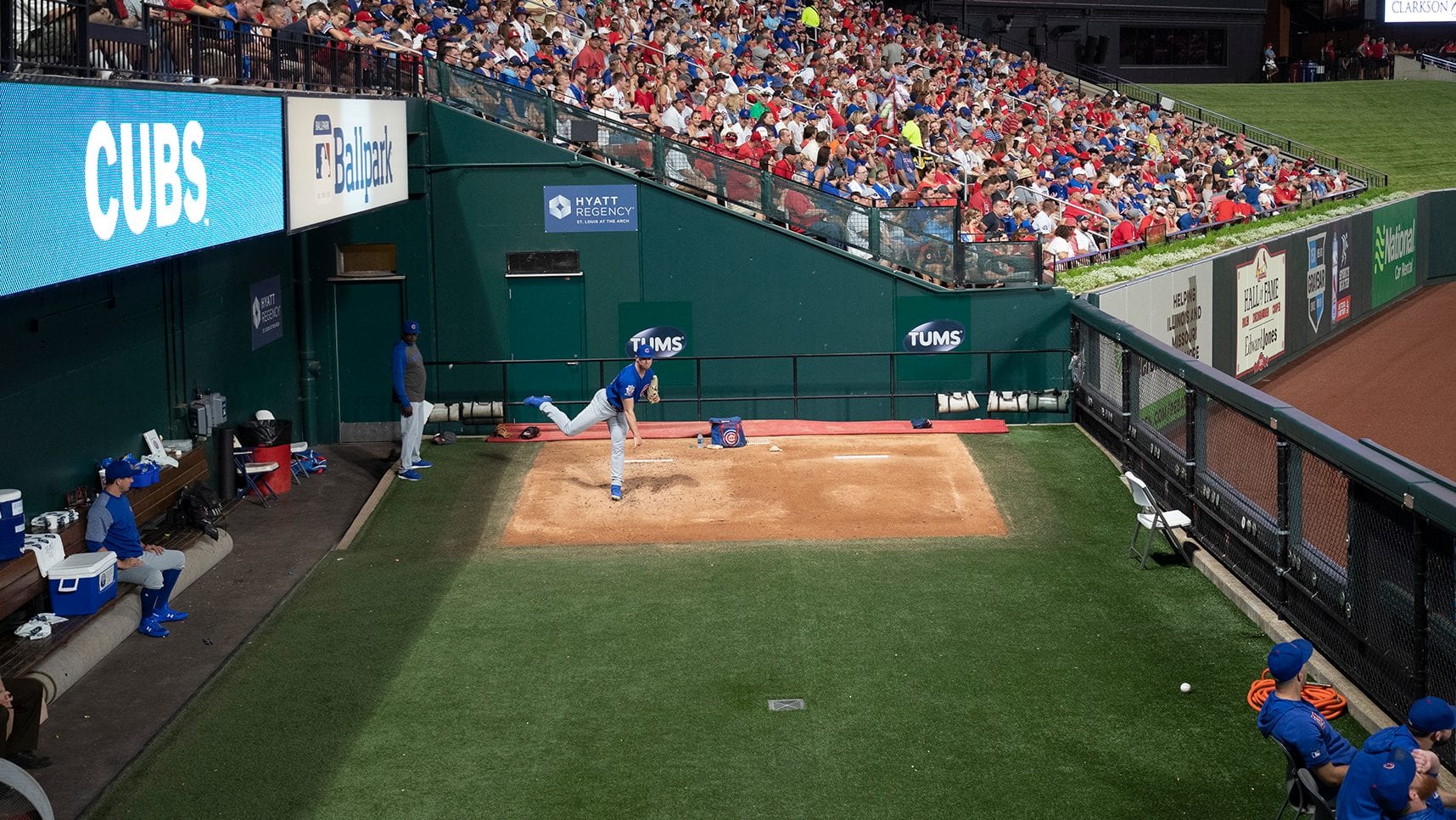
For pitchers, refining the crow hop involves a different set of challenges. Pitchers must work on disguising their pickoff moves, ensuring that their crow hop blends seamlessly into their pitching motion. Bullpen sessions often include pickoff drills, where pitchers practice their crow hop against baserunners to hone their timing and deception. The focus is on subtlety—every step, every glance, every hesitation must be calibrated to sell the illusion. Pitchers also study their opponents, learning to recognize patterns in baserunners’ leads and jumps to exploit them with a well-timed crow hop.
The Crow Hop in the Modern Game: Evolution and Adaptation
The crow hop has evolved alongside the game itself, adapting to changes in player athleticism, coaching philosophies, and technological advancements. In the modern era, outfielders are faster and more agile than ever, with advanced metrics like “route efficiency” and “first-step quickness” now integral to defensive evaluations. The crow hop has become a cornerstone of outfield play, a way to maximize defensive range and turn potential hits into outs. Coaches now use data-driven approaches to refine the crow hop, tailoring it to each player’s strengths and the specific demands of their position.
Pitchers, too, have adapted their crow hop to the modern game. With the rise of analytics, pitchers are more aware than ever of the value of pickoff plays, using the crow hop as a strategic tool to disrupt baserunners. The proliferation of high-definition cameras and slow-motion replays has made it easier for pitchers to study their opponents, refining their crow hop to perfection. The crow hop is no longer just a trick of the trade; it is a weapon, a way to gain a tactical edge in a game where every advantage counts.