The crack of leather on willow, the roar of the crowd, the batsman’s intent gaze—these are the moments that define a cricket match. Yet, hidden in plain sight, is a ballet of precision and anticipation: the fielders moving into position. It’s a dance as old as the game itself, one that unfolds in seconds yet demands years of silent practice. To the untrained eye, it may seem like mere shuffling, a reaction to the bowler’s whim. But beneath the surface lies a labyrinth of strategy, instinct, and split-second decision-making that shapes every delivery. This is the art of field placement, a skill so subtle it often escapes notice—until you know what to look for.
The Geometry of Anticipation: How Fielders Predict the Unpredictable
Every bowler’s delivery is a riddle wrapped in a mystery. The seam, the swing, the angle of release—each variable alters the ball’s trajectory in ways that defy casual observation. Yet, fielders don’t just react; they anticipate. Their positioning is less about chasing the ball and more about preempting its path. This is where the geometry of the field becomes a silent language.
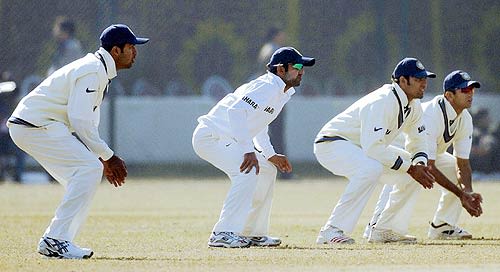
Consider the cover fielder. Positioned at an angle roughly 45 degrees from the batsman’s off-stump, their stance isn’t arbitrary. It’s a calculated guess, a wager on where the ball might land if the batsman plays a horizontal bat shot. The fielder’s body leans slightly forward, knees bent, weight balanced on the balls of their feet—every muscle coiled like a spring. They’re not waiting; they’re *listening*. The subtle shift in the bowler’s grip, the flicker of the batsman’s bottom hand, the angle of the front shoulder—these micro-signals trigger a cascade of adjustments. A half-step to the left, a shuffle to the right, a crouch that lowers the center of gravity. It’s a symphony of micro-movements, where milliseconds separate success from failure.
The Language of Signals: How Captains and Fielders Communicate Without Words
In the cacophony of a packed stadium, silence is the most powerful tool. Captains and fielders communicate through a lexicon of gestures, glances, and unspoken cues—a language that evolves with every match. A raised finger might signal a fielder to inch closer to the boundary. A clenched fist could mean, “Stay deep; the batsman is looking to slog.” These signals are the invisible threads weaving the field’s strategy together.
But the language isn’t static. It adapts. On a turning pitch, the short mid-off might receive a subtle nod to drift a few yards wider, anticipating a lofted drive. On a green-top seamer, the fine leg fielder might be instructed to creep closer, ready to pounce on an edge. The captain’s role isn’t just to bark orders; it’s to read the game’s pulse and translate it into actionable intelligence. Fielders, in turn, must trust their instincts while adhering to the broader plan. It’s a delicate balance—too rigid, and they’re predictable; too flexible, and the gaps appear. The best fielders are those who can dance between the two, blending discipline with improvisation.
The Physics of Movement: Why Fielders Glide, Not Run
Watch a fielder in motion, and you’ll notice something peculiar: they rarely sprint. Instead, they glide—short, quick steps that cover ground without expending unnecessary energy. This isn’t laziness; it’s physics in action. Cricket fields are vast, and a full sprint to the ball could leave a fielder exhausted before the ball even arrives. Efficiency is key.
The art of economical movement is rooted in biomechanics. Fielders use a technique called the “shuffle step,” where their feet move in small, controlled bursts, keeping their body low and balanced. This reduces air resistance and allows for rapid changes in direction. The fielder’s eyes stay locked on the ball, their peripheral vision scanning the batsman’s cues. When the ball is struck, they don’t turn their back; they pivot, using the momentum of their shuffle to propel themselves toward the target. It’s a lesson in controlled aggression—a blend of athleticism and economy that separates the good from the great.
The Psychology of Positioning: How Fear and Confidence Shape the Field
Fielding isn’t just a physical act; it’s a psychological chess match. The placement of a fielder can influence a batsman’s mindset as much as the bowler’s line and length. A fielder lurking at short mid-off doesn’t just wait for a catch—it sends a message: “I’m here. You can’t get away with sloppy shots.” Conversely, a deep square leg signals vulnerability, inviting the batsman to take a risk. The field, in this sense, is a psychological toolkit.
But the psychology cuts both ways. A fielder who hesitates, who second-guesses their positioning, becomes a liability. The best fielders cultivate an almost Zen-like focus, where doubt is drowned out by instinct. They trust their training, their captain’s instructions, and their own abilities. Yet, this confidence is fragile. A single missed catch or misfield can unravel a fielder’s composure, turning a moment of brilliance into a spiral of self-doubt. The mental resilience required to maintain peak performance is what elevates fielding from a mere skill to an art form.
The Evolution of Fielding: From Stodgy to Spectacular
Fielding wasn’t always the dazzling spectacle it is today. In the early days of cricket, fielders were often stationary, their positions dictated by tradition rather than strategy. A fielder at mid-off was as much a decorative element as a tactical one. But as the game evolved, so did the role of the fielder. The advent of limited-overs cricket, with its emphasis on scoring rates and boundaries, forced captains to rethink their approach. Fielders became more agile, more proactive, their positions tailored to stifle runs rather than merely collect catches.
Today, fielding is a high-octane discipline. Modern players train like athletes, with agility drills, reaction-time exercises, and even virtual reality simulations to hone their instincts. The result? A generation of fielders who move with the grace of dancers and the precision of snipers. They’re not just stopping runs; they’re creating them—through run-outs, direct hits, and breathtaking dives that defy gravity. The field has transformed from a static backdrop to a dynamic extension of the bowler’s and captain’s will.
The Unseen Hero: Why the Best Fielders Are Forgotten
In a sport obsessed with batsmen and bowlers, the fielder often occupies the shadows. They’re the unsung heroes, the ones who make the spectacular possible without ever stealing the spotlight. Yet, their contributions are immeasurable. A single run saved by a fielder’s acrobatic stop can change the momentum of a match. A misfield can gift the opposition 10 crucial runs. The fielder’s role is thankless, but it’s also the backbone of the game.
Perhaps that’s why their movements fascinate us. In a world where every run and wicket is scrutinized, the fielder’s artistry lies in its subtlety. It’s the quiet heroism of a player who positions themselves perfectly, only to vanish into the background when the ball is delivered. They’re the silent architects of the game’s most thrilling moments, the ones who remind us that cricket is more than just bat and ball—it’s a symphony of anticipation, precision, and unyielding focus.