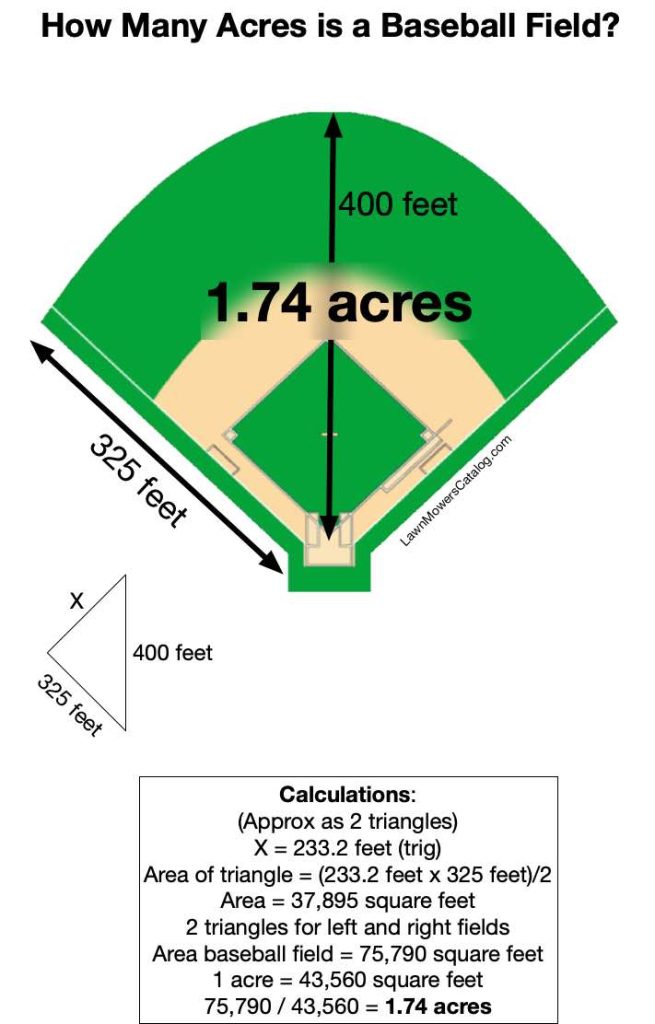
When contemplating the sprawling grandeur of Major League Baseball (MLB) parks, many marvel at the spectacle of the game itself. However, few pause to consider the sheer spatial magnitude these fields command. The dimensions of a baseball field extend far beyond the diamond, encompassing vast tracts of land that challenge common assumptions. Delving into the acreage of these iconic stadiums reveals a fascinating shift in perspective, one that enriches appreciation for the physical canvas upon which America’s pastime unfolds.
The Anatomy of a Baseball Field: More Than Meets the Eye
The quintessential feature of any baseball park is its infield diamond. Measuring exactly 90 feet between each base, the diamond creates a familiar geometric shape that anchors the layout. Yet, this diamond is but the nucleus of a far more expansive arena. Beyond the bases lies lush outfield grass that fans the field to breathtaking breadths, accommodating deep fly balls and towering home runs. The outfield fence distances vary wildly across stadiums, introducing a dose of unique character to each ballpark’s footprint.
Standard professional baseball fields do not adhere to a one-size-fits-all blueprint. Unlike sports arenas with rigid dimensions, MLB parks embrace subtle variations that influence the amount of acreage occupied. These disparities mean the total land enveloped by each stadium can fluctuate tremendously based on the depth of the outfield and the grand scale of seating structures encircling the playing surface.
How Many Acres Does a Baseball Field Actually Cover?
At its core, the baseball playing field typically sprawls across roughly 2 to 3 acres. This estimate includes the infield, outfield, foul territory, and the dirt warning track circling the grass. To put this in perspective, an acre spans 43,560 square feet. When juxtaposed against this measure, the playing field’s dimensions begin to crystallize—an arena that is vast enough to challenge an athlete’s endurance yet intimate enough to maintain a focused spectacle.
Beyond the playing surface, the full stadium complex occupies considerably more land. Grandstands, dugouts, bullpens, concourses, and auxiliary facilities swell a stadium’s footprint to incorporate approximately 5 to 10 acres in total. Iconic venues such as Fenway Park and Wrigley Field exemplify this phenomenon: their intimate playing areas contrast with sprawling spectator amenities that augment the complex’s overall magnitude.
The Outfield: The Unbounded Expanse
Central to the grandeur of baseball fields is the outfield—a seemingly limitless zone where players chase high-stakes balls. Outfield sizes vary, with center fields ranging from about 390 feet to over 420 feet in depth. This variability not only influences gameplay but also dramatically impacts land utilization. More expansive outfields demand correspondingly greater acreage, extending the park’s spatial reach well beyond the infield’s neat dimensions.
Moreover, the unregulated nature of outfield fence distances in MLB allows teams to cultivate idiosyncratic dimensions that form part of their park’s distinctive charm. In some parks, the outfield inclines or incorporates quirky corners that extend the playing area’s calculation beyond a mere rectangle or oval. These irregularities, while subtle, add layers to the field’s spatial identity and consequently amplify the acreage slotted under the umbrella of the baseball park.
Comparative Perspective: How Does a Baseball Field Stack Up?
How does the acreage of a baseball field compare to those of other sports venues? A football field, for instance, occupies around 1.32 acres, including end zones—significantly less than a baseball diamond’s combined infield and outfield. Soccer pitches grow larger still, typically covering about 1.76 to 2.04 acres depending on regulations. Baseball fields, however, transcend these figures due to their asymmetrical shape and extensive outfield, often making them some of the largest professional sports areas in pure land coverage.
Additionally, the variable layout of baseball parks means that no two are precisely alike—each park’s acreage reflects an architectural decision that balances tradition, gameplay, and audience experience. This stands in contrast to the uniformity seen in many other sports where field dimensions are standardized across venues.
The Implications of Field Size on Gameplay and Fan Experience
The acreage of a baseball field does not merely represent a statistic; it actively shapes the essence of the game. A deeper outfield can transform the nature of play, affecting the frequency of home runs, triples, and defensive possibilities. Players and managers constantly adapt strategies to accommodate the quirks of their home park’s dimensions.
From the spectator’s vantage point, the expansive nature of the field fosters a unique ambience. Fans feel the openness of the outfield’s wide expanse juxtaposed with the intimacy of the diamond’s crucible where players engage in split-second decisions. The size of the playing area also influences seating arrangements, sightlines, and the overall stadium atmosphere, intertwining spatial design with fan immersion.
Beyond the Field: The Full Footprint of MLB Stadiums
While the playing field encompasses a significant acreage, the overall stadium complex extends far beyond it. Parking lots, training facilities, retail spaces, and public plazas contribute to the land dedicated to each MLB park. The total acreage for stadiums, including these additional amenities, can often approach or exceed 20 acres in metropolitan environments where multi-use developments are a strategic priority.
Modern ballpark architecture increasingly integrates green spaces and fan-friendly amenities, enhancing the environment beyond the diamond. This expansion not only influences land use but also reflects evolving trends in urban design and community engagement, making the acreage of MLB stadiums a dynamic topic that merges sport with city planning.
Reimagining the Baseball Field’s Scale
Understanding the acreage of a baseball field invites a radical reimagination of the game’s physical dimensions. What at first seems like a modest arena reveals itself as a vast, living organism shaped by architectural ingenuity and sporting tradition. This scale nurtures the drama of baseball, where every corner of the sprawling field can alter the course of play.
Next time eyes glance over a ballpark, consider the hidden expanse it occupies. Acres of carefully manicured grass, dirt, and concrete combine to form not just a playing field but a stage where history unfolds. Appreciating this magnitude enriches our connection to the sport, offering a newfound reverence for the space where legends have been made.