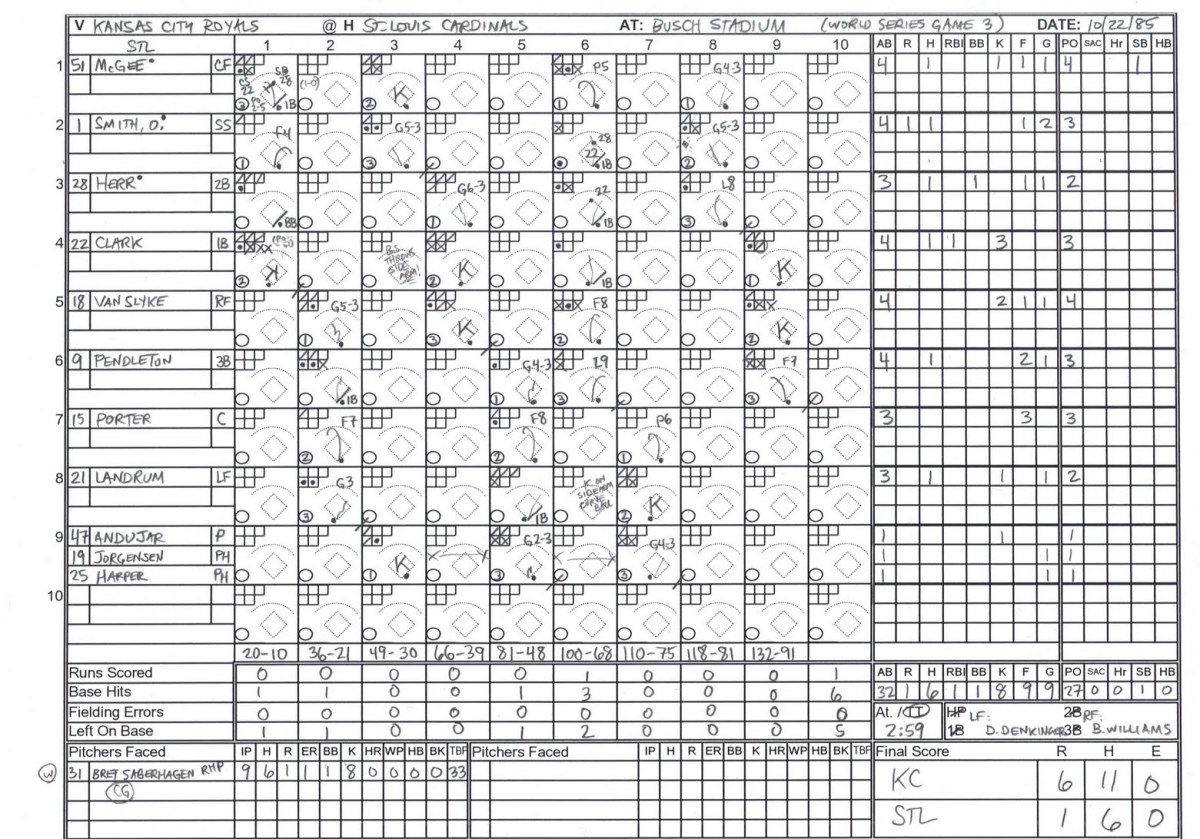
For many, the allure of baseball lies not only in the crack of the bat or the roar of the crowd but also in the intricacies hidden within the game’s statistical tapestry. Few tools encapsulate this complexity better than the baseball box score. At first glance, it can seem like a cryptic ledger—rows and columns filled with numbers, abbreviations, and symbols. Yet, for those who learn its language, the box score transforms into a vivid narrative of the contest’s rhythm, strategy, and pivotal moments. Understanding how to read a baseball box score like a professional unlocks a deeper appreciation for the sport’s nuances, revealing the layers beneath each play and decision.
The Anatomy of a Box Score: An Overview
A baseball box score is more than a mere statistical summary; it is a meticulous record of a game’s flow and outcome. It typically presents teams, players, and their performance in a structured grid format. The core sections usually include batting, pitching, fielding, and the line score, each segment offering distinct insights. Recognizing this structure is fundamental, as it shapes how the data interrelates and crafts the game’s story. The line score, often situated at the top or side, succinctly conveys inning-by-inning scoring, illustrating the ebb and flow of momentum. Beneath or adjacent to this, player-specific statistics detail individual contributions, transforming raw numbers into a rich tableau of athletic prowess and strategic maneuvering.
Decoding the Batting Section: Beyond Hits and Runs
The batting portion is the box score’s heartland. It enumerates each player’s offensive efforts, listing their at-bats, hits, runs, runs batted in (RBIs), and other metrics. Yet, the true depth emerges from understanding the symbols and abbreviations that punctuate this segment. For instance, “AB” (at-bats) excludes walks and sacrifices, which reflects a player’s actual opportunities to produce offensive results. Meanwhile, “H” (hits) encompasses singles, doubles, triples, and home runs, each often annotated with unique shorthand—“2B” for doubles, “3B” for triples, “HR” for homers—to specify quality. The “RBI” statistic encapsulates a player’s ability to deliver in clutch moments, while the “SB” (stolen bases) hints at baserunning aggressiveness and a team’s strategy to pressure defenses.
Understanding these nuances enriches the narrative contained in the batting line. The presence of a walk (BB) or a strikeout (K), for example, can speak volumes about a player’s discipline and approach at the plate. Recognizing when a sacrifice bunt or fly has occurred, often coded as “SH” or “SF,” signals a strategic play designed to advance runners rather than prioritize personal statistics. Thus, the box score serves as a window not only into outcomes but also into the tactical undertones that permeate every at-bat.
Pitching: The Commander of the Field
Pitchers shape a baseball game like generals direct armies. The pitching section of the box score documents their command and resilience. Key statistics here include innings pitched (IP), hits allowed (H), runs (R), earned runs (ER), walks (BB), strikeouts (SO), and the all-important pitch count or decisions related to wins and losses. Innings pitched, presented often as a decimal (e.g., 6.2 to denote six and two-thirds innings), reveal the stamina and durability a pitcher has brought to the mound. The earned run average (ERA) offers a distilled indication of effectiveness, accounting for runs charged directly to the pitcher without defensive errors.
Deciphering the distinction between runs (R) and earned runs (ER) is crucial; it distinguishes whether runs resulted from a pitcher’s mistakes or the defense’s lapses, a subtlety that underscores the collaborative nature of baseball. High strikeout-to-walk ratios suggest control and dominance, while a pitcher’s ability to induce ground balls or fly balls, though not always explicitly noted in simple box scores, further adds layers of context visible through complementary statistics in expanded reports.
Fielding and Defensive Contributions: The Unsung Saga
While not always as prominently displayed as batting or pitching, the fielding portion inscribes the oft-overlooked narrative of defense. Errors (E) quantify lapses that grant opponents additional opportunities, whereas putouts (PO) and assists (A) highlight defensive highlights that can quietly sway a game’s tide. By assessing fielding statistics alongside pitching and batting, one gains a holistic view of the game’s balance between offense and defense. A team’s ability to convert ground balls into outs, turn double plays, or prevent runs from crossing the plate through stellar defensive plays becomes apparent with careful perusal.
From a storytelling perspective, noting who committed an error in a critical inning or who made a game-saving catch adds richness to the game’s drama. The seemingly mundane defensive stats thus seed deeper appreciation for moments that often escape casual viewers but are pivotal in determining outcomes.
The Line Score: The Pulse of the Contest
The line score pulsates with life as it charts the progression of runs scored inning-by-inning. At a glance, it reveals the game’s momentum swings—the innings of breakout offensive bursts or defensive stalemates. This compact sequence showcases how runs accumulate unevenly across nine frames, reflecting changes in strategy, fatigue, and pressure. A late-inning surge shown in the line score can hint at resilient comebacks, whereas an early barrage of runs might presage a dominant performance.
Moreover, the final totals—runs, hits, and errors—round out the macro-view, inviting further exploration of how closely contested or lopsided the encounter was. For aficionados hungry for subtleties, the line score beckons as the heartbeat behind the more granular box score details, sparking questions about how those runs came to be.
Interpreting Abbreviations and Symbols: The Language of the Game
Baseball’s box score is a dialect in its own right, laden with abbreviations and symbols that shorten complex plays into succinct shorthand. Familiarity with these codes—the “K” for strikeout, the “DP” for double play, or the use of “L” and “W” to designate the losing and winning pitchers—is key for fluent reading. Beyond convenience, this lexicon conveys game information with precision and economy, demanding an attentive eye to decode the underlying performance subtleties.
Advanced symbols might include “IBB” for intentional walks or “HBP” for hit by pitch, each adding complexity to the game’s unfolding drama. Notably, the use of short-form descriptors for specific plays—such as “SB” for stolen base or “CS” for caught stealing—contributes layers of strategic insight. These terse codes map the tactical chessboard beneath the surface of a typical baseball diamond.
Why the Box Score Captivates: A Deeper Fascination
The enduring fascination with reading box scores extends beyond statistical curiosity. It taps into the human desire to comprehend, analyze, and narrate stories hidden within the chaos of competition. Each number represents a moment, a decision, a calculated risk or a serendipitous break. The box score condenses a contest lasting several hours into a distilled form that allows fans, analysts, and historians to revisit, reconstruct, and relive a game’s pivotal junctures.
This compact repository evokes a sense of mastery, empowering readers to engage with baseball on a cerebral level. It transforms spectatorship into a participatory act—imagining pitch sequences, defensive alignments, and critical plays—thus enriching the spectator experience. The box score is more than an archive; it is an ongoing dialogue between the raw game action and its enduring interpretation.
Conclusion: Embracing the Box Score as a Lens into Baseball’s Soul
Learning to read a baseball box score like a pro imparts more than just knowledge of hits, runs, and errors. It ushers enthusiasts into a realm where data meets drama and numbers narrate nuanced sagas of athleticism and strategy. As one delves deeper, the box score reveals itself as a microcosm of baseball’s complex charm, a portal through which the sport’s poetic interplay between chance and skill can be appreciated. In mastering this essential skill, the casual observer transcends into an informed connoisseur, equipped to savor the game’s myriad layers spanning history, tactics, and human endeavor.