The realm of Major League Baseball (MLB) is one defined by precision, power, and the relentless pursuit of excellence. Among the myriad skills that players exhibit, pitching speed often captivates fans and analysts alike. But how fast do MLB pitchers truly throw? And what does this velocity signify beyond the obvious numbers? This exploration unveils the nuanced world of pitching speeds, challenging preconceived notions and inviting readers to perceive the art and science of pitching through an invigorated lens.
The Evolution of Pitching Velocity: From Gentle Tosses to Blazing Fireballs
Pitching speeds have not always been the jaw-dropping figures seen in contemporary games. Historically, the average pitch velocity hovered in more modest territory, as early baseball focused heavily on control, placement, and deception. Over the decades, advancements in training methodologies, biomechanical understanding, and athlete conditioning have catalyzed a dramatic acceleration in how hard pitchers can hurl their arsenal.
The advent of high-speed radar technology and digital tracking has transformed how velocity is measured and prized. This technological leap revealed that many pitchers were consistently faster than anecdotal accounts or rudimentary tools had suggested. The result? An arms race of speed, fostering a breed of pitchers capable of routinely eclipsing 95 miles per hour—and occasionally, even breaching triple digits.
Decoding the Numbers: What Constitutes Elite Pitching Speed?
Understanding pitching speed requires more than a glance at a radar gun’s reading. In MLB, average fastball velocities have climbed into the high-90s over recent years, with elite pitchers pushing well beyond 100 miles per hour. Yet, the realm of pitching speed isn’t monolithic—different pitch types vary significantly in velocity, and context matters deeply.
Fastballs, especially four-seamers and two-seamers, represent the pinnacle of velocity. The blazing heat of a high-velocity fastball often serves as a benchmark for a pitcher’s raw power and arm strength. However, velocity must be interpreted alongside control and pitch movement to fully grasp a pitcher’s effectiveness. A 98 mph pitch that wobbles over the plate is less potent than a 92 mph pitch slicing across the strike zone with surgical precision.
The Anatomy of a Fast Pitch: Biomechanics Behind the Speed
The seemingly superhuman velocity of an MLB fastball stems from a symphony of biomechanical elements. The kinetic chain—how energy transfers sequentially through the body segments—plays a critical role in generating maximum acceleration. From a pitcher’s stride foot planting firmly on the mound, through the explosive rotation of the hips and torso, culminating in the whip-like snap of the wrist, every element contributes to that fleeting moment of ball release.
Fine-tuned timing, explosive power, and elastic energy stored in tendons enable some pitchers to unleash what might be termed a violation of human speed. Small mechanical imperfections can sap velocity. Thus, pitchers and coaches painstakingly analyze every millisecond of the delivery process to eke out incremental improvements, turning biomechanics into a science that borders on the arcane.
Breaking the 100 MPH Barrier: Myth vs. Reality
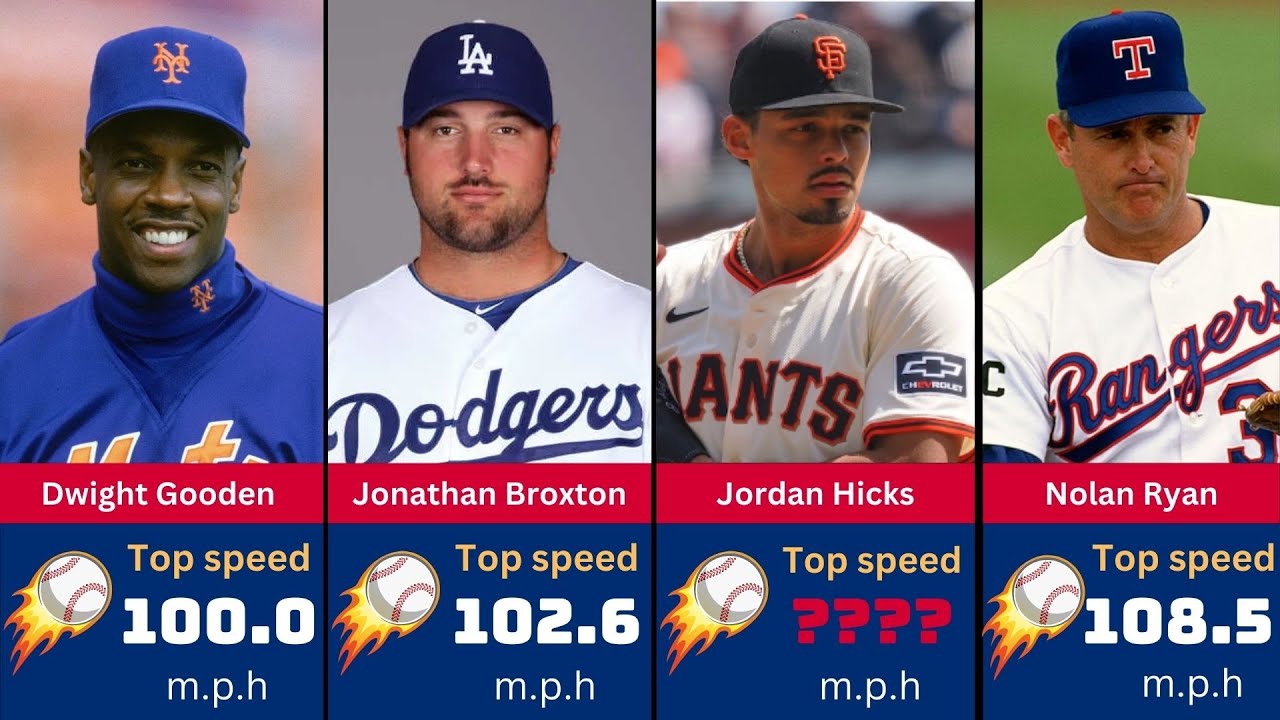
The milestone of pitching 100 mph—often viewed as the modern mythic threshold—carries both literal and symbolic weight. Crossing this invisible Rubicon marks a player as a rarefied talent, in a category reserved for the most powerful arms in baseball history. Yet, reaching this plateau is no guarantee of success. In fact, many pitchers who vape past 100 mph struggle with pitch predictability or stamina.
Moreover, the 100 mph record is not an isolated phenomenon; it has become increasingly common among rising stars and seasoned veterans alike. This trend prompts a reevaluation of how velocity functions within the larger pitching paradigm. Is speed a trump card, or merely one weapon in a comprehensive arsenal? The answer is a resounding mixture of both—velocity dazzles and disrupts, but without command and strategy, it cannot dominate indefinitely.
The Influence of Velocity on Pitching Strategy and Batter Psychology
Velocity isn’t only a physical feat—it is a tactical asset wielded to unnerve batters and manipulate at-bats. When pitchers possess elite speed, they gain leverage on pitch sequencing and can command the strike zone with increased confidence. High-velocity throws often force hitters into hesitation, compelling early or overly aggressive swings that disrupt timing and induce weak contact.
Beyond the tangible effects on hits and strikeouts, velocity crafts an invisible psychological landscape within the batter’s mind. The looming specter of a 98 or 99 mph fastball shapes anticipation and decision-making. For pitchers, this psychological edge is as valuable as the sheer speed itself. It’s a game of chess masked by split-second reactions and millimeters of precision.
Injury Risks and Longevity: The Hidden Costs of Throwing Hard
With great velocity comes great burden. Throwing pitches at the extreme end of the speed spectrum imposes colossal stress on the musculoskeletal system, particularly the elbow and shoulder. The repetitive high-velocity torque contributes to an alarming incidence of injuries such as ulnar collateral ligament (UCL) tears, often necessitating surgical interventions like Tommy John surgery.
Modern sports medicine and conditioning programs aim to mitigate these risks through biomechanical assessments, pitch count monitoring, and recovery protocols. Yet, the tension between pursuing maximum velocity and preserving long-term arm health poses an enduring dilemma for pitchers, coaches, and franchise management. Managing this balance remains a pivotal challenge in sustaining a successful pitching career.
Future Trends: How Technology and Training Are Shaping Pitching Speeds
Looking forward, the trajectory of pitching speeds is poised to intersect with breakthroughs in technology and science. Wearable sensors, machine learning analytics, and personalized training regimens promise more profound insights into optimizing speed without sacrificing durability. Certain organizations now harness artificial intelligence to decode mechanical inefficiencies and forecast injury risks before they manifest.
Simultaneously, innovative strength and conditioning approaches seek to elevate explosive power, neuromuscular coordination, and energy transfer—key elements underpinning velocity. The convergence of these factors heralds a new era in which pitchers may routinely exceed historical velocity norms, offering fans and analysts an evolving spectacle that continuously redefines the boundaries of human capability.
Conclusion: Reimagining Speed Beyond the Radar Gun
The velocity of MLB pitchers transcends mere numbers flashing on a scoreboard. It is a complex interplay of historical evolution, biomechanics, psychology, and strategy. While the modern game reveres fast pitches as hallmarks of dominance, appreciating their deeper context reveals the delicate artistry behind each throw. Velocity fascinates because it encapsulates human potential—raw power married to exquisite technique and mental fortitude.
As fans, understanding the multifaceted nature of pitching speed shifts our perspective from passive observation to engaged appreciation. The blazing fastball, once a symbol of sheer brute force, now emerges as a narrative of precision engineering and calculated risk. In this dynamic dance of speed and skill, MLB pitchers continually redefine what it truly means to be fast.