The New York Mets of the early 2000s were a team caught between eras—too talented to be dismissed as also-rans, yet too inconsistent to be remembered as champions. Between 2002 and 2005, the franchise teetered on the edge of relevance, boasting rosters that flickered with promise before dissolving into the fog of mediocrity. What if these years weren’t just forgotten, but a cautionary tale of squandered potential? What if the Mets of this stretch were the baseball equivalent of a mirage—glittering from afar, but evaporating upon closer inspection?
The Glittering Core: Stars Who Never Quite Aligned
The early 2000s Mets were not devoid of talent. Far from it. The lineup bristled with power, anchored by a trio of sluggers who, in another universe, might have formed the nucleus of a dynasty. Mike Piazza, the indomitable backstop with a bat that could fell skyscrapers, brought veteran savvy and prodigious offensive output. Alongside him, Edgardo Alfonzo, the “Captain,” wielded a bat that seemed to defy physics, spraying line drives with the precision of a Swiss watchmaker. And then there was the enigmatic Mo Vaughn, the erstwhile Red Sox slugger whose arrival in Queens was supposed to herald a new age of dominance.
Yet for all their individual brilliance, these stars never quite synchronized. Piazza’s power was undeniable, but his later years were marred by injuries that robbed him of his legendary quickness. Alfonzo, though beloved, was often overshadowed by the flashier names around him. And Vaughn? His tenure was a study in what-could-have-been, his once-mighty swing reduced to a shadow of its former self by weight and wear. The Mets had the pieces. They just never quite fit them together.
The Pitching Paradox: Arms That Could Save—or Sink—a Franchise
If the position players were a symphony in need of a conductor, the pitching staff was a cacophony of untapped potential. Al Leiter, the left-handed craftsman, was the closest thing the Mets had to a pitching savior, his guile and experience making him the de facto ace of a rotation that frequently lacked cohesion. Alongside him, Rick Reed and Tom Glavine—yes, *that* Tom Glavine—brought a mix of guile and grit, their careers in decline but their reputations still formidable.
But the bullpen was where the Mets’ pitching fortunes swung like a pendulum between brilliance and betrayal. Armando Benítez, the flamethrowing closer, was a force of nature when he was on, striking out batters with a fastball that could shatter glass. Yet his inconsistency bordered on the theatrical—some nights he was unhittable, others he was a walking base on balls. The middle relief, meanwhile, was a revolving door of arms that ranged from the serviceable to the disastrous. What if the Mets had found a way to harness their pitching depth? What if Benítez’s wildness had been tamed, or if the rotation had avoided the injuries that derailed seasons? The answer might have rewritten the franchise’s history.
The Managerial Merry-Go-Round: A Revolving Door of Strategies
No discussion of the 2002–2005 Mets would be complete without acknowledging the carousel of managers who took the helm during these turbulent years. Bobby Valentine, the affable and occasionally controversial skipper, was the longest-tenured figure in the dugout, his tenure marked by flashes of brilliance and head-scratching decisions. Valentine’s Mets were a team of contradictions—capable of sweeping the Yankees in a Subway Series one week, then collapsing in a heap the next. His bullpen management, in particular, became the stuff of legend (or infamy), with Benítez’s appearances often feeling like a high-stakes gamble.
Valentine was followed by Art Howe, a man whose tenure was as brief as it was forgettable. Howe’s arrival coincided with the team’s slow descent into irrelevance, his managerial style ill-suited to the Mets’ volatile roster. The constant turnover in the dugout wasn’t just a symptom of the team’s struggles—it was a contributing factor. How could a team find its footing when its leadership was as transient as the players themselves?
The Draft Dilemma: Missed Opportunities and Unfulfilled Promises
The Mets’ farm system in the early 2000s was a paradox—a treasure trove of talent that somehow never materialized into sustained success. Names like David Wright, José Reyes, and Lastings Milledge flickered on the horizon, their potential tantalizing but their impact delayed. Wright, the future franchise cornerstone, was still a raw prospect in these years, his defensive prowess and offensive promise only beginning to take shape. Reyes, meanwhile, was a speedster in the rough, his electrifying baserunning a glimpse of the star he would become.
Yet for every prospect who showed promise, there were others who fizzled out before they could make an impact. The Mets’ drafting philosophy seemed adrift, their ability to develop talent inconsistent at best. What if they had found a way to fast-track Wright’s arrival? What if Reyes had been given the green light to run wild sooner? The answers might have altered the franchise’s trajectory entirely.
The Subway Series: A Glimpse of Glory in an Otherwise Bleak Landscape
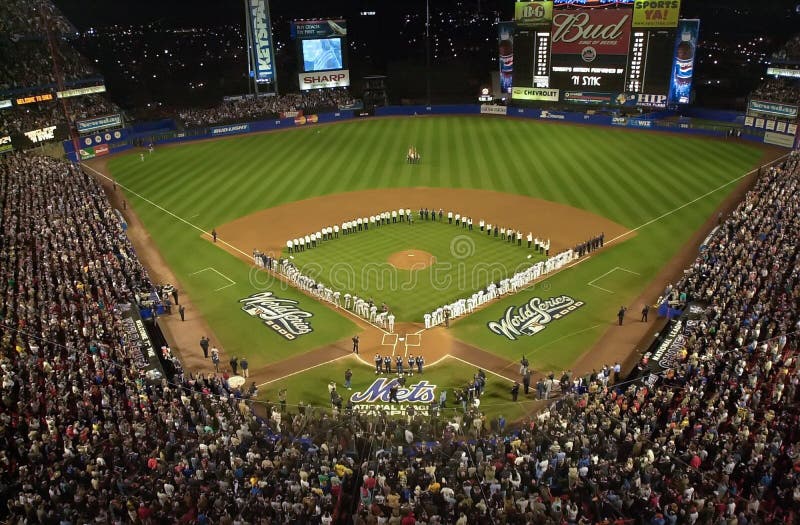
Amid the chaos of these years, the Mets did manage one respite from mediocrity: the 2000 Subway Series. Though technically outside the 2002–2005 window, the echoes of that October clash reverberated through the early 2000s, a reminder of what the team was capable of when the stars aligned. The 2002–2005 Mets never replicated that magic, but they did come close in 2004, when a late-season surge nearly propelled them into the playoffs. The ghosts of 2000 haunted these years, a tantalizing “what if” that lingered like a half-remembered dream.
The Subway Series wasn’t just a moment of glory—it was a fleeting glimpse of the Mets’ potential. What if they had built on that success? What if they had avoided the pitfalls of injuries, inconsistency, and poor management? The answers remain tantalizingly out of reach.
The Aftermath: A Franchise in Search of Redemption
By 2005, the Mets were a team in flux, their once-gleaming roster now tarnished by disappointment. The departures of Piazza, Alfonzo, and others signaled the end of an era, leaving behind a franchise searching for direction. The years that followed—marked by the arrival of Carlos Beltrán, David Wright’s maturation, and the ill-fated Carlos Delgado experiment—would eventually lead to a resurgence. But the 2002–2005 Mets? They remain a cautionary tale, a reminder of how quickly potential can curdle into regret.
What if these years had been different? What if the Mets had found a way to harness their talent, to stabilize their pitching, to build a cohesive identity? The answers are lost to time, buried under the weight of “what could have been.” The 2002–2005 Mets were a team of near-misses and almost-rans, their legacy a tapestry of unfulfilled promises and squandered opportunities. They were the forgotten years—not because they lacked drama, but because they lacked resolution.