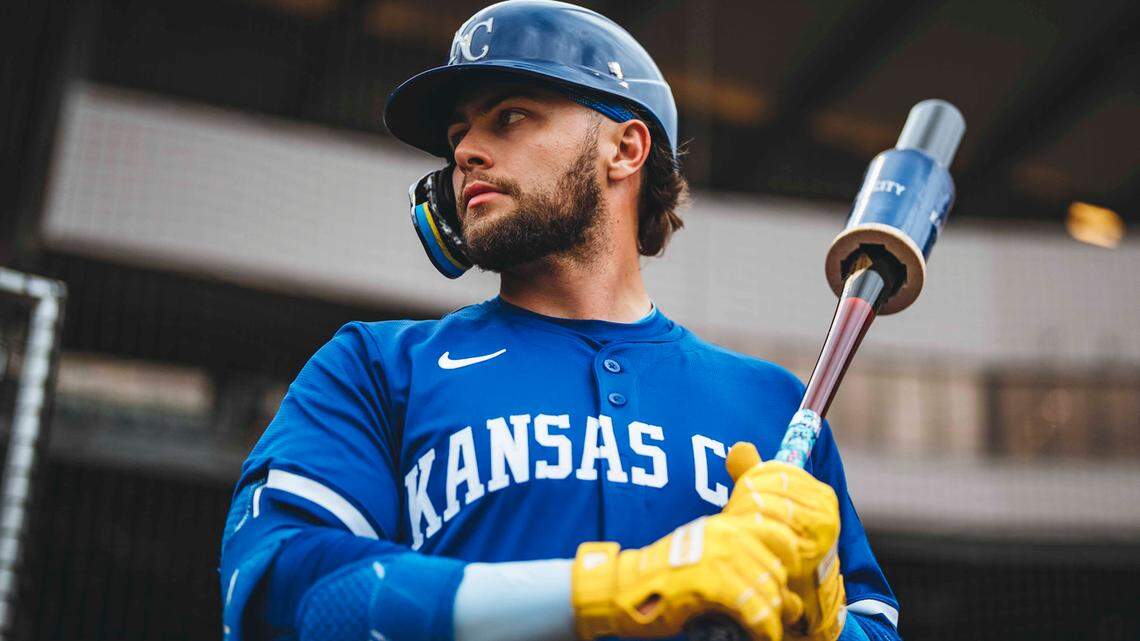
The Kansas City Royals, once a perennial underdog in the American League, underwent a remarkable transformation between 2011 and 2018. This era wasn’t just about incremental changes—it was a tectonic shift in philosophy, talent acquisition, and organizational identity. From the gritty resilience of the 2014 World Series run to the heartbreaking near-misses of 2015, the Royals’ rosters evolved in ways that redefined their legacy. What began as a team of scrappy underdogs became a blueprint for small-market success, blending raw athleticism with tactical ingenuity. This narrative explores how the Royals’ rosters shifted from a patchwork of hopefuls to a cohesive unit that defied expectations, leaving an indelible mark on baseball history.
The Foundation: A Roster in Flux (2011–2012)
The early 2010s were a period of uncertainty for the Royals, a franchise long starved for postseason relevance. The 2011 roster was a motley crew of unproven talents and aging veterans, a team that struggled to find its footing. Eric Hosmer, Mike Moustakas, and Salvador Perez—core pieces of the future—were still raw, their potential obscured by inconsistency. The rotation, anchored by veterans like Bruce Chen and Jeff Francis, lacked the dominance needed to compete in a division dominated by powerhouse rotations. Yet, beneath the surface, a quiet revolution was brewing. The Royals’ farm system, once a barren wasteland, began churning out prospects who would soon redefine the organization’s identity. The 2012 season, though still a losing campaign, saw glimpses of the transformation to come, with Alcides Escobar’s defensive prowess and Alex Gordon’s breakout offensive year hinting at brighter days ahead.
The Rise of the Core Four (2013–2014)
By 2013, the Royals’ roster had begun to crystallize around a nucleus of homegrown talent. The 2013 squad, though still a non-contender, featured the first true signs of synergy. Lorenzo Cain emerged as a defensive stalwart in center field, while Eric Hosmer’s bat began to wake from its slumber. The bullpen, once a liability, transformed into a fortress, with Greg Holland and Wade Davis anchoring a relief corps that would soon strike fear into opposing lineups. The 2014 season, however, was the watershed moment. The Royals, led by a relentless defense and a pitching staff that thrived on contact suppression, stormed into the playoffs as a wild-card team. The roster, now a blend of youthful exuberance and battle-tested veterans like James Shields and Billy Butler, defied the odds. The postseason run culminated in a World Series berth, a feat not seen in Kansas City since 1985. The 2014 roster wasn’t just good—it was a revelation, a team that played with a fearlessness that masked their small-market origins.
The Art of the Bullpen Renaissance (2015)
The 2015 Royals didn’t just repeat their success—they perfected it. The roster had evolved into a well-oiled machine, where every role was meticulously defined. The bullpen, now the crown jewel of the team, was a masterclass in bullpen usage. Kelvin Herrera, Ryan Madson, and the indomitable Wade Davis formed a trio that could stifle rallies before they began. The rotation, bolstered by Edinson Volquez’s resurgence and Yordano Ventura’s electric fastball, provided just enough stability. But the true magic lay in the Royals’ ability to manufacture runs, their small-ball tactics a stark contrast to the power-heavy approaches of their division rivals. The 2015 season ended in heartbreak, a Game 5 loss in the World Series to the Mets that left a city in mourning. Yet, the roster’s resilience was undeniable—a team that had clawed its way from irrelevance to the precipice of greatness.
The Aftermath: Roster Overhauls and Unfulfilled Promises (2016–2017)
The 2016 season was a study in regression. The Royals’ roster, once a model of cohesion, began to fracture under the weight of aging contracts and underperformance. The rotation, once a strength, became a revolving door of injuries and ineffectiveness. The bullpen, though still formidable, lost its edge. The offense, once a model of efficiency, sputtered without the timely hitting that had defined the previous two seasons. The 2017 squad, a shadow of its former self, limped to a dismal 65-97 record. The roster overhaul had begun in earnest, with veterans like Lorenzo Cain and Eric Hosmer departing via free agency. The Royals’ front office, faced with the daunting task of rebuilding, made the difficult choice to prioritize youth over nostalgia. The 2017 season was a necessary purgatory, a year where the seeds of the future were sown amidst the ruins of the past.
The Reckoning: Youth Movement and the Final Act (2018)
By 2018, the Royals’ roster had undergone a complete metamorphosis. The team that took the field that season was a stark departure from the one that had reached the World Series just three years prior. The rotation was a mix of unproven arms and reclamation projects, while the lineup featured a blend of rookies and mid-tier free agents. Whit Merrifield, a late-blooming infielder, emerged as the team’s offensive engine, while Jorge Soler provided a power bat that had been absent in previous years. The bullpen, once the team’s calling card, was now a patchwork of young relievers and reclamation projects. The 2018 season was a tale of two halves—an abysmal first half that saw the Royals flirt with 100 losses, followed by a resurgent second half that hinted at the potential of the farm system. The roster, now a laboratory of experimentation, was a far cry from the championship-caliber team of 2014 and 2015. Yet, it was a necessary step in the franchise’s evolution, a reminder that even the most storied teams must eventually yield to the passage of time.
The Legacy: What the Rosters Taught Us
The Kansas City Royals’ rosters between 2011 and 2018 were more than just collections of players—they were living, breathing testaments to the power of adaptability. The team’s journey from obscurity to contention and back to rebuilding offers a masterclass in organizational resilience. The 2014–2015 teams proved that small-market teams could compete with the best of them, not through financial might, but through ingenuity and grit. The later years, though less successful on the field, demonstrated the importance of patience and long-term planning. The Royals’ rosters evolved in ways that defied conventional wisdom, blending analytics with old-school baseball principles. Their legacy isn’t just in the wins and losses, but in the blueprint they left behind—a reminder that success in baseball isn’t about having the deepest pockets, but the deepest well of creativity and determination.