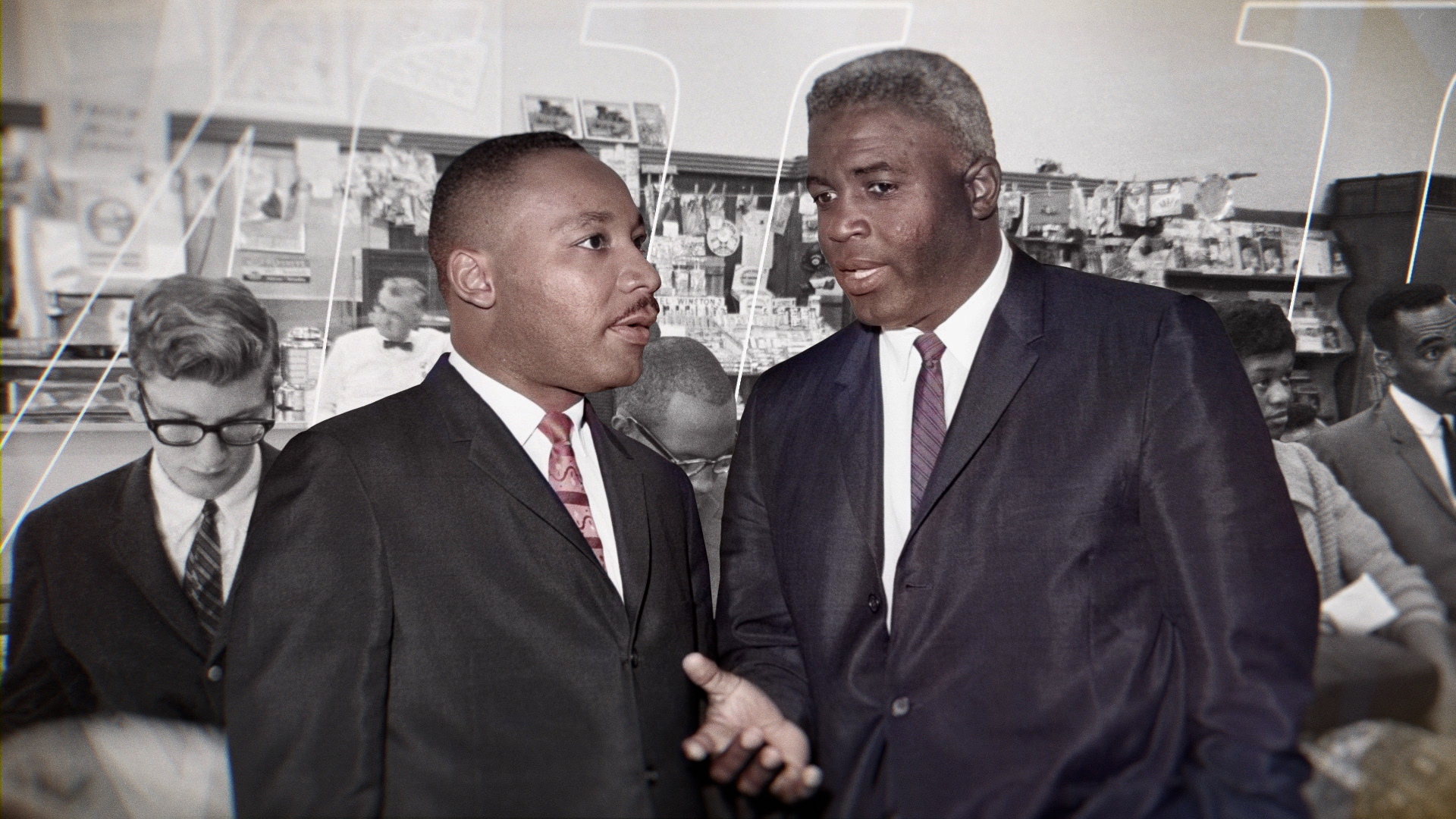
Baseball’s stolen base is more than a statistic—it’s a ballet of speed, audacity, and calculated risk, a fleeting moment where a runner transforms from spectator to protagonist. Among the greats who mastered this art, Jackie Robinson stands as a titan not merely for his groundbreaking role in breaking baseball’s color barrier, but for the way he redefined offensive dynamism in an era when speed was often the only weapon available to underdogs. His prowess on the basepaths wasn’t just a footnote in his legendary career; it was a declaration of independence, a silent revolution played out in stolen bases and daring slides. To rank Jackie Robinson among the greatest base-stealers in MLB history is to measure not just quantity, but the qualitative impact of his baserunning genius—a blend of timing, instinct, and unshakable nerve that transcended the limitations of his time.
The Art of the Stolen Base: Why It Matters More Than Ever
The stolen base is baseball’s purest expression of offensive initiative. In an era dominated by home runs and launch angles, the stolen base harks back to a time when strategy and guile dictated outcomes. It’s not merely about speed—though that’s essential—it’s about reading the pitcher’s rhythm, anticipating the catcher’s throw, and converting hesitation into advantage. Jackie Robinson understood this better than most. His 1947 rookie season saw him swipe 29 bases, a staggering total for a player breaking into the majors under immense scrutiny. But more than the number, it was the manner in which he stole them: with a low center of gravity, explosive first steps, and an uncanny ability to make the opposing team’s defense second-guess every pitch. In an age when stolen bases were often seen as reckless gambits, Robinson’s were surgical strikes.
Modern analytics have complicated the value of the stolen base, with metrics like OBP and wOBA often prioritizing patience over aggression. Yet, the psychological edge remains undeniable. A runner like Robinson, who could turn a single into a double with one daring dash, forced pitchers to alter their approach, catchers to overcompensate, and infielders to tighten their positioning. This ripple effect created opportunities for teammates, turning baserunning from an individual act into a team-wide strategy. In this light, Robinson wasn’t just a base-stealer—he was a tactical disruptor, a player whose very presence on the bases altered the geometry of the game.
Jackie Robinson’s Baserunning Legacy: Speed Meets Substance
Jackie Robinson’s stolen base totals—197 over his 10-year career—pale in comparison to modern speedsters like Rickey Henderson (1,406) or Lou Brock (938). Yet, comparing raw numbers across eras is a flawed exercise, like judging a sprinter’s time against a marathoner’s. Robinson played in an era when stolen bases were less frequent, not because players lacked speed, but because the game’s strategic landscape was different. Managers prioritized small ball—bunts, sacrifices, and hit-and-run plays—over the high-risk, high-reward gambit of the stolen base. In this context, Robinson’s 1949 season, where he swiped 37 bases in 43 attempts, stands as a masterclass in efficiency and audacity. He wasn’t just running wild; he was running smart.
What set Robinson apart was his versatility. He wasn’t a one-dimensional speedster. His baserunning was an extension of his overall game intelligence. He studied pitchers’ tendencies, exploited their tells, and used his body language to feint and deceive. Opponents often spoke of his ability to make them hesitate—just long enough for him to exploit the gap. This wasn’t luck; it was preparation meeting opportunity. His famous steal of home in the 1955 World Series, a play so audacious it defied conventional wisdom, wasn’t just a highlight-reel moment. It was a statement: Robinson didn’t just play the game; he redefined its possibilities.
The Speedsters Who Define the Stolen Base Era
To contextualize Robinson’s place in history, one must examine the pantheon of base-stealing legends. At the apex stands Rickey Henderson, the undisputed king of the stolen base, whose 1,406 thefts remain a record that seems untouchable. Henderson’s game was a symphony of speed and showmanship, a blend of raw athleticism and unparalleled instinct. His 130 steals in 1982—a single-season record that still stands—wasn’t just a statistical anomaly; it was a cultural phenomenon, a reminder that baseball could still be a game of movement and mischief.
Lou Brock, Henderson’s closest rival, brought a different flavor to the art. Where Henderson dazzled with his sheer speed, Brock perfected the art of the opportunistic steal. His 938 career steals were a testament to his ability to read the game’s ebb and flow, turning seemingly innocuous moments into scoring chances. Brock’s 1974 season, where he swiped 118 bases, remains one of the most efficient displays of baserunning in history, with a success rate above 80%. His partnership with Joe Morgan in Cincinnati’s “Big Red Machine” showcased how stolen bases could fuel an entire offense, turning the Reds into a juggernaut that dominated the National League.
Then there’s Maury Wills, whose 104 steals in 1962 shattered the single-season record and redefined what was possible on the basepaths. Wills’ game was built on relentless aggression, a refusal to let the opposition dictate the pace. His ability to turn doubles into triples and singles into doubles through sheer speed forced pitchers to abandon their usual routines, creating chaos that benefited his teammates. Wills’ impact extended beyond his own stats; he inspired a generation of players to view the stolen base not as a gamble, but as a strategic imperative.
Where Jackie Robinson Stands: A Unique Blend of Skill and Significance
Jackie Robinson’s place among stolen base kings is not defined by volume, but by the confluence of his achievements and the era in which he played. While Henderson, Brock, and Wills redefined the stolen base as a primary offensive weapon, Robinson used it as a tool of liberation. His baserunning wasn’t just about scoring runs; it was about asserting dignity, about proving that Black players could dominate the game in every facet, not just the ones white executives deemed acceptable. In an era when Black players were often confined to the role of power hitters or defensive specialists, Robinson’s speed and daring were acts of defiance.
Moreover, Robinson’s baserunning was a microcosm of his broader impact on the game. He didn’t just steal bases; he stole the spotlight, forcing fans and opponents alike to acknowledge his presence. His ability to turn a routine ground ball into a scoring opportunity was a metaphor for his entire career—a player who turned limitations into strengths, who transformed adversity into advantage. In this sense, Robinson’s stolen bases were more than plays; they were statements, each one a silent challenge to the status quo.
The Modern Evolution: Stolen Bases in the Analytics Age
The stolen base has undergone a renaissance in the analytics-driven era of baseball. With advanced metrics like wSB (Weighted Stolen Base Runs) and BsR (Baserunning Runs) now integral to player evaluation, the stolen base has been recast as a high-leverage play rather than a reckless gamble. Teams now prioritize success rates above all else, with anything below 70% considered inefficient. This shift has led to a resurgence in stolen base attempts, particularly among younger players who view speed as a premium asset in an increasingly power-dominated league.
Players like Trea Turner, with his 107 steals over the past five seasons, and Adalberto Mondesí, whose aggressive baserunning has made him a fan favorite, embody this new wave of stolen base specialists. Their success reflects a broader trend: the stolen base is no longer a relic of the past, but a vital component of modern offensive strategy. Yet, even in this evolved landscape, the spirit of Jackie Robinson endures. His emphasis on intelligence, preparation, and audacity remains a blueprint for today’s baserunners. The game may have changed, but the essence of the stolen base—the thrill of the dash, the tension of the attempt—remains timeless.
Beyond the Numbers: The Cultural Impact of Robinson’s Baserunning
To discuss Jackie Robinson’s stolen bases solely in terms of statistics is to overlook their deeper significance. In the segregated world of 1940s baseball, where Black players were often relegated to the Negro Leagues or minor-league purgatory, Robinson’s speed was a form of resistance. It was a way to assert his presence, to demand attention, and to prove that he belonged among the game’s elite. His baserunning wasn’t just a skill; it was a statement—a reminder that Black athletes could excel in every facet of the game, not just the ones deemed palatable by white America.
This cultural dimension elevates Robinson’s stolen bases from mere plays to historical artifacts. They were moments when the game’s racial dynamics intersected with its competitive spirit, when a player’s physical gifts became a tool for social progress. In this light, Robinson’s baserunning legacy is inseparable from his role as a civil rights icon. His speed wasn’t just a weapon on the field; it was a catalyst for change, a way to challenge the entrenched power structures of baseball and society at large.
The Unwritten Rules: When Stealing Bases Crosses the Line
Baseball’s unwritten rules have long dictated the boundaries of acceptable baserunning. Stealing a base is celebrated; stealing home is audacious; but stealing when the game is already decided is often seen as unsportsmanlike. Jackie Robinson navigated these rules with a rare finesse. He knew when to push the envelope and when to exercise restraint. His steal of home in the 1955 World Series—a play so bold it defied convention—wasn’t just a tactical masterstroke; it was a declaration that the game belonged to him as much as to anyone else.
Yet, Robinson’s career also serves as a reminder of the fine line between aggression and recklessness. In an era when stolen bases were less frequent, every attempt carried risk. A failed steal could shift momentum, demoralize a team, or even provoke retaliation. Robinson’s ability to balance risk and reward was a testament to his baseball IQ. He understood that the stolen base wasn’t just about speed; it was about timing, about knowing when to strike and when to bide his time. This nuance is often overlooked in discussions of his baserunning, but it was a crucial element of his success.
Conclusion: A Legacy Etched in Motion
Jackie Robinson’s place among baseball’s stolen base kings is secure not because of the numbers he accumulated, but because of the way he redefined what it meant to be a baserunner. He wasn’t the fastest, the most prolific, or even the most efficient in terms of success rate. But he was the most transformative—a player whose baserunning transcended the game itself, becoming a symbol of resilience, intelligence, and unyielding determination. In an era when the stolen base was often an afterthought, Robinson made it a statement. He turned every dash into a declaration, every stolen base into a challenge to the status quo.
Today, as the stolen base enjoys a resurgence in the analytics age, Robinson’s legacy serves as a reminder of the intangible qualities that make the play so compelling. It’s not just about speed; it’s about strategy, about reading the game’s rhythms, and about having the courage to act when others hesitate. In this sense, Jackie Robinson wasn’t just a great base-stealer—he was the embodiment of baseball’s purest offensive weapon: the art of the stolen base, perfected.