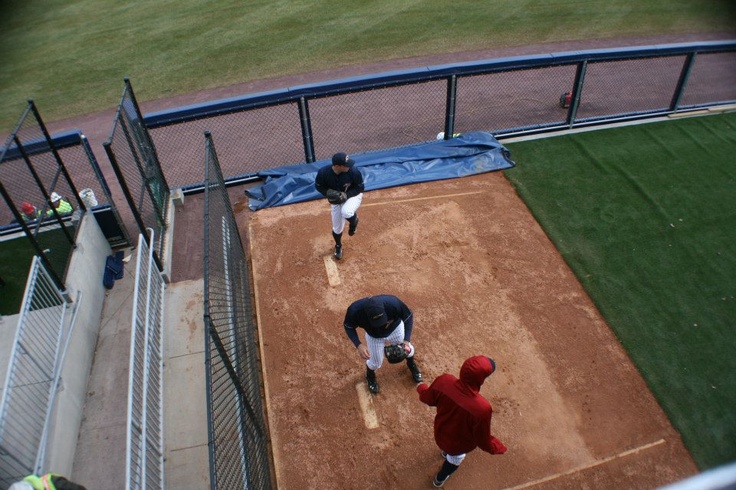
What if I told you that the bullpen isn’t just a place to lob pitches while waiting for your turn in the spotlight? What if it’s a laboratory of precision, a sanctuary of repetition, a proving ground where mechanics are refined and focus is honed? The bullpen is where the magic happens before the magic is seen. But here’s the catch: warming up without purpose is like throwing darts in the dark—you might hit the board, but you’ll never hit the bullseye. So, how do you transform a routine into a ritual? How do you ensure every throw, every stretch, every breath serves a greater goal? Let’s dissect the art of warming up in the bullpen with intention, strategy, and a dash of baseball alchemy.
The Bullpen as a Canvas: Painting with Purpose
The bullpen is more than a stretch of grass or a cluster of mounds—it’s a blank canvas where pitchers sketch their masterpiece. Every warm-up throw is a brushstroke, every stretch a layer of foundation. But without a plan, that canvas remains empty, void of meaning. The first step? Define your objective. Are you working on velocity, command, or a specific pitch? Perhaps you’re fine-tuning your delivery after a mechanical tweak. Maybe you’re simulating game pressure to sharpen your mental resilience. Whatever the goal, clarity is key. Without it, you’re merely going through the motions, and motions alone won’t win ballgames.
Consider the bullpen your personal dojo. In martial arts, every kick, every stance, every breath is deliberate. The same should hold true here. If you’re a starter, your bullpen session might focus on building endurance and refining your fastball command over multiple innings. If you’re a reliever, it’s about explosive bursts of intensity, mimicking the adrenaline of a high-leverage inning. The bullpen isn’t a place for passive participation—it’s where you sculpt your craft. So ask yourself: What’s the story you want to tell with your warm-up? And more importantly, are you writing it with intention?
The Warm-Up Symphony: Rhythm, Tempo, and Flow
A bullpen session should feel like a symphony—each element in harmony, each movement building toward a crescendo. But too often, pitchers treat it like a cacophony of random throws, a disjointed mess of half-hearted efforts. The secret? Establish a rhythm. Start with light tosses, gradually increasing intensity as your arm and mind sync up. Think of it as a musical scale: begin slow, find your pitch, then crescendo to your game-day velocity.
Tempo is everything. A rushed warm-up leads to sloppy mechanics and wasted energy. Conversely, a lethargic approach leaves you underprepared. The ideal bullpen session is a Goldilocks scenario—just right. Begin with 50-60% effort, focusing on feel and location. Then, as your body responds, ramp up to 80-90%, simulating the demands of a real inning. But here’s the twist: don’t just throw fastballs. Mix in breaking balls, changeups, and even pickoff moves if you’re a control artist. The bullpen is your laboratory—experiment, adapt, and refine.
Flow is the invisible thread that ties it all together. A pitcher with flow moves seamlessly from one throw to the next, as if each motion is a natural extension of the last. This comes from repetition, yes, but also from mindfulness. Are you rushing between pitches? Are you overthinking your mechanics? The best warm-ups feel effortless, as if the body is operating on autopilot. To achieve this, visualize each throw before you make it. Picture the ball cutting through the zone, the batter’s reaction, the umpire’s call. When your mind and body are in sync, the bullpen becomes a stage, not a waiting room.
The Mental Grind: Sharpening Your Edge Before the Game
Baseball is as much a mental game as it is physical, and the bullpen is where the mental battle begins. Yet, so many pitchers treat it as a purely physical exercise. They throw, they stretch, they move on—without ever engaging their mind. That’s a missed opportunity. The bullpen is your proving ground for focus, resilience, and adaptability. So how do you train your brain as rigorously as your arm?
Start with visualization. Before you even pick up a ball, close your eyes and imagine the game unfolding. See yourself on the mound, the crowd roaring, the count full with runners in scoring position. Feel the pressure. Then, visualize your warm-up in that context. Picture each throw as if it’s the most important pitch of your career. This isn’t just daydreaming—it’s mental rehearsal, a way to prime your nervous system for the demands ahead.
Next, embrace discomfort. The bullpen is the place to fail safely. Try throwing a pitch outside your comfort zone—a high fastball, a backdoor slider—and see how your body reacts. The goal isn’t perfection; it’s exploration. The more you push your limits in the bullpen, the less daunting they’ll seem in a real game. And remember: pressure is a privilege. The best pitchers don’t shy away from it—they seek it out, even in practice. So when you’re in the bullpen, ask yourself: Am I comfortable being uncomfortable? If not, you’re not warming up—you’re just going through the motions.
The Hidden Variables: Weather, Fatigue, and Adaptability
No two bullpen sessions are alike, and the best pitchers know how to adapt on the fly. Weather is a silent adversary—wind can turn a perfect fastball into a batting practice offering, while humidity can sap your energy before you’ve even thrown a pitch. Then there’s fatigue, the thief of velocity and command. A pitcher who ignores their body’s signals is a pitcher doomed to underperform. So how do you account for these variables?
First, check the elements. If it’s a blustery day, adjust your grip or aim to compensate for the wind. If the humidity is suffocating, hydrate aggressively and shorten your warm-up to conserve energy. Fatigue is trickier. Listen to your body. If your arm feels heavy or your command is off, don’t force it. Instead, focus on quality over quantity. A few sharp throws are worth more than a dozen sloppy ones. The bullpen is your early warning system—use it to detect issues before they become crises.
Adaptability is the hallmark of a great pitcher. The game doesn’t always go as planned, and neither should your warm-up. If a coach calls an audible and asks you to work on a new pitch, can you pivot without hesitation? If the catcher signals for a changeup in the middle of your fastball progression, can you adjust seamlessly? The bullpen is where you build that flexibility. Treat every session as a puzzle, and your job is to solve it—no matter the pieces.
The Aftermath: Recovery and Reflection
A bullpen session doesn’t end when the last pitch is thrown. The real work begins in the aftermath. Recovery is where the gains are made—or lost. Ice, stretch, hydrate—these aren’t optional steps; they’re the foundation of longevity. But recovery isn’t just physical. It’s mental, too. Take five minutes to reflect on your session. What worked? What didn’t? Did you feel sharp, or did fatigue creep in too soon? Jot down notes, even if it’s just a few bullet points. Over time, these reflections will reveal patterns—trends in your performance that might otherwise go unnoticed.
And don’t forget to celebrate the small victories. Did you hit your spots for the first time in weeks? Did you feel a new pitch snap into place? Those moments matter. They’re the building blocks of progress. The bullpen is a grind, but it’s also a playground. Approach it with curiosity, not just obligation. The best pitchers don’t just warm up—they evolve. They turn routine into ritual, repetition into mastery, and warm-up into a weapon.
So the next time you step into the bullpen, ask yourself: Are you just throwing, or are you sculpting? Are you warming up, or are you preparing to dominate? The choice is yours—and the game is waiting.