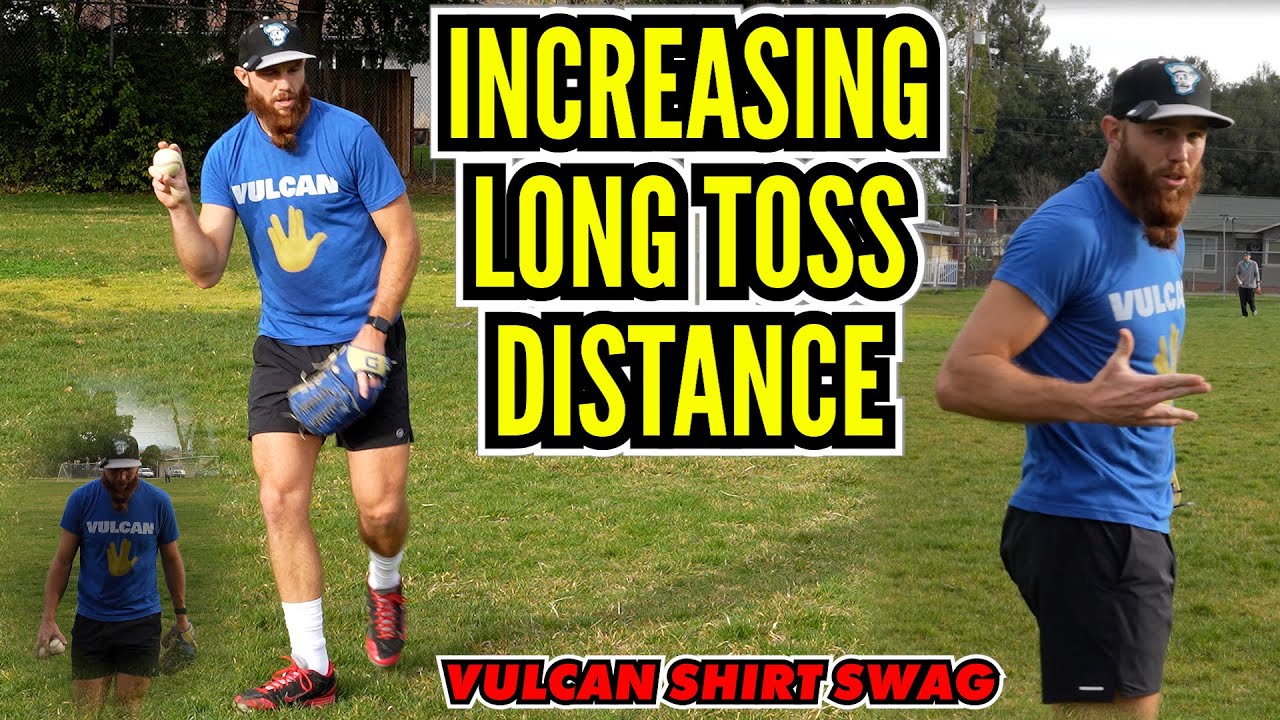
Ever stood on a baseball field, glove in hand, staring down the outfield fence like it’s a dare? You’ve heard the whispers—“Long toss is the holy grail of arm strength!”—but then someone drops the real question: How far should you actually throw? It’s not just about flinging a ball until your arm screams mercy. There’s a science, a rhythm, a poetry to it. And if you’re not careful, you might end up doing more harm than good. So, let’s dive into the art and science of long toss, where the distance isn’t just a number—it’s a conversation between you and the baseball.
The Myth of the Mile: Why “As Far As You Can” Isn’t the Answer
You’ve seen it at the park or in a highlight reel: a player heaves a baseball so far it disappears into the sunset, only to have their coach nod approvingly. “That’s a 300-foot toss!” someone shouts. But here’s the catch—distance isn’t the goal. It’s the byproduct of proper mechanics, not the other way around. Throwing as far as humanly possible with reckless abandon is like sprinting a marathon without training; sure, you might cover ground, but you’ll pay for it later.
The real danger? Compensatory mechanics. When you force a throw beyond your comfort zone, your body starts cheating. Your elbow drops. Your shoulder twists unnaturally. Your follow-through becomes a desperate flail. And suddenly, you’re not strengthening your arm—you’re reinforcing bad habits that could lead to injury. Long toss isn’t about ego. It’s about controlled aggression, where each throw is a deliberate step toward better arm health.
The Goldilocks Zone: Finding Your Ideal Long Toss Distance
So, how do you determine your “just right” distance? Start with a baseline: your maximum crow hop distance. This is the farthest you can throw a baseball with a full, explosive stride—no crow hop, no extra oomph, just pure arm strength. For most players, this lands somewhere between 180 and 220 feet. But here’s the twist: your long toss distance shouldn’t be static. It’s a living, breathing range that evolves with your arm care and conditioning.
Think of it like a dial, not a stopwatch. On days when your arm feels crisp and your mechanics are dialed in, you might push to 250 or even 270 feet. On off-days, when your shoulder feels like it’s wrapped in wet newspaper, you might dial it back to 150 feet. The key is listening to your body. If a throw feels forced, it probably is. If your elbow aches after 10 throws, it’s time to call it quits. Long toss isn’t a punishment—it’s a dialogue.
The Mechanics of Distance: More Than Just Arm Strength
Throwing a baseball 200 feet isn’t just about raw power. It’s about sequencing, leverage, and timing. Your legs initiate the throw, your core transfers energy, and your arm acts as the final whip. If any of these elements break down, distance suffers—and so does your arm health. The most efficient long tossers don’t just rely on their arms; they use their entire kinetic chain.
Start with your lower half. A proper crow hop isn’t just a hop—it’s a controlled, explosive step that loads your back leg and transfers energy forward. Your front foot should land softly, almost like a feather touching down, to allow your hips to rotate fully. As your torso unwinds, your throwing arm lags behind, creating elastic energy. Then, like a coiled spring released, your arm whips forward in a smooth, repeatable motion. The result? A throw that carries effortlessly, with minimal stress on your shoulder and elbow.
And don’t forget the follow-through. A proper follow-through isn’t just for show—it’s your arm’s way of dissipating force safely. If your throwing arm collapses across your body or your glove arm flies open like a startled bird, you’re leaking energy. That means more strain on your arm and less distance on the ball. The best long tossers finish with their throwing shoulder pointing toward their target, their glove arm extended, and their back leg lifted slightly off the ground. It’s a pose of completion, not exhaustion.
The Frequency Paradox: How Often Should You Long Toss?
Here’s where things get tricky. Long toss isn’t an everyday affair. In fact, overdoing it can be just as harmful as underdoing it. Most baseball purists recommend long tossing 2-3 times per week, with at least 48 hours of recovery between sessions. But frequency isn’t a one-size-fits-all prescription. A minor leaguer with a high workload might long toss once a week, while a high school pitcher in the offseason could benefit from three sessions.
The key is balance. Long toss should complement your throwing program, not replace it. If you’re already throwing bullpens or playing catch at shorter distances, long toss is the icing on the cake—not the whole dessert. And always, always prioritize quality over quantity. Ten perfect throws at 200 feet are worth more than 50 sloppy throws at 300 feet.
Another consideration: the season. During the offseason, you can afford to be more aggressive with your long toss distances. But once the season starts, you might dial it back to 150-180 feet to preserve arm health. The goal isn’t to maintain peak distance year-round; it’s to maintain peak performance when it matters most.
The Mental Game: Long Toss as a Ritual, Not a Chore
Long toss isn’t just a physical exercise—it’s a mental one. The best players treat it as a ritual, a moment of solitude where they reconnect with the game. There’s a meditative quality to it: the rhythmic crunch of cleats on dirt, the arc of the ball against the sky, the satisfying thwack of leather hitting leather. It’s a chance to reset, to focus, to remind yourself why you fell in love with baseball in the first place.
But rituals can become monotonous. If you find yourself going through the motions, it’s time to mix it up. Try incorporating different grips—two-seam for sink, four-seam for ride, a changeup grip for deception. Or experiment with different release points. Throwing sidearm or overhand can challenge your mechanics and keep things fresh. Even the simplest tweak can reignite your passion for the drill.
And don’t underestimate the power of visualization. Before each throw, picture the ball’s trajectory. Imagine the perfect arc, the way it cuts through the air, the sound it makes as it lands in your glove. Mental rehearsal isn’t just for free throws and penalty kicks—it’s a tool for baseball players, too. The more vivid your visualization, the more natural your mechanics will feel.
The Recovery Factor: Long Toss’s Unsung Hero
Long toss is only as effective as your recovery. Skipping arm care is like skipping leg day—you’ll pay the price eventually. After a long toss session, your arm is primed for microtrauma. Tiny tears in your muscle fibers, microscopic stress on your tendons. That’s not a bad thing—it’s how you get stronger. But it’s also how you get injured if you don’t recover properly.
Start with ice. A 10-15 minute session post-long toss can reduce inflammation and speed up recovery. Then, focus on mobility. Gentle shoulder and elbow stretches can prevent stiffness, while foam rolling your lats and rotator cuff can alleviate tension. Hydration and nutrition are non-negotiable. Your muscles need protein to repair, and your joints need electrolytes to stay lubricated. And don’t forget sleep—the ultimate recovery tool. Your body does its best work when you’re unconscious.
Another pro tip: track your throws. Keep a simple log of distances, arm soreness, and how you felt after each session. Over time, you’ll start to see patterns. Maybe you always feel great after 200-foot throws but gimp after 250. Maybe your elbow aches when you long toss too frequently. Data doesn’t lie, and it’s the best way to fine-tune your program without guesswork.
The Final Throw: Long Toss as a Lifelong Skill
Long toss isn’t a drill you master in a season. It’s a lifelong skill, one that evolves with you as a player. What worked for you at 16 might not work at 22. What felt effortless in college might feel laborious in the minors. The key is adaptability. Stay curious. Experiment. Listen to your body. And most importantly, enjoy the process.
Because at the end of the day, long toss isn’t just about throwing a baseball farther. It’s about throwing it smarter. It’s about building an arm that’s durable, a mind that’s focused, and a love for the game that never fades. So next time you step onto the field, don’t just ask, “How far can I throw?” Ask, “How well can I throw?” The distance will follow.