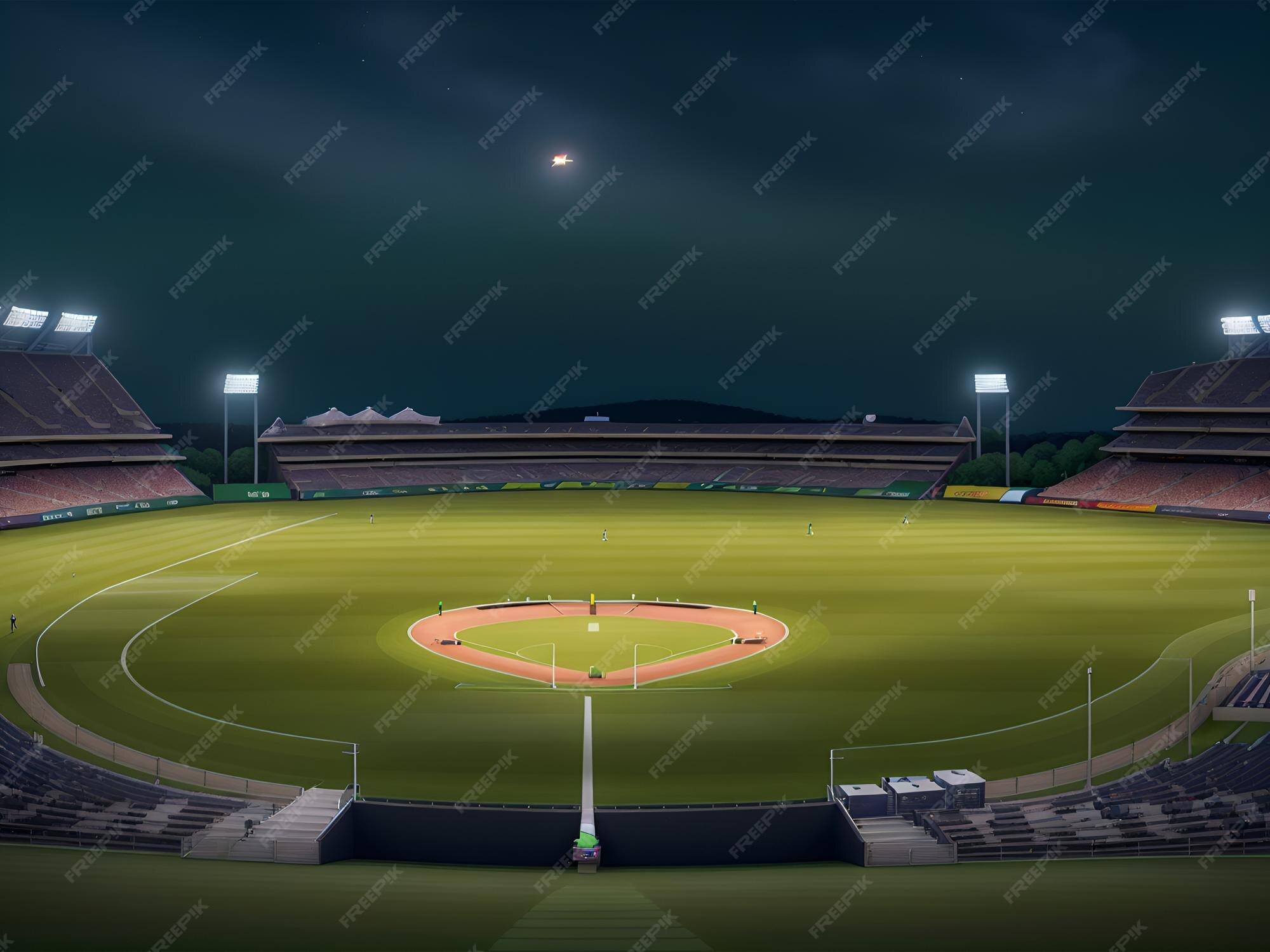
The crack of the bat echoes through the stadium like a thunderclap, the ball soaring into the night sky with an almost otherworldly trajectory. Every fan in the stands holds their breath, eyes locked on the ascending orb, wondering: Has a baseball ever left the stadium entirely? The answer, as it turns out, is not as straightforward as one might assume. While no officially recorded “moon shot” has breached the confines of a ballpark, the idea of a ball clearing the upper deck, the outfield fence, and the very atmosphere itself is a tantalizing thought experiment—one that blends physics, myth, and the raw power of the game.
The Physics of a Mythic Blast: Could a Baseball Truly Escape a Stadium?
To comprehend whether a baseball could ever leave a stadium entirely, we must first dissect the forces at play. A typical MLB stadium’s outfield fence stands between 300 to 420 feet from home plate, with some parks featuring towering structures like the 42-foot-high wall at Fenway Park’s Green Monster. A ball traveling at 110 mph—considered elite exit velocity—would require roughly 5.5 seconds of hang time to clear even the deepest center field. Yet, atmospheric drag, gravity, and the curvature of the Earth impose relentless constraints.
At sea level, a baseball’s terminal velocity hovers around 95 mph, meaning any ball hit beyond that speed will eventually decelerate. For a ball to escape Earth’s gravitational pull, it would need to reach a minimum velocity of 25,020 mph—an impossibility for even the mightiest of swings. However, the more plausible (and still fantastical) scenario involves a ball clearing the stadium’s upper deck, the press box, and perhaps even the parking lot before finally succumbing to gravity. The record for the longest home run in MLB history, 582 feet by Josh Gibson in a Negro Leagues exhibition, suggests that such a feat is theoretically within reach—if not for the confines of the ballpark.
The Psychological Impact: When a Hitter Becomes a Mythmaker
There’s something almost mythological about a batter whose swing could, in theory, defy the boundaries of the stadium. The crowd’s reaction—a collective gasp, a moment of stunned silence—mirrors the awe reserved for legendary feats like Babe Ruth’s called shot or Hank Aaron’s 714th home run. A “moon shot” that leaves the park would transcend sport, becoming a cultural touchstone etched into baseball’s collective memory.
Consider the psychological warfare such a hitter would wage against opposing pitchers. Knowing that one swing could rewrite the record books would force pitchers into a paradox: throw harder to avoid the blast, or risk becoming a footnote in history. The mere possibility of a ball clearing the stadium would elevate every pitch into a high-stakes duel between human skill and the immutable laws of physics. And what of the pitcher? Would they feel cursed, doomed to be the one who served up baseball’s most infamous “moon shot”?
The Stadium as a Battleground: Engineering and Obstacles
Modern stadiums are marvels of engineering, designed not just for aesthetics but to contain the raw power of a 100-mph fastball. The upper deck’s overhang, the outfield’s padded walls, even the strategic placement of scoreboards and luxury boxes all serve as obstacles to a ball’s escape. The tallest stadiums, like the retractable-roofed Globe Life Field in Arlington, stand at a modest 122 feet—nowhere near the altitude required for a ball to breach the atmosphere.
Yet, some parks are more vulnerable than others. Fenway’s Green Monster, while intimidating, offers a flat surface that could theoretically allow a ball to ricochet out if struck at the perfect angle. Wrigley Field’s ivy-covered walls, meanwhile, might swallow a ball whole, preventing any chance of an escape. The challenge isn’t just about power; it’s about trajectory, spin, and the whims of wind. A ball hit at a 30-degree launch angle might soar over the fence, while one struck at 45 degrees could sail into the stratosphere—if only for a fleeting moment before plummeting back to Earth.
The Fan’s Dilemma: Would You Believe Your Eyes?
Imagine the scene: a ball rockets toward the upper deck, the crowd erupting in a cacophony of cheers and disbelief. For a split second, it appears as though the ball has vanished into the night sky. Did it clear the stadium? Or did it ricochet off a rafter, a scoreboard, or a lucky fan’s glove? The ambiguity would spark debates for generations. Was it a true “moon shot,” or merely an optical illusion, a trick of the light and the mind?
Baseball thrives on such moments of uncertainty. The infamous “Merkle Boner” of 1908, where a baserunning error led to a disputed play, remains a cautionary tale. Similarly, a ball that *might* have left the stadium would become a Rorschach test for fans, analysts, and historians. Did it clear the upper deck? Did it sail into the parking lot? Or did it, as some might whisper, briefly touch the moon before gravity reclaimed it? The lack of definitive proof would only deepen the legend.
The Unwritten Rules: When a Hitter Crosses the Line
Baseball is a game of unwritten rules, and a batter who dared to hit a ball out of the park would inevitably face scrutiny. Would such a feat be celebrated, or would it be seen as a violation of the sport’s sacred traditions? Some might argue that a true “moon shot” would disrupt the balance of the game, turning every home run into a potential existential threat to the stadium itself. Others would embrace it as the ultimate expression of power, a moment where the game transcends its own rules.
The challenge, then, is not just physical but philosophical. Where does baseball draw the line between spectacle and sacrilege? Would a ball clearing the stadium be a triumph of human achievement, or a reckless act that endangers the sanctity of the ballpark? The answer may depend on who you ask—and whether they’re willing to accept that some feats are meant to remain just beyond the realm of possibility.
The Legacy of the “Moon Shot” That Never Was
Even if no baseball has ever left a stadium entirely, the idea persists as a tantalizing “what if.” It’s the kind of question that fuels late-night debates in sports bars, the kind of myth that could one day inspire a new generation of sluggers to swing for the fences—literally. The closest we’ve come is a handful of balls that cleared the upper deck but were caught by fans in the bleachers or ricocheted back into play. These near-misses only serve to heighten the allure of the impossible.
Perhaps the true magic of baseball lies in its ability to make us believe, if only for a moment, that the extraordinary is within reach. A “moon shot” that leaves the stadium entirely may never happen—but the dream of it is what keeps the game alive, season after season, swing after swing.